THE ADVENTURE COLLECTIVE® · Independent discovery and booking for outdoor travel

A six-day mixed-trek-and-climb in Peru’s Cordillera Blanca that combines long approaches, glacier travel and steep ice on a 6,040m summit. Ideal for experienced alpinists who want a technical objective with local support.
A six-day mixed-trek-and-climb in Peru’s Cordillera Blanca that combines long approaches, glacier travel and steep ice on a 6,040m summit. Ideal for experienced alpinists who want a technical objective with local support.
Dawn in the Cordillera Blanca is a thin, cold light that cleans the moraine of its shadows. You stand at Quitaraju Base Camp, wind pushing the ridge lines into sharp relief, Alpamayo’s needle just across the cirque daring you to move higher. This six-day expedition walks the line between high-altitude trekking and technical mountaineering.
Verified experiences and guided adventures in the surrounding area.
Operated by Peru Expeditions Tours · Huaraz, Ancash
Dawn in the Cordillera Blanca is a thin, cold light that cleans the moraine of its shadows. You stand at Quitaraju Base Camp, wind pushing the ridge lines into sharp relief, Alpamayo’s needle just across the cirque daring you to move higher. This six-day expedition walks the line between high-altitude trekking and technical mountaineering.
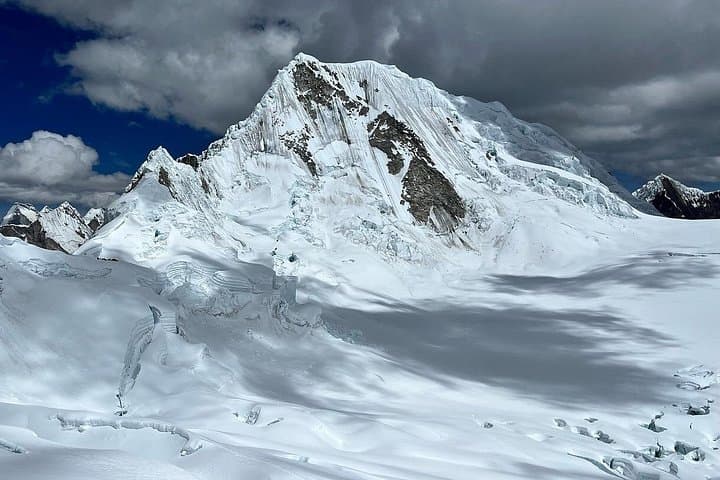
Quitaraju (Kitarahu in Ancash Quechua) rises to about 6,040 m and sits southeast of Alpamayo in Huascarán National Park. The range is composed of granitic intrusions sculpted by Pleistocene glaciers; the result is steep ice faces, knife-edged ridges and moraine tongues that demand route-finding skills. Local communities in the Santa Valley maintain enduring traditions of mule packing and guiding—porters and donkey drivers still shoulder the logistical load up valleys like Huaripampa.
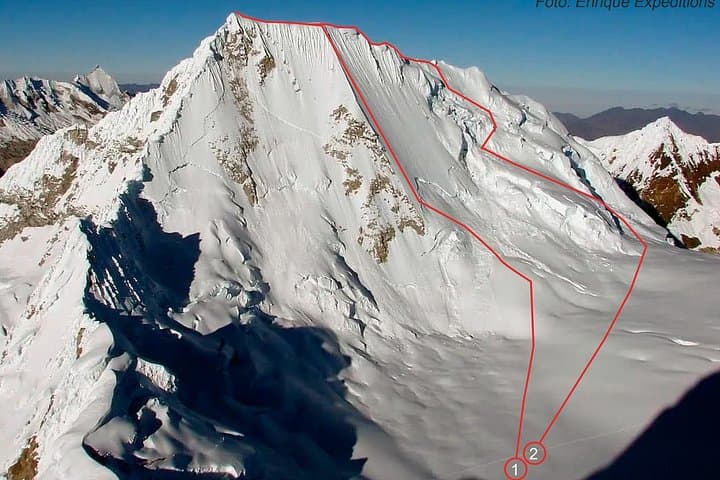
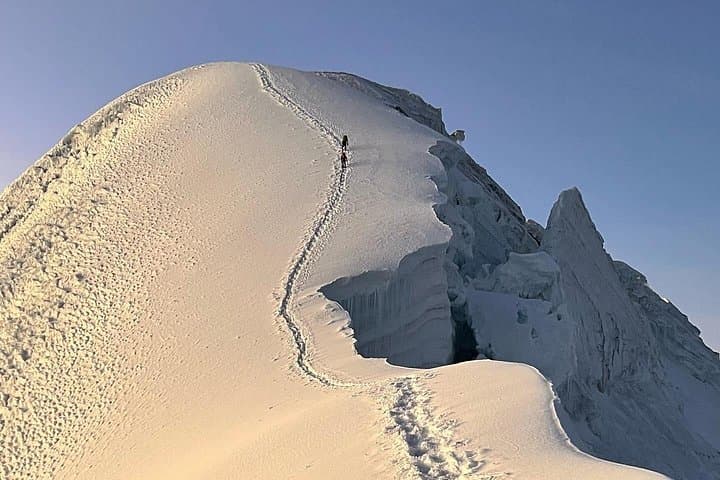
Expect long days of hiking to high camps, then steep, sustained ice climbing on summit day. The French route can present 60–70° sections and requires front-pointing, fixed ropes and controlled rappels. Weather patterns shift quickly here: clear mornings can turn to high-wind snow in hours.
Practical guidance: plan a multi-day acclimatization schedule beginning in Huaraz, pack technical ice gear and layered, cold-weather camping kit, and move with a certified mountain guide familiar with glacial conditions. Hydrate, eat frequently, and set conservative turnaround times—altitude and objective hazards, including crevasse and serac risk, are constant partners. For climbers seeking a serious alpine objective, Quitaraju delivers raw exposure, compact ice climbing, and panoramic views of the Cordillera Blanca.
The May–August dry season (local winter) offers the most stable weather and is the recommended climbing window.
Yes—participants should be competent on steep ice and comfortable operating in a roped glacier team; guided instruction is often part of the trip.
Summit day is long and technical: expect 6–9 hours ascent with sustained steep ice and fixed ropes, followed by a faster descent.
Yes—plan staged nights at intermediate camps, and allow several days in Huaraz or on nearby treks to adapt to altitude.
Peru Expeditions Tours operates guided outdoor trips and adventures with an emphasis on safety, stewardship, and memorable experiences.
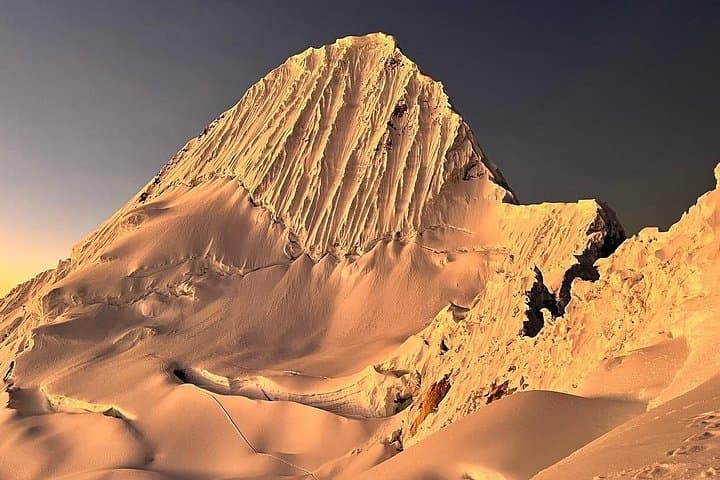
Dawn in the Cordillera Blanca is a thin, cold light that cleans the moraine of its shadows. You stand at Quitaraju Base Camp, wind pushing the ridge lines into sharp relief, Alpamayo’s needle just across the cirque daring you to move higher. This six-day expedition walks the line between high-altitude trekking and technical mountaineering.
Dawn in the Cordillera Blanca is a thin, cold light that cleans the moraine of its shadows. You stand at Quitaraju Base Camp, wind pushing the ridge lines into sharp relief, Alpamayo’s needle just across the cirque daring you to move higher. This six-day expedition walks the line between high-altitude trekking and technical mountaineering.
Quitaraju (Kitarahu in Ancash Quechua) rises to about 6,040 m and sits southeast of Alpamayo in Huascarán National Park. The range is composed of granitic intrusions sculpted by Pleistocene glaciers; the result is steep ice faces, knife-edged ridges and moraine tongues that demand route-finding skills. Local communities in the Santa Valley maintain enduring traditions of mule packing and guiding—porters and donkey drivers still shoulder the logistical load up valleys like Huaripampa.
Expect long days of hiking to high camps, then steep, sustained ice climbing on summit day. The French route can present 60–70° sections and requires front-pointing, fixed ropes and controlled rappels. Weather patterns shift quickly here: clear mornings can turn to high-wind snow in hours.
Practical guidance: plan a multi-day acclimatization schedule beginning in Huaraz, pack technical ice gear and layered, cold-weather camping kit, and move with a certified mountain guide familiar with glacial conditions. Hydrate, eat frequently, and set conservative turnaround times—altitude and objective hazards, including crevasse and serac risk, are constant partners. For climbers seeking a serious alpine objective, Quitaraju delivers raw exposure, compact ice climbing, and panoramic views of the Cordillera Blanca.