THE ADVENTURE COLLECTIVE® · Independent discovery and booking for outdoor travel

The Rongai route climbs Kilimanjaro from the quieter northern flank over six days, offering steady acclimatization and varied terrain from montane forest to alpine desert. This guide outlines what to expect on the trail, cultural context, and practical tips to reach Uhuru Peak safely.
The Rongai route climbs Kilimanjaro from the quieter northern flank over six days, offering steady acclimatization and varied terrain from montane forest to alpine desert. This guide outlines what to expect on the trail, cultural context, and practical tips to reach Uhuru Peak safely.
On the cool morning the porters move like a practiced brigade: canvas rolls, kettles clinking and charcoal coals humming under a chef’s pot. The Rongai route begins on the drier northern shoulder of Mount Kilimanjaro, threading through cornfields into a cathedral of pines before opening into moorland where giant lobelia and groundsel punctuate the trail. Over six days the mountain tests patience and rewards persistence — from the forest, through alpine desert, to the knife-edge of the crater rim where snow brushes your gloves.
Verified experiences and guided adventures in the surrounding area.
Operated by Kilisa Tours & Safaris · Moshi, Kilimanjaro Region
On the cool morning the porters move like a practiced brigade: canvas rolls, kettles clinking and charcoal coals humming under a chef’s pot. The Rongai route begins on the drier northern shoulder of Mount Kilimanjaro, threading through cornfields into a cathedral of pines before opening into moorland where giant lobelia and groundsel punctuate the trail. Over six days the mountain tests patience and rewards persistence — from the forest, through alpine desert, to the knife-edge of the crater rim where snow brushes your gloves.
The Rongai approach has a different personality than the southern routes. Historically a path used by traders and honey collectors coming down from the Kenyan side, Rongai offers a more gradual, steady climb that gives teams extra time to acclimatize. Geologically, Kilimanjaro is a dormant stratovolcano with three peaks — Shira, Mawenzi and Kibo — and the summit, Uhuru Peak, sits on Kibo’s rim at 5,895 meters. Cultural life around the mountain centers in Moshi and the foothill villages: Chagga farmers on steep terraces who sell bananas and make coffee that tastes like the slopes it comes from.
Practicalities matter here. The itinerary covers roughly 8–27 kilometers per day with big elevation swings: first night at 2,600 m, a key acclimatization night at 4,330 m, and a summit push from Kibo Hut at 4,700 m. Expect mixed terrain — packed earth through forest, soggy tussock in moorland, loose scree on the summit approach and possible snow above 5,150 m. Your summit night starts near midnight; you’ll hike 6–8 hours to Gillman’s Point (5,681 m) and on to Uhuru if weather and body allow, then descend 21 km back to Horombo.
The operator includes park fees, mountain crew, camp tents, most meals on the mountain and treated water; permits and rescue fees are standard. Fitness matters: regular cardio, strength work for legs and a week-long endurance base will help; route fitness beats short-term enthusiasm. Layers, a down jacket, sturdy boots, poles, and a sleeping bag rated for sub-zero nights are essential. Hydrate early, follow the guide’s pace, and respect the mountain — slow ascent and listening to your body are how most climbers reach the rim.
Timing: climb in the long dry season (June–October) for the best summit odds, but Rongai carries fewer crowds year-round. Budget rest days in Moshi both before and after the climb to sort logistics and to recover. When the summit is reached, the reward is quiet: a rare clear hour atop Africa, the horizon falling away in cold, thin air — a hard-earned view you’ll remember long after your boots are aired back in town.
No technical mountaineering skills are required — the route is a high-altitude trek, not a climb; however, experience with long days of hiking and altitude exposure is strongly recommended.
Success varies with fitness and acclimatization; 6-day itineraries have lower summit rates than 7–8 day plans, but good pacing and a professional crew make summits possible.
Yes — this operator includes park entry fees, government taxes, and rescue fees as part of the package.
Temperatures commonly drop below -10°C on summit night with wind chill; appropriate insulation and a good sleeping bag are essential.
Three hot meals per day on the mountain, plus treated and filtered drinking water; additional bottled drinks may be available for purchase at higher huts.
The operator includes portable oxygen tanks and an oximeter, and teams are linked to Kilimanjaro Rescue procedures for evacuation if needed.
Kilisa Tours & Safaris operates guided outdoor trips and adventures with an emphasis on safety, stewardship, and memorable experiences.
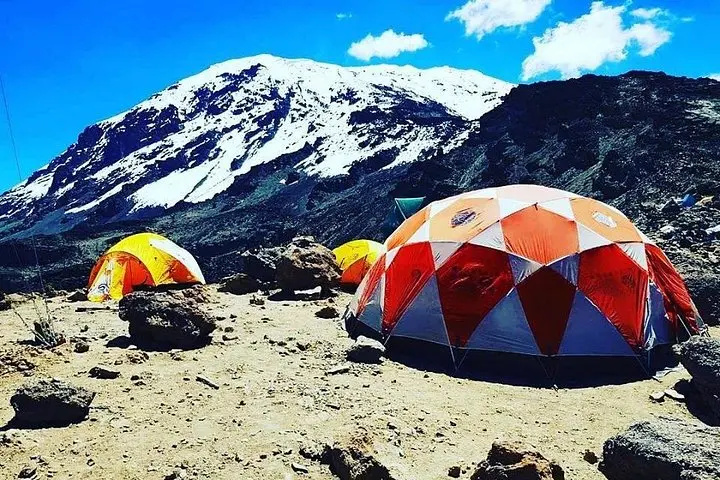
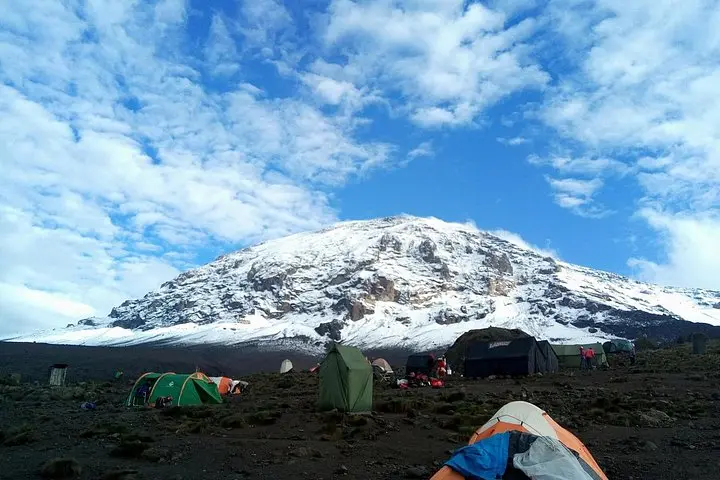
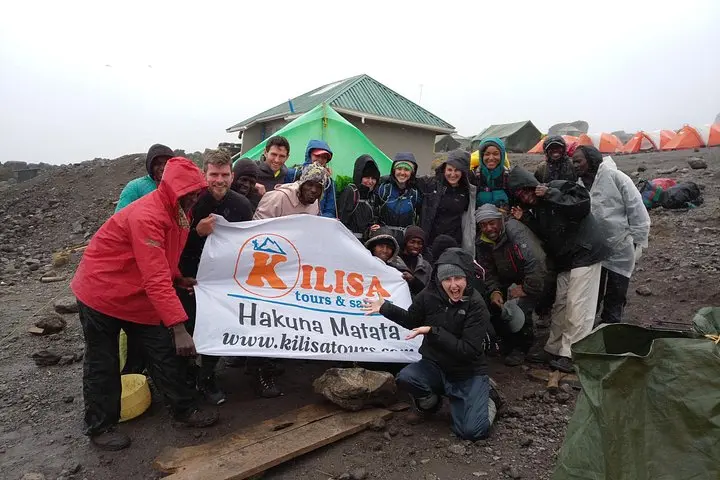
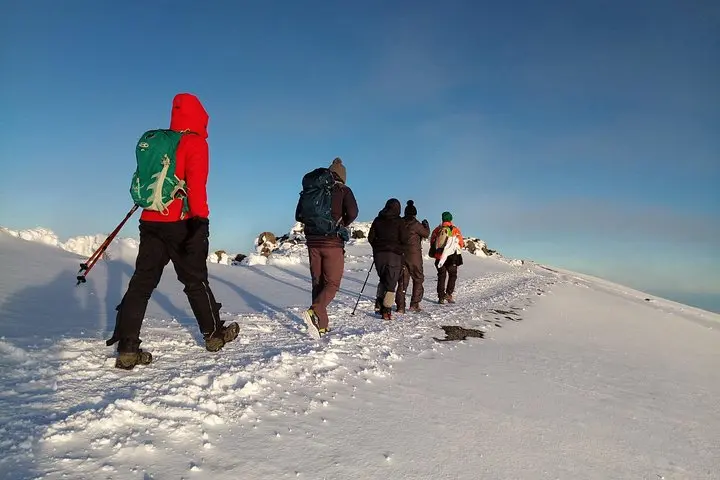
On the cool morning the porters move like a practiced brigade: canvas rolls, kettles clinking and charcoal coals humming under a chef’s pot. The Rongai route begins on the drier northern shoulder of Mount Kilimanjaro, threading through cornfields into a cathedral of pines before opening into moorland where giant lobelia and groundsel punctuate the trail. Over six days the mountain tests patience and rewards persistence — from the forest, through alpine desert, to the knife-edge of the crater rim where snow brushes your gloves.
On the cool morning the porters move like a practiced brigade: canvas rolls, kettles clinking and charcoal coals humming under a chef’s pot. The Rongai route begins on the drier northern shoulder of Mount Kilimanjaro, threading through cornfields into a cathedral of pines before opening into moorland where giant lobelia and groundsel punctuate the trail. Over six days the mountain tests patience and rewards persistence — from the forest, through alpine desert, to the knife-edge of the crater rim where snow brushes your gloves.
The Rongai approach has a different personality than the southern routes. Historically a path used by traders and honey collectors coming down from the Kenyan side, Rongai offers a more gradual, steady climb that gives teams extra time to acclimatize. Geologically, Kilimanjaro is a dormant stratovolcano with three peaks — Shira, Mawenzi and Kibo — and the summit, Uhuru Peak, sits on Kibo’s rim at 5,895 meters. Cultural life around the mountain centers in Moshi and the foothill villages: Chagga farmers on steep terraces who sell bananas and make coffee that tastes like the slopes it comes from.
Practicalities matter here. The itinerary covers roughly 8–27 kilometers per day with big elevation swings: first night at 2,600 m, a key acclimatization night at 4,330 m, and a summit push from Kibo Hut at 4,700 m. Expect mixed terrain — packed earth through forest, soggy tussock in moorland, loose scree on the summit approach and possible snow above 5,150 m. Your summit night starts near midnight; you’ll hike 6–8 hours to Gillman’s Point (5,681 m) and on to Uhuru if weather and body allow, then descend 21 km back to Horombo.
The operator includes park fees, mountain crew, camp tents, most meals on the mountain and treated water; permits and rescue fees are standard. Fitness matters: regular cardio, strength work for legs and a week-long endurance base will help; route fitness beats short-term enthusiasm. Layers, a down jacket, sturdy boots, poles, and a sleeping bag rated for sub-zero nights are essential. Hydrate early, follow the guide’s pace, and respect the mountain — slow ascent and listening to your body are how most climbers reach the rim.
Timing: climb in the long dry season (June–October) for the best summit odds, but Rongai carries fewer crowds year-round. Budget rest days in Moshi both before and after the climb to sort logistics and to recover. When the summit is reached, the reward is quiet: a rare clear hour atop Africa, the horizon falling away in cold, thin air — a hard-earned view you’ll remember long after your boots are aired back in town.