
6-Day Southern Tunisia Guided Tour: Desert Oases, Ksour & Roman Ruins
A six‑day guided circuit from Tunis through Kairouan, Sbeitla, Tozeur and the Sahara — a mix of Roman ruins, Berber ksour, thermal oases and dune bivouacs. Expect long drives, moderate walking and vivid desert scenery.
An Adventure In Tunis.
A six‑day guided circuit from Tunis through Kairouan, Sbeitla, Tozeur and the Sahara — a mix of Roman ruins, Berber ksour, thermal oases and dune bivouacs. Expect long drives, moderate walking and vivid desert scenery.
Read the full experience
Dawn breaks over the olive groves outside Tunis and the bus eases onto the road south — by midmorning the light has changed, the land opening from coastal green to ochre stone and then to the sculpted lines of the Sahara.
Dawn breaks over the olive groves outside Tunis and the bus eases onto the road south — by midmorning the light has changed, the land opening from coastal green to ochre stone and then to the sculpted lines of the Sahara.
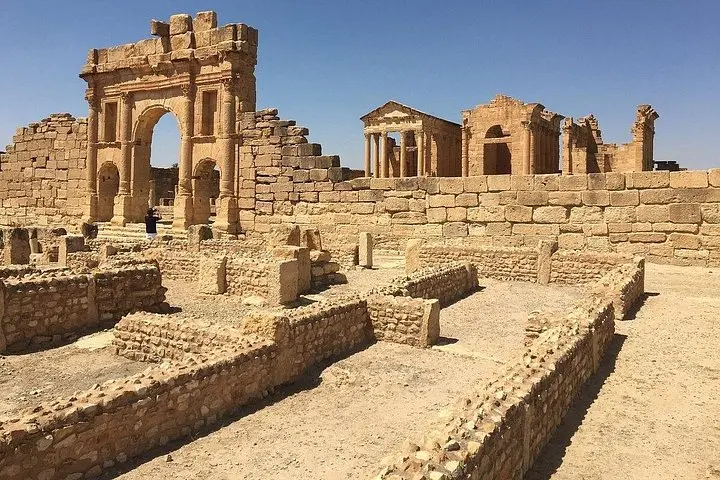
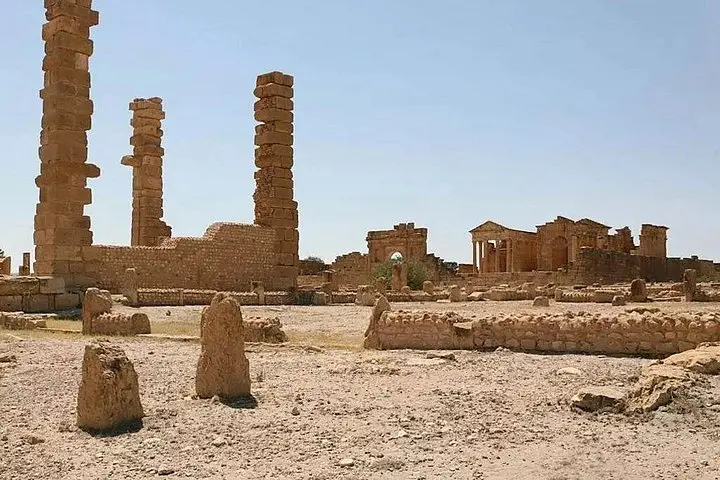
Across six days this guided loop links UNESCO sites, Roman colonnades, mountain oases and wind-carved dunes. In Kairouan the 9th‑century Grand Mosque anchors centuries of Islamic learning; further south Sbeitla’s triple temples recall Roman civic life carved into North African limestone. The Jebel Dahar and Atlas foothills reveal folded strata and deep gorges where water still finds a way, feeding palm groves that sustain local families.
Cultural notes arrive in markets and ksour: Tozeur’s geometric brick medina, the khettara irrigation channels that keep dates growing, and cave houses in Matmata that show ingenious thermal design. Film buffs will recognize locations used in Star Wars, while quieter moments come at Ksar Ghilane’s hot spring or the mirror-flat Chott El Djerid where mirages seem to challenge the horizon.
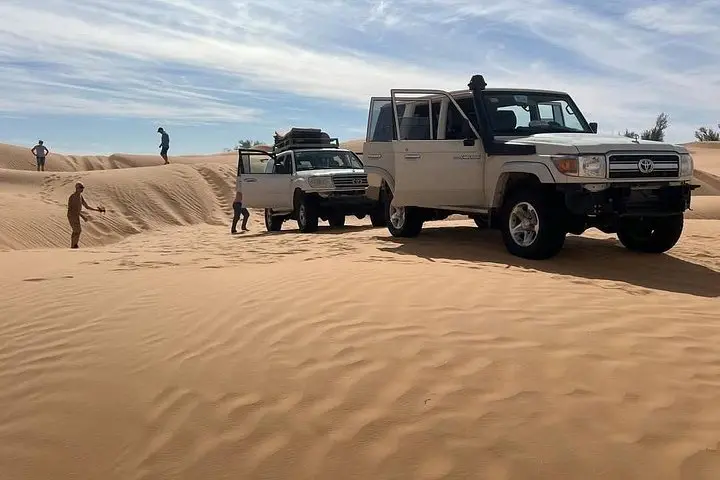
Practical guidance: expect long drives (several 3–5 hour legs), daily walking of 1–3 hours on varied terrain, and simple hotels plus at least one bivouac camp. Temperatures swing widely—pack layers, sun protection and sturdy shoes. Hydrate proactively (organizers supply water en route) and bring copies of travel documents for border-adjacent areas. Optional extras such as camel or quad rides are commonly available on site. Travel respectfully: these are working oases and archaeological sites—leave no trace, ask before photographing people, and follow guide instructions on fragile ruins.
Frequently asked questions
Yes—the tour starts and ends in Tunis and includes private transportation; confirm your pickup point when booking.
A short camel walk in Douz is included as part of the itinerary; extended camel treks or quad rides are optional extras payable on site.
Moderate fitness is recommended: expect daily short hikes, uneven surfaces, and several long vehicle transfers.
Most nationalities require a passport valid at least six months; check Tunisian visa rules for your country and carry passport copies during the tour.
About This Experience
TRAVEL EST TUNISIA operates guided outdoor trips and adventures with an emphasis on safety, stewardship, and memorable experiences.
Adventure tips
Recommended gear
- Sturdy hiking shoes: Support and traction for rocky oases, ksour alleys and short canyon walks.
- Sun hat and UV sunglasses: Protects against intense desert sun and reflected light on salt flats.
- Light insulated layer: Warmth for cool desert mornings and nights in bivouacs.
- Headlamp or flashlight: Useful in cave houses, camps, and for early departures before dawn.
Photos of the experience
Related adventures & guides
Read the full experience
Dawn breaks over the olive groves outside Tunis and the bus eases onto the road south — by midmorning the light has changed, the land opening from coastal green to ochre stone and then to the sculpted lines of the Sahara.
Dawn breaks over the olive groves outside Tunis and the bus eases onto the road south — by midmorning the light has changed, the land opening from coastal green to ochre stone and then to the sculpted lines of the Sahara.
Across six days this guided loop links UNESCO sites, Roman colonnades, mountain oases and wind-carved dunes. In Kairouan the 9th‑century Grand Mosque anchors centuries of Islamic learning; further south Sbeitla’s triple temples recall Roman civic life carved into North African limestone. The Jebel Dahar and Atlas foothills reveal folded strata and deep gorges where water still finds a way, feeding palm groves that sustain local families.
Cultural notes arrive in markets and ksour: Tozeur’s geometric brick medina, the khettara irrigation channels that keep dates growing, and cave houses in Matmata that show ingenious thermal design. Film buffs will recognize locations used in Star Wars, while quieter moments come at Ksar Ghilane’s hot spring or the mirror-flat Chott El Djerid where mirages seem to challenge the horizon.
Practical guidance: expect long drives (several 3–5 hour legs), daily walking of 1–3 hours on varied terrain, and simple hotels plus at least one bivouac camp. Temperatures swing widely—pack layers, sun protection and sturdy shoes. Hydrate proactively (organizers supply water en route) and bring copies of travel documents for border-adjacent areas. Optional extras such as camel or quad rides are commonly available on site. Travel respectfully: these are working oases and archaeological sites—leave no trace, ask before photographing people, and follow guide instructions on fragile ruins.
Make a day of it nearby.
Verified experiences and guided adventures in the surrounding area.