THE ADVENTURE COLLECTIVE® · Independent discovery and booking for outdoor travel

A six-day private circuit through Sri Lanka’s cultural heart: climb Sigiriya’s rock fortress, wander Polonnaruwa’s ruins, visit Dambulla’s cave temples and breathe the tea-scented air of Nuwara Eliya. This guided loop blends history, wildlife and working plantations into a compact introduction to the island.
A six-day private circuit through Sri Lanka’s cultural heart: climb Sigiriya’s rock fortress, wander Polonnaruwa’s ruins, visit Dambulla’s cave temples and breathe the tea-scented air of Nuwara Eliya. This guided loop blends history, wildlife and working plantations into a compact introduction to the island.
You step off the air-conditioned car and the heat of Colombo unfurls behind you like a turned page. Ahead the road narrows, palms lean in, and the island’s interior throws up its first real landmark: the bulk of Sigiriya, a raw, vertical crown rising from green fields. For six days this private heritage loop stitches together the island’s political capitals, cave temples, tea estates and waterfalls—each stop a different register of Sri Lanka’s long, layered history.
Verified experiences and guided adventures in the surrounding area.
Operated by KINGFISHER TOURS SRI LANKA · Kandy, Central Province
You step off the air-conditioned car and the heat of Colombo unfurls behind you like a turned page. Ahead the road narrows, palms lean in, and the island’s interior throws up its first real landmark: the bulk of Sigiriya, a raw, vertical crown rising from green fields. For six days this private heritage loop stitches together the island’s political capitals, cave temples, tea estates and waterfalls—each stop a different register of Sri Lanka’s long, layered history.
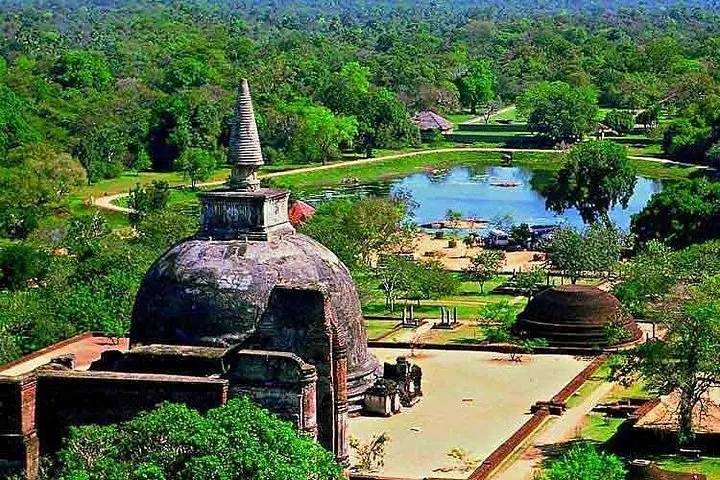
Sigiriya still pushes skyward like a ruler over its plain. Built in the 5th century CE by King Kasyapa, the rock fortress reads as ambition in stone—terraced gardens, cisterns, and the frescoes that survive, sun-faded but precise. Down the road, Polonnaruwa’s open ruins tell a calmer story: a planned medieval city of stupas and Buddha images from the 10th–13th centuries that reveal the island’s engineering and ritual life.
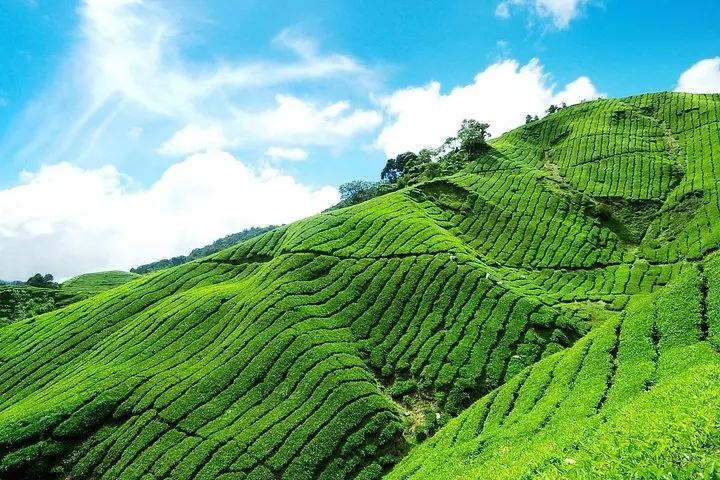
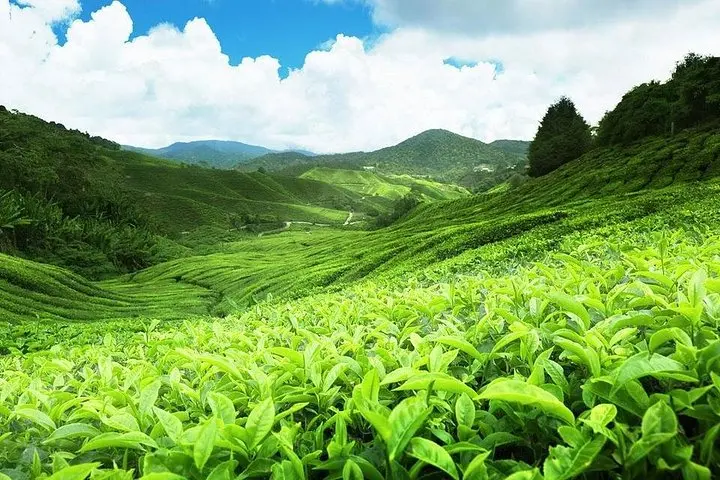
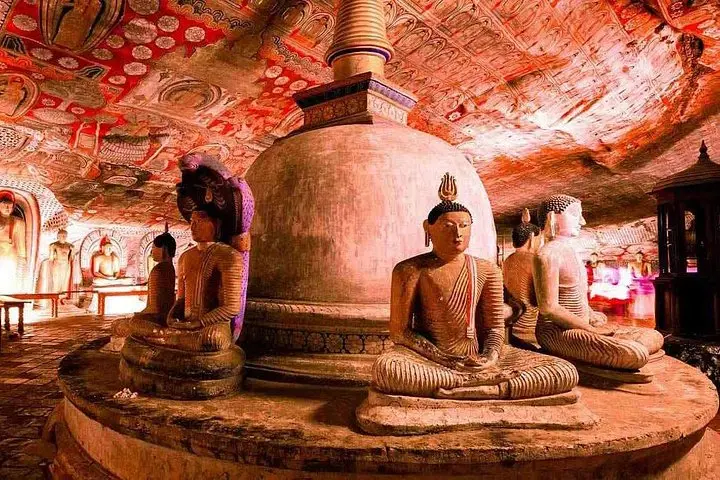
The itinerary moves from lowland jungle to the cool highlands of Nuwara Eliya—‘Little England’—where tea plantations contour the hills in neat, green waves. Dambulla’s cave temples, with paintings dating to the 1st century BCE, press an older spiritual layer into the route; Kandy’s Temple of the Tooth anchors living Buddhism and Kandyan court culture at the tour’s heart.
This is a circuit of contrast: dry zone villages and tank irrigation around Sigiriya, the wet, volcanic soils of the central highlands that made Sri Lanka a tea powerhouse, and pockets of wildlife that still slip through the landscape—elephants and macaques among them. Along the way local guides translate more than words: they translate context—why a garden was built here, how a temple survived colonial pressure, where villagers still cook over wood fire.
Practical guidance: plan for early starts and long drives—Colombo to Sigiriya is roughly a 3.5–4 hour transfer. Bring sturdy shoes for rock steps (Sigiriya is about 200 meters high and involves steep iron staircases), light layers for the highlands (Nuwara Eliya can drop to ~16°C at night), and conservative clothing for temple visits—shoulders and knees covered. Carry cash in Sri Lankan rupees for small purchases and tipping; ATMs are common in towns but sparse in village stops. Hydration matters—Sri Lanka’s tropical sun moves fast; a 1–2L water bottle and sunscreen will make visiting ruins and plantations enjoyable rather than exhausting.
This private tour balances history, culture and wildlife without the pressure of a group timetable—ideal for a first-time visit to the island. Book early in high season to secure the best pickup times from Colombo’s Bandaranaike International Airport, and expect each day to blend walking, short safaris, and intimate cultural exchanges that leave the maps more readable and the place more immediate.
Yes—it's a private tour with flexible pacing, but younger children should be able to manage car transfers and some walking; infants must sit on laps per operator policy.
Entrance fees are typically not included; confirm at booking and carry local currency for site tickets and optional activities.
Yes—both Dambulla and the Temple of the Tooth require modest dress; carry a scarf or sarong to cover shoulders and knees.
Expect about 3.5–4 hours by private vehicle depending on traffic; the operator offers airport pickup and hotel transfers across Sri Lanka.
You’ll have guided jeep or safari options where elephants and other wildlife can be spotted, but sightings aren’t guaranteed—wild animals roam freely and seasonally.
Yes—travel insurance is recommended to cover medical issues, cancellations or delays; some activities involve uneven terrain and long drives.
KINGFISHER TOURS SRI LANKA operates guided outdoor trips and adventures with an emphasis on safety, stewardship, and memorable experiences.
You step off the air-conditioned car and the heat of Colombo unfurls behind you like a turned page. Ahead the road narrows, palms lean in, and the island’s interior throws up its first real landmark: the bulk of Sigiriya, a raw, vertical crown rising from green fields. For six days this private heritage loop stitches together the island’s political capitals, cave temples, tea estates and waterfalls—each stop a different register of Sri Lanka’s long, layered history.
You step off the air-conditioned car and the heat of Colombo unfurls behind you like a turned page. Ahead the road narrows, palms lean in, and the island’s interior throws up its first real landmark: the bulk of Sigiriya, a raw, vertical crown rising from green fields. For six days this private heritage loop stitches together the island’s political capitals, cave temples, tea estates and waterfalls—each stop a different register of Sri Lanka’s long, layered history.
Sigiriya still pushes skyward like a ruler over its plain. Built in the 5th century CE by King Kasyapa, the rock fortress reads as ambition in stone—terraced gardens, cisterns, and the frescoes that survive, sun-faded but precise. Down the road, Polonnaruwa’s open ruins tell a calmer story: a planned medieval city of stupas and Buddha images from the 10th–13th centuries that reveal the island’s engineering and ritual life.
The itinerary moves from lowland jungle to the cool highlands of Nuwara Eliya—‘Little England’—where tea plantations contour the hills in neat, green waves. Dambulla’s cave temples, with paintings dating to the 1st century BCE, press an older spiritual layer into the route; Kandy’s Temple of the Tooth anchors living Buddhism and Kandyan court culture at the tour’s heart.
This is a circuit of contrast: dry zone villages and tank irrigation around Sigiriya, the wet, volcanic soils of the central highlands that made Sri Lanka a tea powerhouse, and pockets of wildlife that still slip through the landscape—elephants and macaques among them. Along the way local guides translate more than words: they translate context—why a garden was built here, how a temple survived colonial pressure, where villagers still cook over wood fire.
Practical guidance: plan for early starts and long drives—Colombo to Sigiriya is roughly a 3.5–4 hour transfer. Bring sturdy shoes for rock steps (Sigiriya is about 200 meters high and involves steep iron staircases), light layers for the highlands (Nuwara Eliya can drop to ~16°C at night), and conservative clothing for temple visits—shoulders and knees covered. Carry cash in Sri Lankan rupees for small purchases and tipping; ATMs are common in towns but sparse in village stops. Hydration matters—Sri Lanka’s tropical sun moves fast; a 1–2L water bottle and sunscreen will make visiting ruins and plantations enjoyable rather than exhausting.
This private tour balances history, culture and wildlife without the pressure of a group timetable—ideal for a first-time visit to the island. Book early in high season to secure the best pickup times from Colombo’s Bandaranaike International Airport, and expect each day to blend walking, short safaris, and intimate cultural exchanges that leave the maps more readable and the place more immediate.