THE ADVENTURE COLLECTIVE® · Independent discovery and booking for outdoor travel

Drive from Tangier’s port through Chefchaouen’s blue alleys, explore Fes’s labyrinthine medina, and cross the High Atlas to sleep under Sahara stars at Erg Chebbi. This six‑day private tour mixes cultural cities, dramatic gorges and sand-dune nights with manageable drives and riad comfort.
Drive from Tangier’s port through Chefchaouen’s blue alleys, explore Fes’s labyrinthine medina, and cross the High Atlas to sleep under Sahara stars at Erg Chebbi. This six‑day private tour mixes cultural cities, dramatic gorges and sand-dune nights with manageable drives and riad comfort.
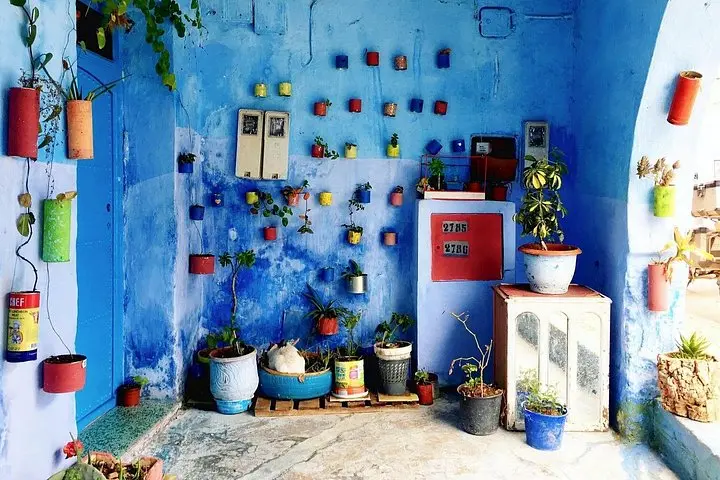
A pale morning light slides over blue-washed alleys in Chefchaouen, then the road eats up olive groves and cedar forest as the Atlas range rises like a wall ahead. By Day 4 the landscape changes again: the Ziz Valley opens into a ribbon of palms and the sand sea of Erg Chebbi towers in soft orange waves—this is a six-day corridor through northern Morocco’s contrasts.
Verified experiences and guided adventures in the surrounding area.
Operated by Morocco Tours 4x4 - Day Tours · Merzouga, Errachidia Province
A pale morning light slides over blue-washed alleys in Chefchaouen, then the road eats up olive groves and cedar forest as the Atlas range rises like a wall ahead. By Day 4 the landscape changes again: the Ziz Valley opens into a ribbon of palms and the sand sea of Erg Chebbi towers in soft orange waves—this is a six-day corridor through northern Morocco’s contrasts.
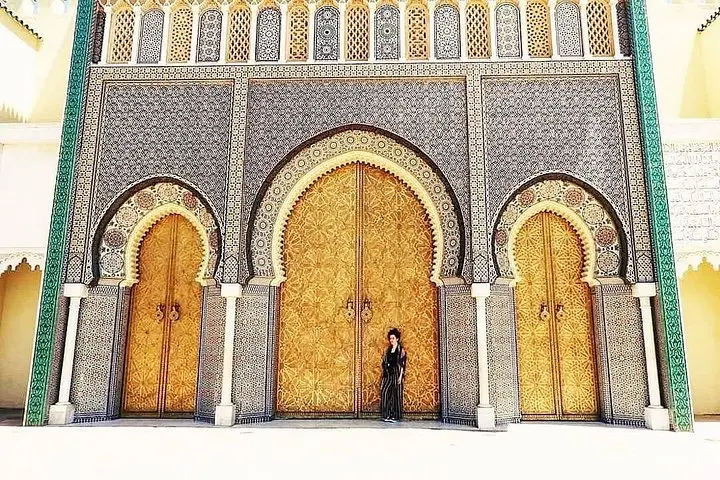
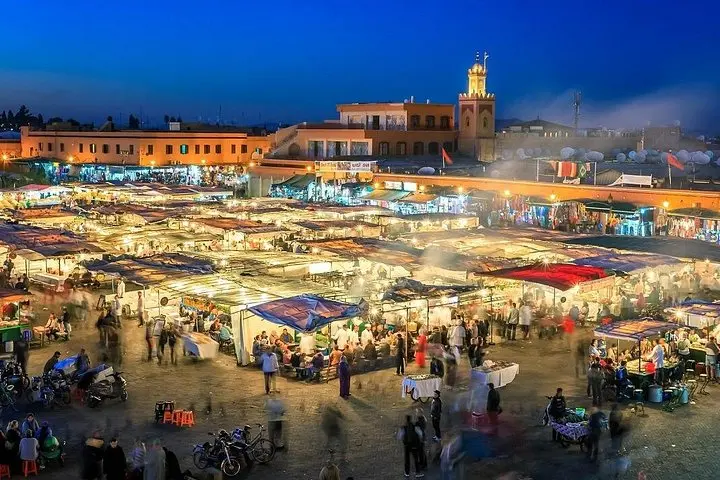
The route traces ancient trade arteries and modern culture: Fes’s medina preserves crafts and the world’s oldest university, Todra and Dades reveal fluted canyon walls created by millennia of river incision, and Ait Ben Haddou stands as a rammed-earth Kasbah on caravan routes—UNESCO-listed and frequently on film. Geologically, the trip moves from Rif and Middle Atlas limestone into High Atlas schist and finally wind-sculpted Sahara dunes that can reach 100–150 m in height.
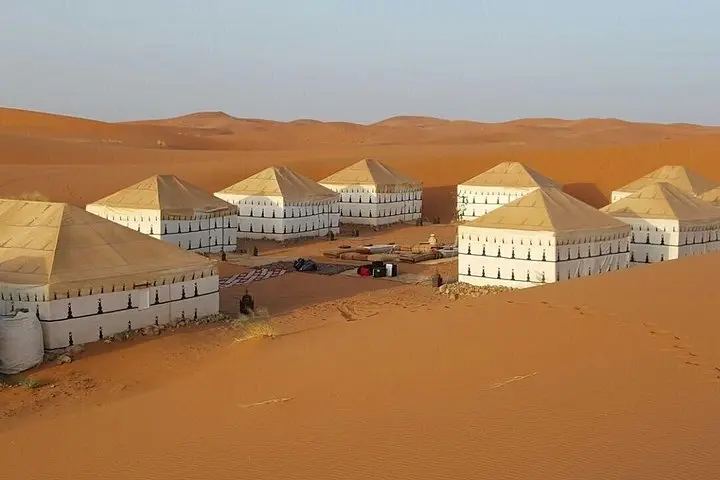
Culturally the tour threads Amazigh (Berber) villages, riad hospitality, and desert camp traditions—expect local music around a fire and simple, hearty meals. Practicalities matter: this is a private, air‑conditioned transfer tour with multiple multi‑hour drives (several legs of 3–6 hours). Tizi n’Tichka climb tops at about 2,260 m; prepare for rapid temperature swings. Camel rides to the desert camp are typically 1–2 hours each way; the camp provides a mattress tent, basic washrooms, and hot showers at some sites.
Packing: layers, sun protection, and good walking shoes. Time your travel for spring or fall to avoid extreme desert heat; mornings and nights in the Sahara can be very cold. Hydrate on long drives, carry cash for small village purchases, and leave fossils and cultural artifacts untouched to support sustainable tourism.
Several legs range from about 2 to 6 hours; longest stretches occur on Day 4 crossing toward Merzouga and Day 6 over Tizi n’Tichka to Marrakech.
Desert camps typically offer private tents with mattresses, shared or individual washrooms and hot water options at many camps; expect communal dinners and a campfire with music.
No technical skills required—camel rides are slow and led by experienced guides; you’ll mount from a kneeling position and ride 1–2 hours to the camp.
The itinerary lists breakfasts and some dinners included (noted HB); expect two desert meals included at the camp and most riad breakfasts provided.
Morocco Tours 4x4 - Day Tours operates guided outdoor trips and adventures with an emphasis on safety, stewardship, and memorable experiences.
A pale morning light slides over blue-washed alleys in Chefchaouen, then the road eats up olive groves and cedar forest as the Atlas range rises like a wall ahead. By Day 4 the landscape changes again: the Ziz Valley opens into a ribbon of palms and the sand sea of Erg Chebbi towers in soft orange waves—this is a six-day corridor through northern Morocco’s contrasts.
A pale morning light slides over blue-washed alleys in Chefchaouen, then the road eats up olive groves and cedar forest as the Atlas range rises like a wall ahead. By Day 4 the landscape changes again: the Ziz Valley opens into a ribbon of palms and the sand sea of Erg Chebbi towers in soft orange waves—this is a six-day corridor through northern Morocco’s contrasts.
The route traces ancient trade arteries and modern culture: Fes’s medina preserves crafts and the world’s oldest university, Todra and Dades reveal fluted canyon walls created by millennia of river incision, and Ait Ben Haddou stands as a rammed-earth Kasbah on caravan routes—UNESCO-listed and frequently on film. Geologically, the trip moves from Rif and Middle Atlas limestone into High Atlas schist and finally wind-sculpted Sahara dunes that can reach 100–150 m in height.
Culturally the tour threads Amazigh (Berber) villages, riad hospitality, and desert camp traditions—expect local music around a fire and simple, hearty meals. Practicalities matter: this is a private, air‑conditioned transfer tour with multiple multi‑hour drives (several legs of 3–6 hours). Tizi n’Tichka climb tops at about 2,260 m; prepare for rapid temperature swings. Camel rides to the desert camp are typically 1–2 hours each way; the camp provides a mattress tent, basic washrooms, and hot showers at some sites.
Packing: layers, sun protection, and good walking shoes. Time your travel for spring or fall to avoid extreme desert heat; mornings and nights in the Sahara can be very cold. Hydrate on long drives, carry cash for small village purchases, and leave fossils and cultural artifacts untouched to support sustainable tourism.