THE ADVENTURE COLLECTIVE® · Independent discovery and booking for outdoor travel

Explore six days of remote footpaths, pink granite formations and Amazigh hospitality in Morocco’s Anti-Atlas. This trek balances manageable daily hikes with deep cultural immersion and off-the-beaten-path scenery.
Explore six days of remote footpaths, pink granite formations and Amazigh hospitality in Morocco’s Anti-Atlas. This trek balances manageable daily hikes with deep cultural immersion and off-the-beaten-path scenery.
You step out of the minibus and the air tastes of dust, citrus and cooking smoke. Pink granite boulders rise like oversized sculptures, sun-warmed and sharp against a bowl of sky; a mule clip-clops away, indifferent to your arrival. Over six days the mountains will test your legs and reward your patience with narrow passes, palm-fringed valleys and terraces where goats graze above carved village rooftops.
Verified experiences and guided adventures in the surrounding area.
Operated by Journey Tours in Morocco · Tafraout, Tiznit Province
You step out of the minibus and the air tastes of dust, citrus and cooking smoke. Pink granite boulders rise like oversized sculptures, sun-warmed and sharp against a bowl of sky; a mule clip-clops away, indifferent to your arrival. Over six days the mountains will test your legs and reward your patience with narrow passes, palm-fringed valleys and terraces where goats graze above carved village rooftops.
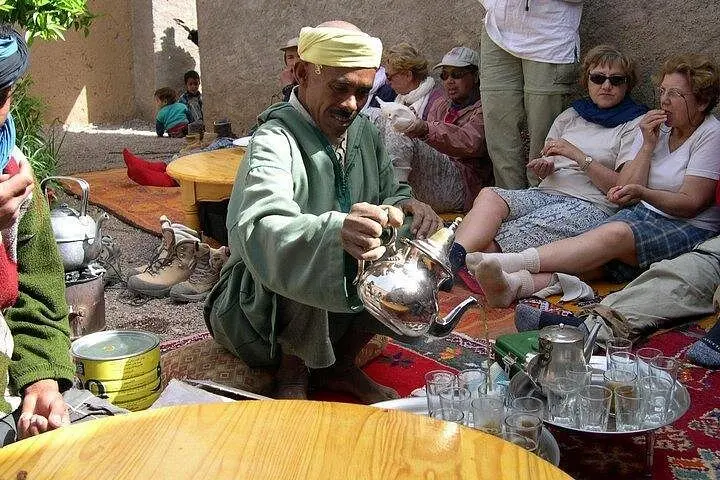
The Anti-Atlas are older and lower than the High Atlas, their landscape shaped by ancient uplift and relentless erosion that left smooth domes and dramatic clefts. Amazigh (Berber) communities have inhabited these trails for centuries—footpaths here are living infrastructure, lined with stone markers and date palms and threaded through cultural practices you'll observe in conversation and shared meals.
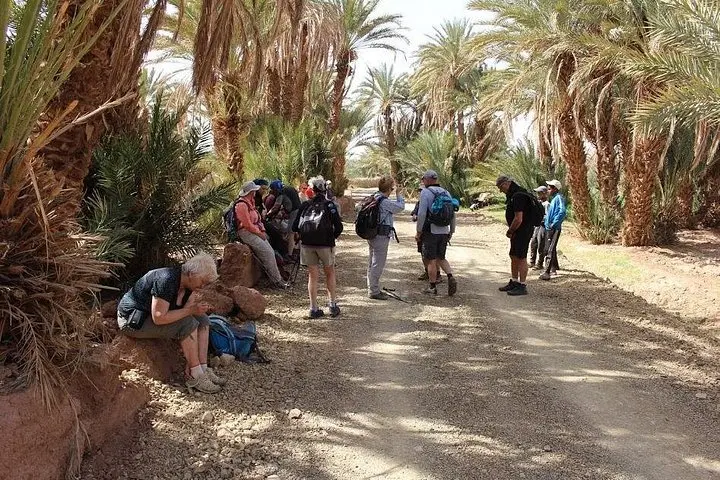
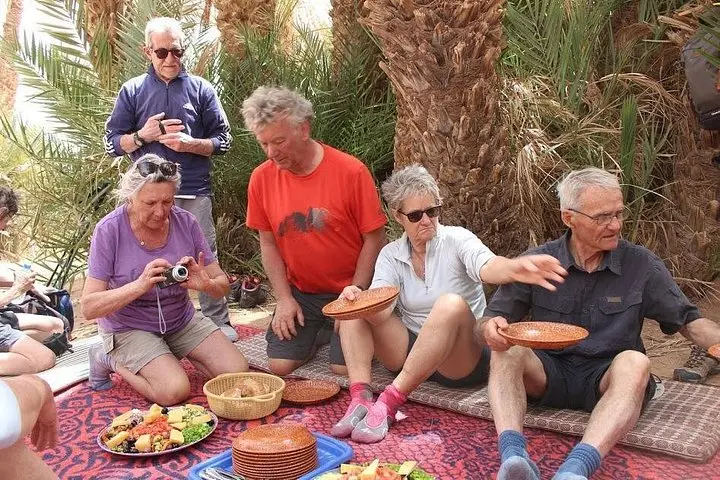
Expect daily hikes of varied grade: rock-slab sections, loose scree and steady ascents between villages. Guides lead the route and mules carry baggage, which keeps pack weight reasonable but doesn’t remove the need for good footwear and steady pacing. Meals are homemade tagines, flatbread and stewed vegetables sourced locally; water refills are available at village springs but treat or filter if unsure.
Timing matters—spring and autumn offer comfortable temperatures; summer can be hot and winter nights drop cold. Bring layered clothing, sun protection and a small first-aid kit. Respect local customs—ask before photographing people—and leave no trace on narrow terraces and fragile soils. This trek blends geology, culture and steady effort into a route that rewards curiosity and a willingness to move at local pace.
Expect 4–6 hours of walking per day on mixed terrain with moderate elevation changes; the pace is steady and guide-supported.
Accommodation is in local guesthouses or simple village lodgings; some nights may be basic but include home-cooked meals.
No—mules or camels transport main bags and equipment; you should carry a daypack with water, layers and essentials.
Yes for those in decent health; guides manage route logistics, but participants should be comfortable on uneven trails and heat exposure.
Journey Tours in Morocco operates guided outdoor trips and adventures with an emphasis on safety, stewardship, and memorable experiences.
You step out of the minibus and the air tastes of dust, citrus and cooking smoke. Pink granite boulders rise like oversized sculptures, sun-warmed and sharp against a bowl of sky; a mule clip-clops away, indifferent to your arrival. Over six days the mountains will test your legs and reward your patience with narrow passes, palm-fringed valleys and terraces where goats graze above carved village rooftops.
You step out of the minibus and the air tastes of dust, citrus and cooking smoke. Pink granite boulders rise like oversized sculptures, sun-warmed and sharp against a bowl of sky; a mule clip-clops away, indifferent to your arrival. Over six days the mountains will test your legs and reward your patience with narrow passes, palm-fringed valleys and terraces where goats graze above carved village rooftops.
The Anti-Atlas are older and lower than the High Atlas, their landscape shaped by ancient uplift and relentless erosion that left smooth domes and dramatic clefts. Amazigh (Berber) communities have inhabited these trails for centuries—footpaths here are living infrastructure, lined with stone markers and date palms and threaded through cultural practices you'll observe in conversation and shared meals.
Expect daily hikes of varied grade: rock-slab sections, loose scree and steady ascents between villages. Guides lead the route and mules carry baggage, which keeps pack weight reasonable but doesn’t remove the need for good footwear and steady pacing. Meals are homemade tagines, flatbread and stewed vegetables sourced locally; water refills are available at village springs but treat or filter if unsure.
Timing matters—spring and autumn offer comfortable temperatures; summer can be hot and winter nights drop cold. Bring layered clothing, sun protection and a small first-aid kit. Respect local customs—ask before photographing people—and leave no trace on narrow terraces and fragile soils. This trek blends geology, culture and steady effort into a route that rewards curiosity and a willingness to move at local pace.