THE ADVENTURE COLLECTIVE® · Independent discovery and booking for outdoor travel

Traverse six days of Upper Egypt from Luxor to Abu Simbel, blending monumental temples with intimate Nubian culture. This trip mixes guided archaeology, river scenery and village visits with practical logistics for travelers.
Traverse six days of Upper Egypt from Luxor to Abu Simbel, blending monumental temples with intimate Nubian culture. This trip mixes guided archaeology, river scenery and village visits with practical logistics for travelers.
You step onto the Nile’s heat-warmed air at dawn in Luxor, the river pushing your small convoy south past mud-brick villages and date palms. Columns of Karnak rise like a disciplined forest; the Valley of the Kings sits low and dry against a band of limestone where kings were buried to meet the sun.
Verified experiences and guided adventures in the surrounding area.
Operated by Eyes of Egypt · Luxor, Luxor Governorate
You step onto the Nile’s heat-warmed air at dawn in Luxor, the river pushing your small convoy south past mud-brick villages and date palms. Columns of Karnak rise like a disciplined forest; the Valley of the Kings sits low and dry against a band of limestone where kings were buried to meet the sun.
This six-day loop threads Egypt’s layered history: Pharaonic colossi and Ramesside reliefs at Abu Simbel—carved into the sandstone cliff—Ptolemaic precision at Edfu, the twin axes of Kom Ombo, and the floating stones of Philae relocated to Agilkia after the High Dam reshaped the Nile. Geology here matters; felspathic sandstone and Nile alluvium shaped how temples were carved and where towns sit. Cultural notes are immediate: Nubian houses painted in bright geometric patterns, souk sellers in Luxor, and boatmen who know the river’s moods.
Practical guidance: expect long drives (Aswan–Abu Simbel ~300 km one way, Luxor–Edfu ~100 km) and many sites with uneven stone floors and stairways. Start early to avoid midday heat, carry water, and observe conservative dress at religious sites. Transport and private guides are usually provided; choose packages that include entry tickets if you want a smoother flow through busy temples. Plan time for slow moments—an evening café in Luxor or a quiet walk through Aswan’s Botanical Island—so the trip balances monuments with the human scale of the Nile.
It depends on the package—choose the full tour option that explicitly lists entry tickets for a single upfront payment; otherwise pay on arrival.
Many transport options are wheelchair accessible and some sites can accommodate limited accessibility, but several tombs and temple areas have steps and uneven surfaces—confirm specifics with the operator before booking.
October–April offers milder temperatures and more comfortable touring conditions; summer brings high heat and midday closures are common.
The road transfer is about 3–4 hours each way (~300 km); options include private car or organized day-trip transport—plan for an early start.
Eyes of Egypt operates guided outdoor trips and adventures with an emphasis on safety, stewardship, and memorable experiences.
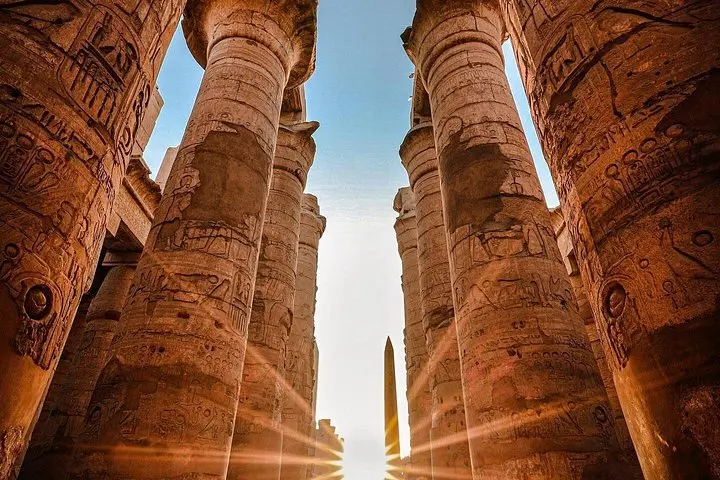
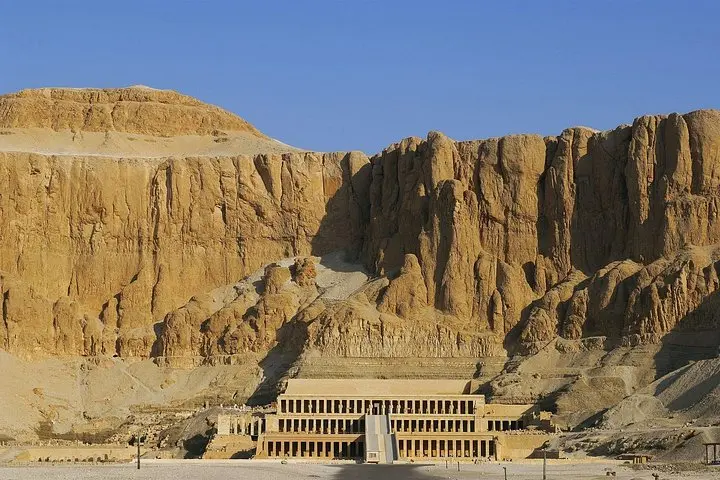
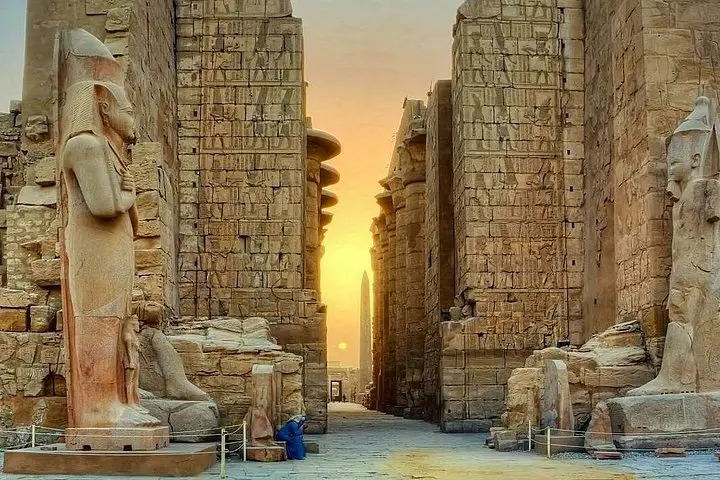
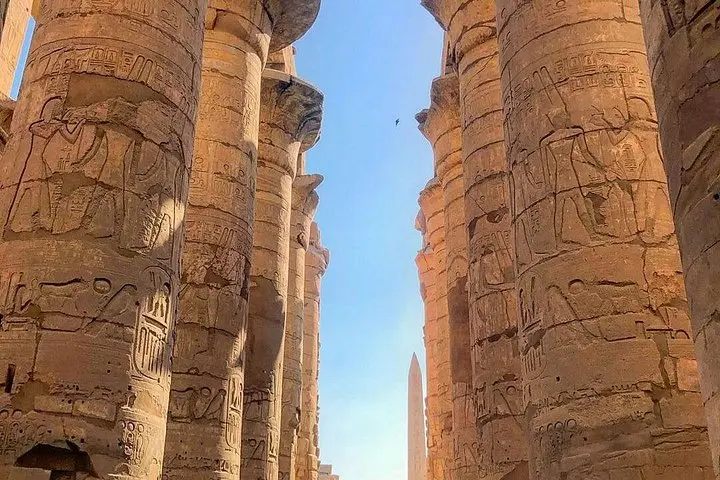
You step onto the Nile’s heat-warmed air at dawn in Luxor, the river pushing your small convoy south past mud-brick villages and date palms. Columns of Karnak rise like a disciplined forest; the Valley of the Kings sits low and dry against a band of limestone where kings were buried to meet the sun.
You step onto the Nile’s heat-warmed air at dawn in Luxor, the river pushing your small convoy south past mud-brick villages and date palms. Columns of Karnak rise like a disciplined forest; the Valley of the Kings sits low and dry against a band of limestone where kings were buried to meet the sun.
This six-day loop threads Egypt’s layered history: Pharaonic colossi and Ramesside reliefs at Abu Simbel—carved into the sandstone cliff—Ptolemaic precision at Edfu, the twin axes of Kom Ombo, and the floating stones of Philae relocated to Agilkia after the High Dam reshaped the Nile. Geology here matters; felspathic sandstone and Nile alluvium shaped how temples were carved and where towns sit. Cultural notes are immediate: Nubian houses painted in bright geometric patterns, souk sellers in Luxor, and boatmen who know the river’s moods.
Practical guidance: expect long drives (Aswan–Abu Simbel ~300 km one way, Luxor–Edfu ~100 km) and many sites with uneven stone floors and stairways. Start early to avoid midday heat, carry water, and observe conservative dress at religious sites. Transport and private guides are usually provided; choose packages that include entry tickets if you want a smoother flow through busy temples. Plan time for slow moments—an evening café in Luxor or a quiet walk through Aswan’s Botanical Island—so the trip balances monuments with the human scale of the Nile.