THE ADVENTURE COLLECTIVE® · Independent discovery and booking for outdoor travel

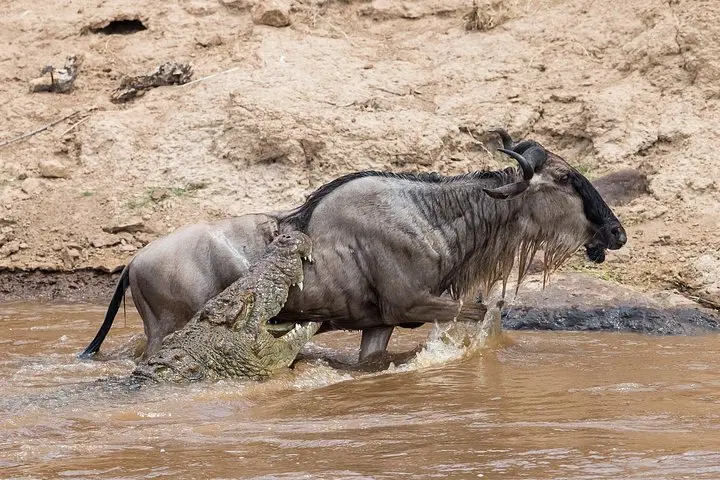
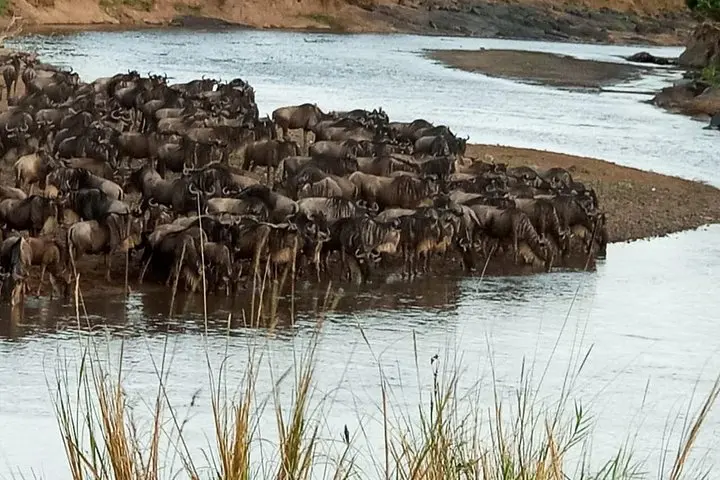
Witness the great wildebeest migration across northern Serengeti and peer into the lush basin of Ngorongoro Crater on this six-day safari. Long game-drive days, river crossings and close predator-prey encounters define the journey.
Witness the great wildebeest migration across northern Serengeti and peer into the lush basin of Ngorongoro Crater on this six-day safari. Long game-drive days, river crossings and close predator-prey encounters define the journey.
Dust lifts in a long, low ribbon as your 4x4 eases onto a black-soil track. Ahead, a living river of wildebeest and zebra moves with slow, relentless purpose; vultures circle like punctuation. This six-day circuit threads northern Serengeti plains and the rim of Ngorongoro Crater, where geology and life collide — volcanic cone walls holding a caldera ecosystem rich with predators and grazers.
Verified experiences and guided adventures in the surrounding area.
Operated by Rupia Adventure · Arusha, Arusha Region
Dust lifts in a long, low ribbon as your 4x4 eases onto a black-soil track. Ahead, a living river of wildebeest and zebra moves with slow, relentless purpose; vultures circle like punctuation. This six-day circuit threads northern Serengeti plains and the rim of Ngorongoro Crater, where geology and life collide — volcanic cone walls holding a caldera ecosystem rich with predators and grazers.
The Serengeti’s story is written in migration: seasonal rains, river crossings and a rhythm that predates colonial mapping. The Mara River becomes a dramatic throat of the journey in July–October when herds push north toward Kenya’s Masai Mara, and the crater’s basin has been a Maasai grazing and ritual landscape for generations.
Expect long game-drive days punctuated by close-up wildlife sightings from open-sided vehicles, short walks at conservancy edges, and simple camp or lodge meals depending on your booking class. Terrain shifts from flat grassy plains to scrub, riverine forests and the steep rim of Ngorongoro — volcanic rock that funnels animals into a naturally enclosed sanctuary.
Practical edge: travel light but bring layers, a quality pair of binoculars and a camera with a medium telephoto. Plan for early starts; predators and crossings move at dawn and dusk. Respect local guides and keep distance from wildlife — the herds move for survival, not spectacle. Health-wise, moderate vaccine and malaria precautions are standard; vehicle time is long, so bring water, motion-gear and patience. This is a trip about timing and presence: arrive ready to watch the migration’s choreography rather than chase every sighting.
River crossings most commonly occur July–October when the herds move north toward the Mara River, though timing can vary year to year with rains.
No technical skills are required; the tour is suitable for most travelers though you should be comfortable with long vehicle days and early starts.
This itinerary can be booked as budget, mid-range or luxury; the route and wildlife viewing remain similar but comfort and services will vary by choice.
Routine travel vaccinations and malaria prophylaxis are recommended; consult a travel clinic for up-to-date medical advice before travel.
Rupia Adventure operates guided outdoor trips and adventures with an emphasis on safety, stewardship, and memorable experiences.
Dust lifts in a long, low ribbon as your 4x4 eases onto a black-soil track. Ahead, a living river of wildebeest and zebra moves with slow, relentless purpose; vultures circle like punctuation. This six-day circuit threads northern Serengeti plains and the rim of Ngorongoro Crater, where geology and life collide — volcanic cone walls holding a caldera ecosystem rich with predators and grazers.
Dust lifts in a long, low ribbon as your 4x4 eases onto a black-soil track. Ahead, a living river of wildebeest and zebra moves with slow, relentless purpose; vultures circle like punctuation. This six-day circuit threads northern Serengeti plains and the rim of Ngorongoro Crater, where geology and life collide — volcanic cone walls holding a caldera ecosystem rich with predators and grazers.
The Serengeti’s story is written in migration: seasonal rains, river crossings and a rhythm that predates colonial mapping. The Mara River becomes a dramatic throat of the journey in July–October when herds push north toward Kenya’s Masai Mara, and the crater’s basin has been a Maasai grazing and ritual landscape for generations.
Expect long game-drive days punctuated by close-up wildlife sightings from open-sided vehicles, short walks at conservancy edges, and simple camp or lodge meals depending on your booking class. Terrain shifts from flat grassy plains to scrub, riverine forests and the steep rim of Ngorongoro — volcanic rock that funnels animals into a naturally enclosed sanctuary.
Practical edge: travel light but bring layers, a quality pair of binoculars and a camera with a medium telephoto. Plan for early starts; predators and crossings move at dawn and dusk. Respect local guides and keep distance from wildlife — the herds move for survival, not spectacle. Health-wise, moderate vaccine and malaria precautions are standard; vehicle time is long, so bring water, motion-gear and patience. This is a trip about timing and presence: arrive ready to watch the migration’s choreography rather than chase every sighting.