THE ADVENTURE COLLECTIVE® · Independent discovery and booking for outdoor travel

Spend six hours exploring the Salish Sea from a covered vessel out of Campbell River. This longer-format whale-watching tour increases chances of seeing orcas, humpbacks, sea lions, and dolphins while offering heated cabins, expert naturalists, and included lunch.
Spend six hours exploring the Salish Sea from a covered vessel out of Campbell River. This longer-format whale-watching tour increases chances of seeing orcas, humpbacks, sea lions, and dolphins while offering heated cabins, expert naturalists, and included lunch.
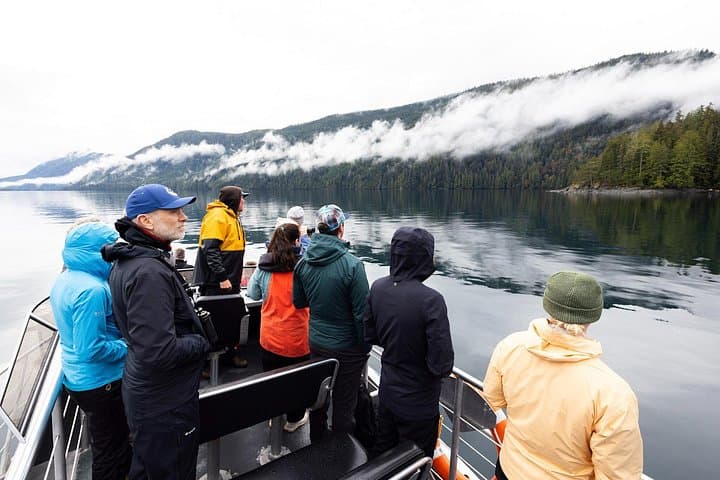
The vessel slips away from Campbell River's marina and the forested shoreline recedes into a new kind of horizon: open water punctuated by islands and evergreen ridgelines. Sea-salt air sharpens the senses; the covered cabin keeps riders warm while the open viewing decks bring the Pacific into reach. Guides scan the water, hydrophone ready, and the ocean answers with blows and distant tail slaps.
Verified experiences and guided adventures in the surrounding area.
Operated by Campbell River Whale Watching & Adventure Tours · Campbell River, British Columbia
The vessel slips away from Campbell River's marina and the forested shoreline recedes into a new kind of horizon: open water punctuated by islands and evergreen ridgelines. Sea-salt air sharpens the senses; the covered cabin keeps riders warm while the open viewing decks bring the Pacific into reach. Guides scan the water, hydrophone ready, and the ocean answers with blows and distant tail slaps.
This stretch of the Salish Sea sits on traditional territories of Kwakwakaʼwakw peoples and has long been a corridor for marine life. The coastline's geology—ancient granites sheared into islands and channels by glacial ice—creates deep feeding grounds where herring and salmon aggregate, drawing whales and sea lions in seasonal cycles. Local crews combine modern cetacean science with decades of coastal seamanship to find pods and explain behavior.
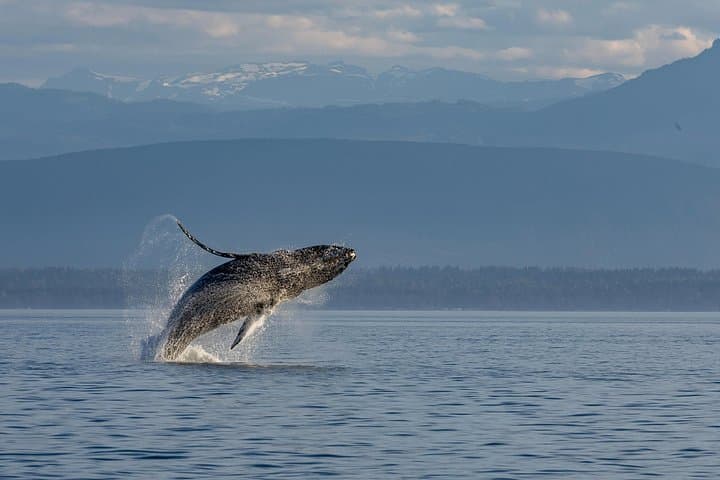
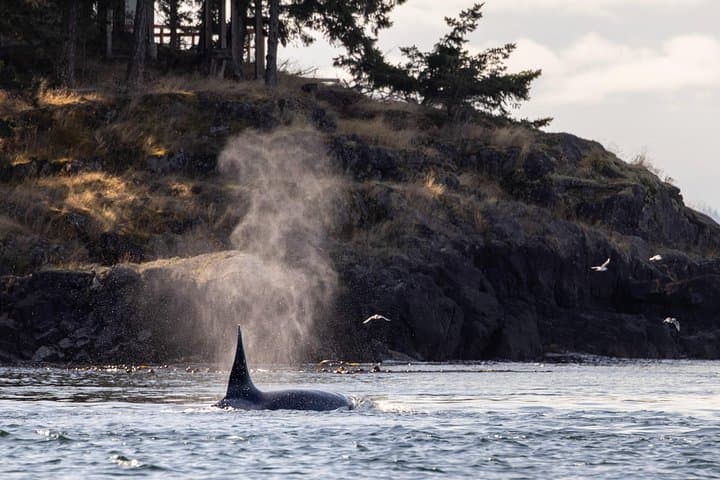
Expect schooling dolphins, curious sea lions, breaching humpbacks, and the distinctive dorsal fins of resident or transient orcas. The longer, six-hour format gives guides time to move beyond busy channels into quieter inlets and around Quadra Island's Cape Mudge for lighthouse views if conditions allow.
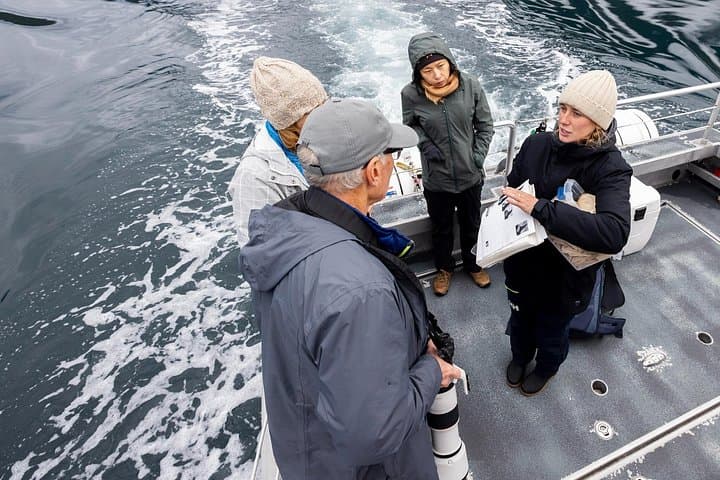
Practical guidance: dress in warm layers, bring a waterproof outer layer and stable shoes for wet decks. Motion sensitivity is common—take precautions before boarding. Binoculars and a camera with a zoom lens are useful; the crew provides float suits and hot beverages. The tour includes snacks and a lunch, and operates subject to marine weather; cancelations are sometimes necessary for safety. Plan for a full half-day, arrive early for boarding, and leave room in your itinerary for variable marine conditions.
No. The tour maximizes time on the water to improve odds, but wildlife is wild and sightings cannot be guaranteed.
Yes; infants must sit on an adult’s lap. The vessel is family-friendly but parents should plan for cold and motion.
Trips may be canceled or rescheduled for safety due to rough seas or storms; operators typically offer full refunds if canceled at least 24 hours prior.
Yes, floater suits are available for added warmth and buoyancy, though passengers should still wear appropriate layers and footwear.
Campbell River Whale Watching & Adventure Tours operates guided outdoor trips and adventures with an emphasis on safety, stewardship, and memorable experiences.
The vessel slips away from Campbell River's marina and the forested shoreline recedes into a new kind of horizon: open water punctuated by islands and evergreen ridgelines. Sea-salt air sharpens the senses; the covered cabin keeps riders warm while the open viewing decks bring the Pacific into reach. Guides scan the water, hydrophone ready, and the ocean answers with blows and distant tail slaps.
The vessel slips away from Campbell River's marina and the forested shoreline recedes into a new kind of horizon: open water punctuated by islands and evergreen ridgelines. Sea-salt air sharpens the senses; the covered cabin keeps riders warm while the open viewing decks bring the Pacific into reach. Guides scan the water, hydrophone ready, and the ocean answers with blows and distant tail slaps.
This stretch of the Salish Sea sits on traditional territories of Kwakwakaʼwakw peoples and has long been a corridor for marine life. The coastline's geology—ancient granites sheared into islands and channels by glacial ice—creates deep feeding grounds where herring and salmon aggregate, drawing whales and sea lions in seasonal cycles. Local crews combine modern cetacean science with decades of coastal seamanship to find pods and explain behavior.
Expect schooling dolphins, curious sea lions, breaching humpbacks, and the distinctive dorsal fins of resident or transient orcas. The longer, six-hour format gives guides time to move beyond busy channels into quieter inlets and around Quadra Island's Cape Mudge for lighthouse views if conditions allow.
Practical guidance: dress in warm layers, bring a waterproof outer layer and stable shoes for wet decks. Motion sensitivity is common—take precautions before boarding. Binoculars and a camera with a zoom lens are useful; the crew provides float suits and hot beverages. The tour includes snacks and a lunch, and operates subject to marine weather; cancelations are sometimes necessary for safety. Plan for a full half-day, arrive early for boarding, and leave room in your itinerary for variable marine conditions.