THE ADVENTURE COLLECTIVE® · Independent discovery and booking for outdoor travel

Traverse Bhutan’s high valleys on a week-long cultural and hiking tour that pairs short day hikes with visits to Paro, Thimphu and Punakha’s most iconic monasteries. Expect sharp mountain air, painted dzongs, and daily walks that reward panoramic Himalayan views.
Traverse Bhutan’s high valleys on a week-long cultural and hiking tour that pairs short day hikes with visits to Paro, Thimphu and Punakha’s most iconic monasteries. Expect sharp mountain air, painted dzongs, and daily walks that reward panoramic Himalayan views.
You step off the small plane at Paro and the air feels thin and sharp—Himalayan ridgelines cutting the sky, prayer flags snapping at the roadside. The next six days move between valley towns and hilltop monasteries: two-hour climbs that open into courtyards of painted chortens, and roadside farms where yaks graze like deliberate punctuation.
Verified experiences and guided adventures in the surrounding area.
Operated by Happiness Drukyul Holiday · Paro, Paro District
You step off the small plane at Paro and the air feels thin and sharp—Himalayan ridgelines cutting the sky, prayer flags snapping at the roadside. The next six days move between valley towns and hilltop monasteries: two-hour climbs that open into courtyards of painted chortens, and roadside farms where yaks graze like deliberate punctuation.
Bhutan’s history is visible in its dzongs: fortress-monasteries such as Paro Rinpung and Punakha with layered roofs and carved timber, each built as a blend of administration and devotion. Geologically, these valleys are young — steep, glacially-carved troughs with terraces clinging to alluvial fans. Culturally, Buddhism shapes daily rhythm; you’ll hear mani wheels turn and watch saffron-robed monks moving between prayer halls.
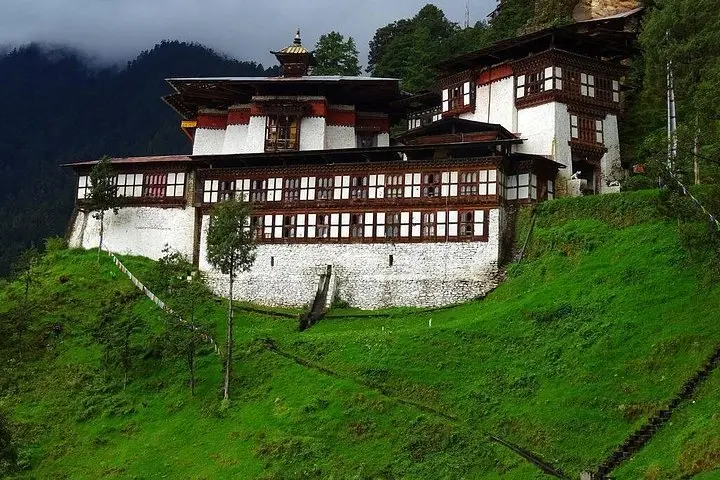
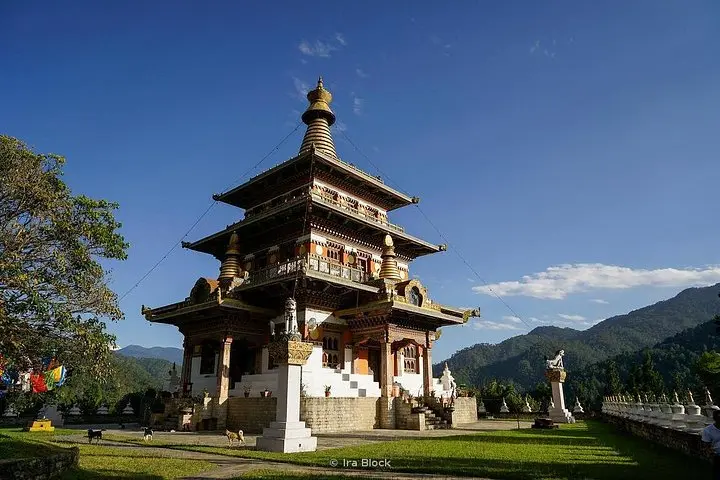
Highlights include the Cheri Monastery ridge walk above Thimphu, the forested approach and river-side path to Chumphu Temple, a panoramic ascent to Khamsum Chorten, and the iconic climb to Taktsang (Tiger’s Nest). Expect firm dirt trails, stone steps, and short steep sections; trails are well-marked but can be slippery after rain.
Practical edge: allow a day to acclimatize around 2,300–2,400 m, carry 1.5–2 L water daily, and use layered clothing for rapid temperature shifts. Permit and visa processing takes time—submit documents at least 10 days ahead. Guides handle local logistics and entrance fees, but bring small bills for donations at temples. Start hikes early for cooler air and clearer views—monsoon months can obscure the high peaks.
Yes — a Bhutan visa and entry permit are required and the operator will process them after receiving passport details; allow at least 10 days.
The hike is a steady climb to about 3,120 m with roughly 2–3 hours ascent for fit walkers; it’s steep in sections but not technical—rest breaks and a steady pace help.
Yes — this private tour includes three meals per day, internal land transport, a licensed Bhutanese guide, and monument entrance fees as listed.
Carrying some local currency (Ngultrum) or USD for small purchases, tips and donations is recommended; cards are not widely accepted in rural areas.
Happiness Drukyul Holiday operates guided outdoor trips and adventures with an emphasis on safety, stewardship, and memorable experiences.
You step off the small plane at Paro and the air feels thin and sharp—Himalayan ridgelines cutting the sky, prayer flags snapping at the roadside. The next six days move between valley towns and hilltop monasteries: two-hour climbs that open into courtyards of painted chortens, and roadside farms where yaks graze like deliberate punctuation.
You step off the small plane at Paro and the air feels thin and sharp—Himalayan ridgelines cutting the sky, prayer flags snapping at the roadside. The next six days move between valley towns and hilltop monasteries: two-hour climbs that open into courtyards of painted chortens, and roadside farms where yaks graze like deliberate punctuation.
Bhutan’s history is visible in its dzongs: fortress-monasteries such as Paro Rinpung and Punakha with layered roofs and carved timber, each built as a blend of administration and devotion. Geologically, these valleys are young — steep, glacially-carved troughs with terraces clinging to alluvial fans. Culturally, Buddhism shapes daily rhythm; you’ll hear mani wheels turn and watch saffron-robed monks moving between prayer halls.
Highlights include the Cheri Monastery ridge walk above Thimphu, the forested approach and river-side path to Chumphu Temple, a panoramic ascent to Khamsum Chorten, and the iconic climb to Taktsang (Tiger’s Nest). Expect firm dirt trails, stone steps, and short steep sections; trails are well-marked but can be slippery after rain.
Practical edge: allow a day to acclimatize around 2,300–2,400 m, carry 1.5–2 L water daily, and use layered clothing for rapid temperature shifts. Permit and visa processing takes time—submit documents at least 10 days ahead. Guides handle local logistics and entrance fees, but bring small bills for donations at temples. Start hikes early for cooler air and clearer views—monsoon months can obscure the high peaks.