THE ADVENTURE COLLECTIVE® · Independent discovery and booking for outdoor travel

A seven-day loop from Kathmandu to Pokhara and Chitwan that pairs UNESCO temples and hilltop sunrises with a jungle safari and Tharu cultural experiences. Expect moderate travel days, vivid mountain views, and hands-on local culture.
A seven-day loop from Kathmandu to Pokhara and Chitwan that pairs UNESCO temples and hilltop sunrises with a jungle safari and Tharu cultural experiences. Expect moderate travel days, vivid mountain views, and hands-on local culture.
Dawn breaks over a jagged horizon of ice and rock as the tour convoy climbs out of Kathmandu; mist still clings to rice terraces while prayer flags snap in the wind. Over seven days travelers move from the city’s UNESCO temples to hilltop viewpoints, across the terraced lowlands to the subtropical floodplains of Chitwan, and onto lakeside Pokhara where the Annapurna massif commands the skyline.
Verified experiences and guided adventures in the surrounding area.
Operated by Regulus Treks And Expedition pvt.ltd · Kathmandu, Bagmati Province
Dawn breaks over a jagged horizon of ice and rock as the tour convoy climbs out of Kathmandu; mist still clings to rice terraces while prayer flags snap in the wind. Over seven days travelers move from the city’s UNESCO temples to hilltop viewpoints, across the terraced lowlands to the subtropical floodplains of Chitwan, and onto lakeside Pokhara where the Annapurna massif commands the skyline.
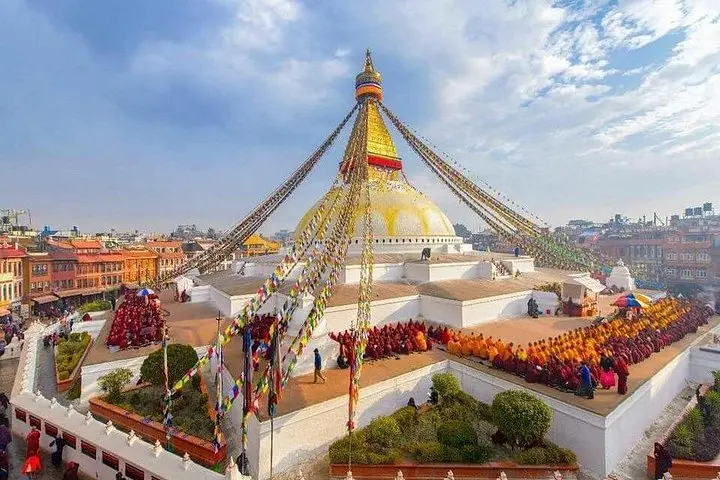
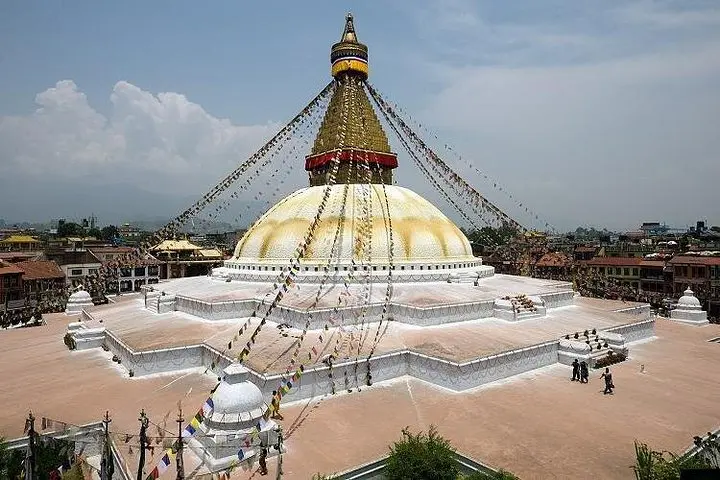
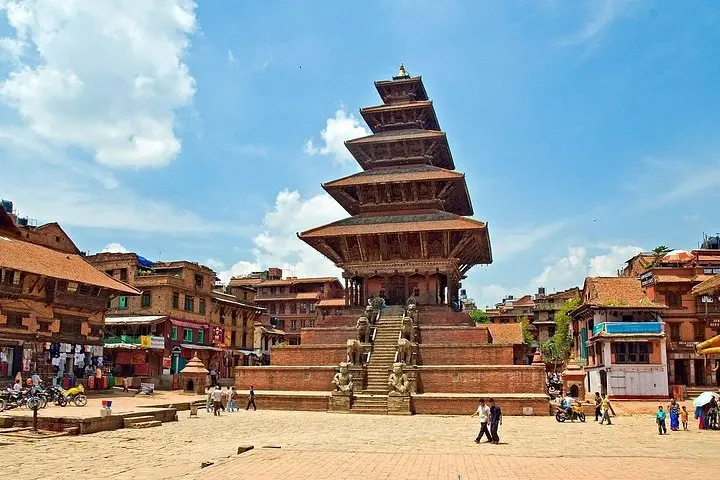
Kathmandu Valley holds centuries of Newar art, palaces, stupas and a cultural weave shaped by Hindu and Buddhist practice; Sarangkot and Nagarkot are local vantage points formed on Miocene hill ridges that offer wide-angle views of the high Himalaya. Chitwan National Park protects alluvial grasslands and riverine forest where conservation efforts reintroduced the greater one-horned rhino and support community-based Tharu culture and tourism.
Practical guidance: expect moderate travel days with a mix of short walks, vehicle transfers and a jungle safari. Elevation ranges from roughly 1,400 m at Nagarkot to 200–800 m in Chitwan and Pokhara — altitude is not extreme but mornings can be cool. Carry a daypack, water, sun protection and a light insulating layer for summit viewpoints; comfortable walking shoes are sufficient for most activities, though waterproof footwear helps during monsoon-season trails.
Timing tip: early mornings deliver best mountain clarity and wildlife sightings; midday in Pokhara suits lake activities. Respect local customs at religious sites — remove shoes, dress modestly, and ask before photographing people. With basic preparation, this loop offers a compact cross-section of Nepal’s landscapes, wildlife and cultural history.
Most nationalities require a tourist visa, obtainable on arrival at Kathmandu airport or in advance online; check current visa rules for your passport.
The trip combines sightseeing, short walks and a jungle safari—no technical hiking required, but expect stairs and uneven ground.
Elevations are moderate (under 2,000 m); altitude sickness is unlikely, though those sensitive to altitude should monitor symptoms.
Routine vaccinations are advised; consider hepatitis A and typhoid and consult a travel clinic about malaria precautions for Chitwan depending on season.
Regulus Treks And Expedition pvt.ltd operates guided outdoor trips and adventures with an emphasis on safety, stewardship, and memorable experiences.
Dawn breaks over a jagged horizon of ice and rock as the tour convoy climbs out of Kathmandu; mist still clings to rice terraces while prayer flags snap in the wind. Over seven days travelers move from the city’s UNESCO temples to hilltop viewpoints, across the terraced lowlands to the subtropical floodplains of Chitwan, and onto lakeside Pokhara where the Annapurna massif commands the skyline.
Dawn breaks over a jagged horizon of ice and rock as the tour convoy climbs out of Kathmandu; mist still clings to rice terraces while prayer flags snap in the wind. Over seven days travelers move from the city’s UNESCO temples to hilltop viewpoints, across the terraced lowlands to the subtropical floodplains of Chitwan, and onto lakeside Pokhara where the Annapurna massif commands the skyline.
Kathmandu Valley holds centuries of Newar art, palaces, stupas and a cultural weave shaped by Hindu and Buddhist practice; Sarangkot and Nagarkot are local vantage points formed on Miocene hill ridges that offer wide-angle views of the high Himalaya. Chitwan National Park protects alluvial grasslands and riverine forest where conservation efforts reintroduced the greater one-horned rhino and support community-based Tharu culture and tourism.
Practical guidance: expect moderate travel days with a mix of short walks, vehicle transfers and a jungle safari. Elevation ranges from roughly 1,400 m at Nagarkot to 200–800 m in Chitwan and Pokhara — altitude is not extreme but mornings can be cool. Carry a daypack, water, sun protection and a light insulating layer for summit viewpoints; comfortable walking shoes are sufficient for most activities, though waterproof footwear helps during monsoon-season trails.
Timing tip: early mornings deliver best mountain clarity and wildlife sightings; midday in Pokhara suits lake activities. Respect local customs at religious sites — remove shoes, dress modestly, and ask before photographing people. With basic preparation, this loop offers a compact cross-section of Nepal’s landscapes, wildlife and cultural history.