THE ADVENTURE COLLECTIVE® · Independent discovery and booking for outdoor travel

A compact 7-day route into the Annapurna Sanctuary, this ABC trek links traditional Gurung villages, high rhododendron forests and the broad amphitheater of Annapurna’s peaks. Expect long days, teahouse stays and a final approach to 4,130 m with sweeping mountain panoramas.
A compact 7-day route into the Annapurna Sanctuary, this ABC trek links traditional Gurung villages, high rhododendron forests and the broad amphitheater of Annapurna’s peaks. Expect long days, teahouse stays and a final approach to 4,130 m with sweeping mountain panoramas.
Dawn breaks over Pokhara and the road to Nayapul threads through rice terraces and hamlets, a slow warm-up before the trail tightens and the massif takes over.
Verified experiences and guided adventures in the surrounding area.
Operated by Swissa Adventure Travel & Treks · Pokhara, Gandaki Province
Dawn breaks over Pokhara and the road to Nayapul threads through rice terraces and hamlets, a slow warm-up before the trail tightens and the massif takes over.
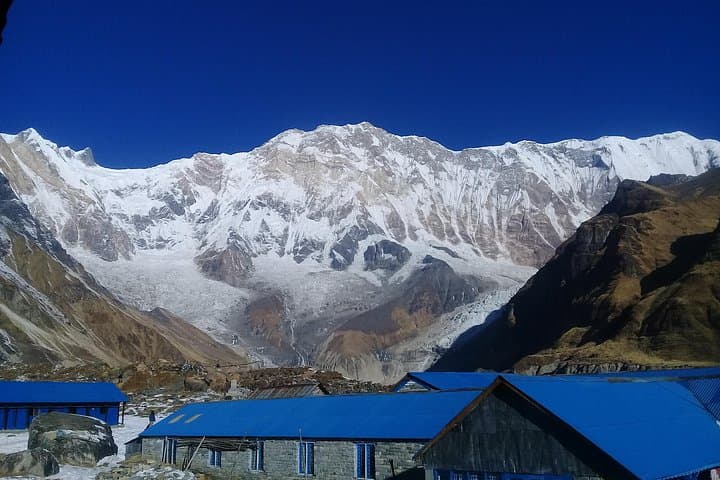
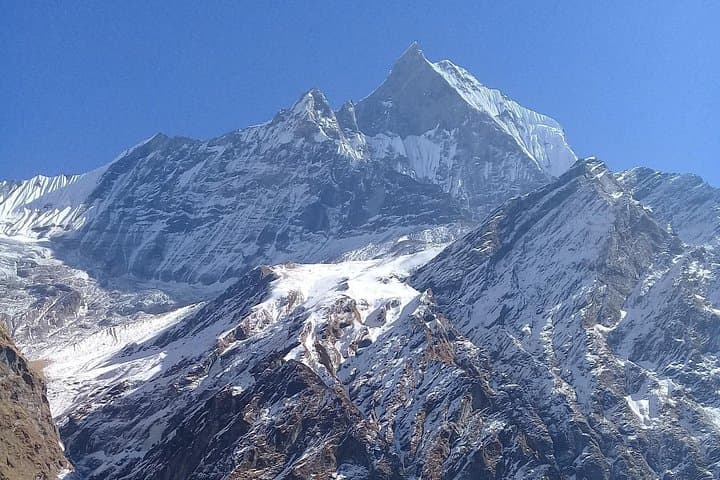
You walk into a bowl of peaks: Annapurna I, Annapurna South, Hiunchuli and the sharp fishtail of Machhapuchchhre loom, their faces daring you forward. The path moves through bamboo and rhododendron, past Gurung villages where prayer flags catch the wind and chai steams on teahouse stoves.
The Annapurna Sanctuary has a cultural history shaped by the Gurung and Magar communities and by conservation measures introduced by the Annapurna Conservation Area Project (ACAP), which helped formalize permits and responsible trekking in the 1980s. Geologically, the trail traverses moraine-carved valleys and steep glacial cirques that expose the high Himalaya’s uplifted metamorphic bedrock.
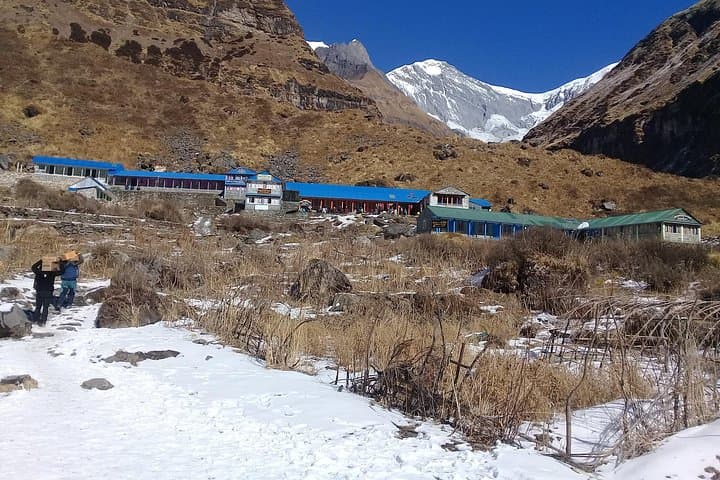
Expect a mix of pine- and rhododendron-dominated forest to alpine scrub as you gain altitude; streams will command your attention, the current pushing you toward the higher passes. Local teahouses serve dal bhat and sharing stories—human warmth that balances the thin air.
Practical guidance: the itinerary commonly runs Ghandruk → Chhomrong → Bamboo → Deurali → MBC → ABC → Jhinu Danda. Days are long (4–6 hours walking on moderate to steep terrain) and altitude gain is steady up to ~4,130 m at ABC. Carry layered clothing, a good sleeping bag, water treatment, and a few days’ flexibility for weather. Acclimatize by keeping daily elevation gain modest and stay hydrated; if symptoms of altitude sickness appear, descend immediately.
This trek rewards steady effort with panoramic summit-close views and cultural contact—prepare practically and the sanctuary delivers the kind of Himalayan clarity that stays with you long after the descent.
Yes—trekkers need the TIMS card and ACAP permit to enter the Annapurna Conservation Area; many operators include these in the package.
The final approach to ABC reaches about 4,130 m; expect several hours of steady uphill with thin air—moderate to strenuous depending on acclimatization.
Teahouses in the Annapurna region are basic but functional: shared rooms, simple bedding, and communal dining; private rooms are available on some nights for a surcharge.
Stop ascent immediately, inform your guide, rest, hydrate and descend if symptoms persist; seek medical attention if breathing or coordination worsens.
Swissa Adventure Travel & Treks operates guided outdoor trips and adventures with an emphasis on safety, stewardship, and memorable experiences.
Dawn breaks over Pokhara and the road to Nayapul threads through rice terraces and hamlets, a slow warm-up before the trail tightens and the massif takes over.
Dawn breaks over Pokhara and the road to Nayapul threads through rice terraces and hamlets, a slow warm-up before the trail tightens and the massif takes over.
You walk into a bowl of peaks: Annapurna I, Annapurna South, Hiunchuli and the sharp fishtail of Machhapuchchhre loom, their faces daring you forward. The path moves through bamboo and rhododendron, past Gurung villages where prayer flags catch the wind and chai steams on teahouse stoves.
The Annapurna Sanctuary has a cultural history shaped by the Gurung and Magar communities and by conservation measures introduced by the Annapurna Conservation Area Project (ACAP), which helped formalize permits and responsible trekking in the 1980s. Geologically, the trail traverses moraine-carved valleys and steep glacial cirques that expose the high Himalaya’s uplifted metamorphic bedrock.
Expect a mix of pine- and rhododendron-dominated forest to alpine scrub as you gain altitude; streams will command your attention, the current pushing you toward the higher passes. Local teahouses serve dal bhat and sharing stories—human warmth that balances the thin air.
Practical guidance: the itinerary commonly runs Ghandruk → Chhomrong → Bamboo → Deurali → MBC → ABC → Jhinu Danda. Days are long (4–6 hours walking on moderate to steep terrain) and altitude gain is steady up to ~4,130 m at ABC. Carry layered clothing, a good sleeping bag, water treatment, and a few days’ flexibility for weather. Acclimatize by keeping daily elevation gain modest and stay hydrated; if symptoms of altitude sickness appear, descend immediately.
This trek rewards steady effort with panoramic summit-close views and cultural contact—prepare practically and the sanctuary delivers the kind of Himalayan clarity that stays with you long after the descent.