THE ADVENTURE COLLECTIVE® · Independent discovery and booking for outdoor travel

Seven days across Bosnia, Croatia and Montenegro that stitch Sarajevo’s Ottoman streets to Mostar’s Old Bridge, Split’s Roman walls and Kotor’s fjord-like bay. This guided tour balances short walks, scenic drives and cultural stops with 4-star stays and included breakfasts.
Seven days across Bosnia, Croatia and Montenegro that stitch Sarajevo’s Ottoman streets to Mostar’s Old Bridge, Split’s Roman walls and Kotor’s fjord-like bay. This guided tour balances short walks, scenic drives and cultural stops with 4-star stays and included breakfasts.
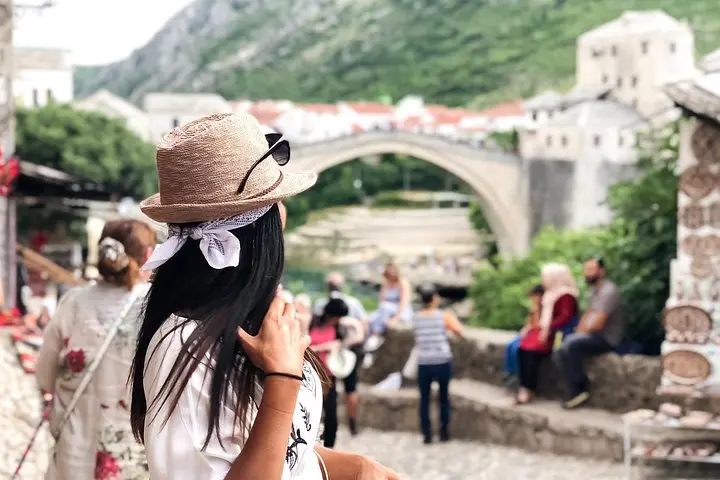
A morning in Sarajevo opens with the clack of tram tracks and the perfume of strong Bosnian coffee as the group gathers beneath the Ottoman arches of Baščaršija. From that Old Town pulse the tour unfolds: forested ridgelines around Trebević, karst springs that push the Buna into daylight at Blagaj, and the stone-poured light on Mostar’s Old Bridge.
Verified experiences and guided adventures in the surrounding area.
Operated by Tour Mage · Sarajevo, Sarajevo Canton
A morning in Sarajevo opens with the clack of tram tracks and the perfume of strong Bosnian coffee as the group gathers beneath the Ottoman arches of Baščaršija. From that Old Town pulse the tour unfolds: forested ridgelines around Trebević, karst springs that push the Buna into daylight at Blagaj, and the stone-poured light on Mostar’s Old Bridge.
This route threads three countries whose boundaries have shifted through Ottoman, Austro-Hungarian and Yugoslav eras; visitors encounter Austro-Hungarian clock towers, Ottoman mosques and medieval Venetian walls. Geology shapes the story — karst limestone creates dramatic springs and narrow canyons, while the Dinaric Alps lift quickly from the Adriatic to form steep fjord-like bays around Kotor.
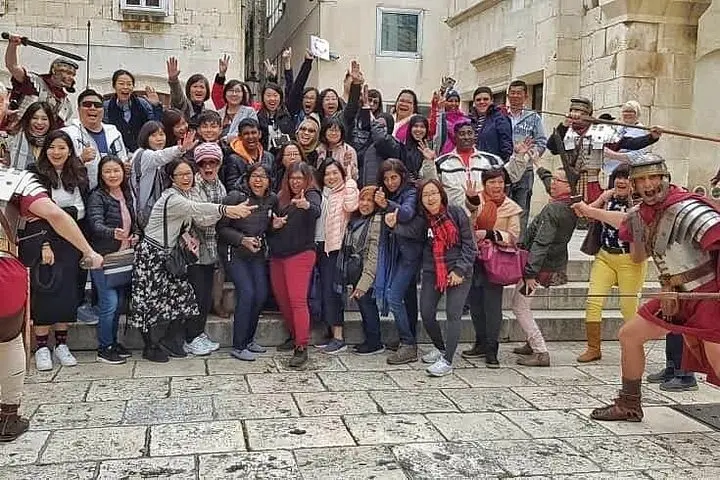
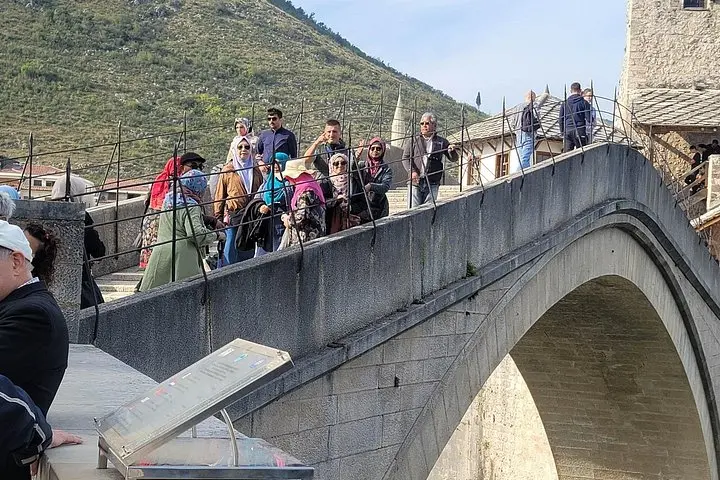
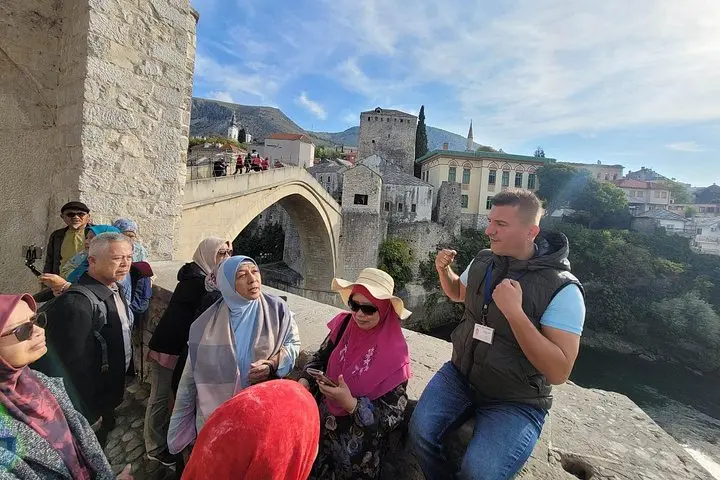
Culturally the pace is small-town markets, handcrafted coppersmith shops in Sarajevo and coastal promenades lined with Roman-era masonry in Split and Dubrovnik. Highlights include the abandoned 1984 Olympic bobsleigh on Trebević, the Buna spring at Blagaj, Kravice waterfall’s cold plunge pools and a guided walk across Mostar’s reconstructed Stari Most.
Practical notes: expect several day drives (most transfers 1–4 hours), passport checks at borders, and varied walking surfaces — cobbles, short forest paths and city steps. Pack layered footwear, a light rain shell and a daypack; mornings can be cool in the mountains and hot on the coast. The itinerary is guided with accommodation in 4-star hotels and breakfast included, making this a logistics-light way to sample Balkan landscapes, history and coastal charm in seven compact days.
Visa requirements depend on your nationality; many travelers can enter Bosnia and Herzegovina, Croatia and Montenegro visa-free for short stays, but always check current embassy guidance.
Expect short guided walks (30–90 minutes) in towns and attractions, plus transfers of 1–4 hours by air‑conditioned vehicle.
Daily breakfasts are included; other meals are typically at your expense, with free time to explore local restaurants.
The tour is rated easy and open to most fitness levels, but some sites have cobbles and steps; contact the operator about specific mobility needs.
Tour Mage operates guided outdoor trips and adventures with an emphasis on safety, stewardship, and memorable experiences.
A morning in Sarajevo opens with the clack of tram tracks and the perfume of strong Bosnian coffee as the group gathers beneath the Ottoman arches of Baščaršija. From that Old Town pulse the tour unfolds: forested ridgelines around Trebević, karst springs that push the Buna into daylight at Blagaj, and the stone-poured light on Mostar’s Old Bridge.
A morning in Sarajevo opens with the clack of tram tracks and the perfume of strong Bosnian coffee as the group gathers beneath the Ottoman arches of Baščaršija. From that Old Town pulse the tour unfolds: forested ridgelines around Trebević, karst springs that push the Buna into daylight at Blagaj, and the stone-poured light on Mostar’s Old Bridge.
This route threads three countries whose boundaries have shifted through Ottoman, Austro-Hungarian and Yugoslav eras; visitors encounter Austro-Hungarian clock towers, Ottoman mosques and medieval Venetian walls. Geology shapes the story — karst limestone creates dramatic springs and narrow canyons, while the Dinaric Alps lift quickly from the Adriatic to form steep fjord-like bays around Kotor.
Culturally the pace is small-town markets, handcrafted coppersmith shops in Sarajevo and coastal promenades lined with Roman-era masonry in Split and Dubrovnik. Highlights include the abandoned 1984 Olympic bobsleigh on Trebević, the Buna spring at Blagaj, Kravice waterfall’s cold plunge pools and a guided walk across Mostar’s reconstructed Stari Most.
Practical notes: expect several day drives (most transfers 1–4 hours), passport checks at borders, and varied walking surfaces — cobbles, short forest paths and city steps. Pack layered footwear, a light rain shell and a daypack; mornings can be cool in the mountains and hot on the coast. The itinerary is guided with accommodation in 4-star hotels and breakfast included, making this a logistics-light way to sample Balkan landscapes, history and coastal charm in seven compact days.