THE ADVENTURE COLLECTIVE® · Independent discovery and booking for outdoor travel

Cover China’s headline sights in seven days: walk the Great Wall at Mutianyu, stand before the Terra Cotta Army, cruise the Li River and hike the Dragon’s Backbone terraces. This compact private tour pairs efficient transfers with guided context.
Cover China’s headline sights in seven days: walk the Great Wall at Mutianyu, stand before the Terra Cotta Army, cruise the Li River and hike the Dragon’s Backbone terraces. This compact private tour pairs efficient transfers with guided context.
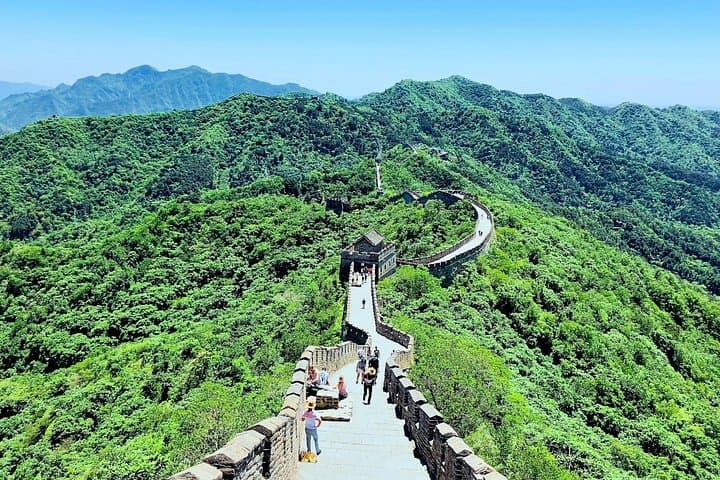
You step out of a Beijing hotel at dawn and the city opens in stages: bicycles threading the wide avenue, a breakfast stall steaming dumplings, and beyond the skyline the Great Wall rising like a folded stone ridge across green hills. Over seven days the route moves from imperial courts to river valleys — each landscape asserting itself by sound and scale.
Verified experiences and guided adventures in the surrounding area.
Operated by Sunflower Tours China · Beijing, Beijing
You step out of a Beijing hotel at dawn and the city opens in stages: bicycles threading the wide avenue, a breakfast stall steaming dumplings, and beyond the skyline the Great Wall rising like a folded stone ridge across green hills. Over seven days the route moves from imperial courts to river valleys — each landscape asserting itself by sound and scale.
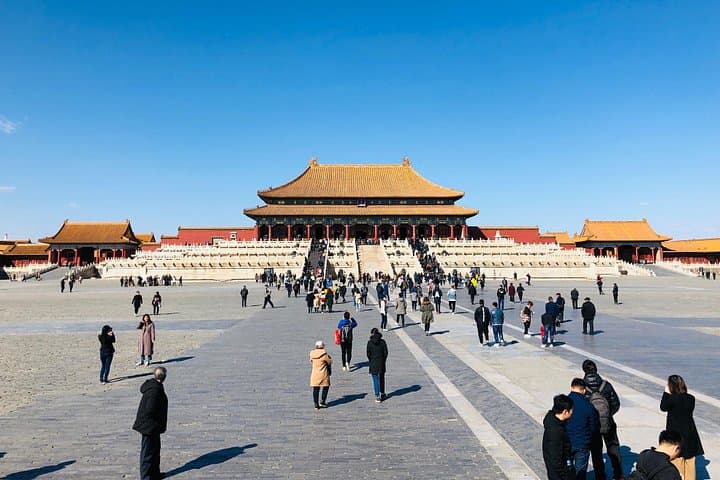
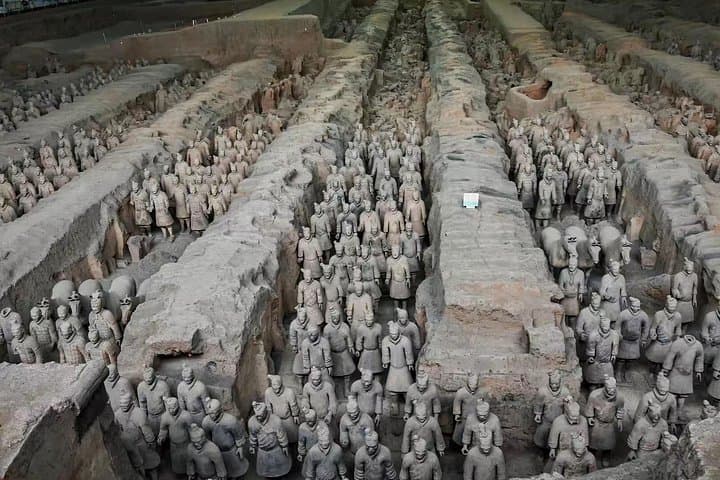
In Beijing, walk the Forbidden City’s courtyards where Ming and Qing emperors organized empire; at Mutianyu you’ll hike 2–3 miles on restored ramparts that survey orchards and villages. Xi’an shifts the frame: the Qin army, buried with the first emperor more than 2,000 years ago, is an archaeological shock of life-sized infantry in rank. The city wall encircling Xi’an runs 14 km and is best seen by bike.
Guilin and Yangshuo trade stone for water: the Li River’s 437 km corridor carves karst pinnacles that fishermen still work; Xianggong Mountain is a 15-minute ascent for a sweeping viewpoint. Ping’an’s Dragon’s Backbone terraces offer a 1–1.5 hour downhill hike through centuries of rice cultivation, where seasonal light defines the scene.
Practical guidance: plan for early starts to avoid crowds, carry a daypack with water, and expect multiple short walks each day—most transfers are by private car and bullet train. Bring comfortable walking shoes, lightweight layers for changing temperature between plains and river valleys, and valid ID for national sites. With moderate fitness you’ll move easily between highlights; with a sensible pace this week is a compact, well-rounded introduction to China’s physical and cultural landmarks.
This private tour lists entrance fees and lunch as included for the itinerary’s main attractions; verify specific exclusions before booking.
Expect several short walks and site-specific walks — roughly 1–3 miles at places like the Forbidden City, Great Wall and Li River stops; some days involve more standing and short hikes.
Mutianyu and the terraces are family-friendly but include stairs; the operator notes moderate fitness is required and discourages travelers with serious back or heart conditions.
An English-speaking private guide is provided; drivers may be Mandarin-speaking for some transfers.
Sunflower Tours China operates guided outdoor trips and adventures with an emphasis on safety, stewardship, and memorable experiences.
You step out of a Beijing hotel at dawn and the city opens in stages: bicycles threading the wide avenue, a breakfast stall steaming dumplings, and beyond the skyline the Great Wall rising like a folded stone ridge across green hills. Over seven days the route moves from imperial courts to river valleys — each landscape asserting itself by sound and scale.
You step out of a Beijing hotel at dawn and the city opens in stages: bicycles threading the wide avenue, a breakfast stall steaming dumplings, and beyond the skyline the Great Wall rising like a folded stone ridge across green hills. Over seven days the route moves from imperial courts to river valleys — each landscape asserting itself by sound and scale.
In Beijing, walk the Forbidden City’s courtyards where Ming and Qing emperors organized empire; at Mutianyu you’ll hike 2–3 miles on restored ramparts that survey orchards and villages. Xi’an shifts the frame: the Qin army, buried with the first emperor more than 2,000 years ago, is an archaeological shock of life-sized infantry in rank. The city wall encircling Xi’an runs 14 km and is best seen by bike.
Guilin and Yangshuo trade stone for water: the Li River’s 437 km corridor carves karst pinnacles that fishermen still work; Xianggong Mountain is a 15-minute ascent for a sweeping viewpoint. Ping’an’s Dragon’s Backbone terraces offer a 1–1.5 hour downhill hike through centuries of rice cultivation, where seasonal light defines the scene.
Practical guidance: plan for early starts to avoid crowds, carry a daypack with water, and expect multiple short walks each day—most transfers are by private car and bullet train. Bring comfortable walking shoes, lightweight layers for changing temperature between plains and river valleys, and valid ID for national sites. With moderate fitness you’ll move easily between highlights; with a sensible pace this week is a compact, well-rounded introduction to China’s physical and cultural landmarks.