THE ADVENTURE COLLECTIVE® · Independent discovery and booking for outdoor travel

Traverse Jordan’s Golden Triangle in a week: Roman streets at Jerash, Nabataean Petra’s rose rock, the wide silence of Wadi Rum, and floating in the Dead Sea. This private 7-day route blends geology, history and Bedouin hospitality with practical, walkable exploration.
Traverse Jordan’s Golden Triangle in a week: Roman streets at Jerash, Nabataean Petra’s rose rock, the wide silence of Wadi Rum, and floating in the Dead Sea. This private 7-day route blends geology, history and Bedouin hospitality with practical, walkable exploration.
A low sun slants across Amman as travelers gather at a hotel lobby and set out on a week that moves from whitewashed city streets to sea-level salt flats and back into ancient rock.
Verified experiences and guided adventures in the surrounding area.
Operated by Jordan Nature · Amman, Amman Governorate
A low sun slants across Amman as travelers gather at a hotel lobby and set out on a week that moves from whitewashed city streets to sea-level salt flats and back into ancient rock.
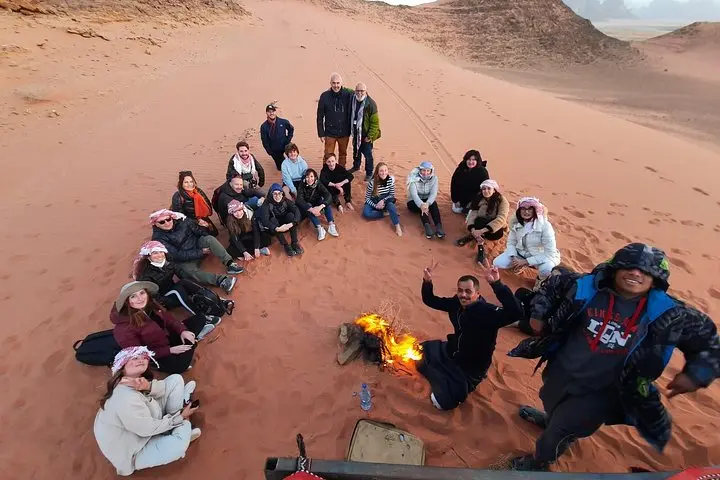
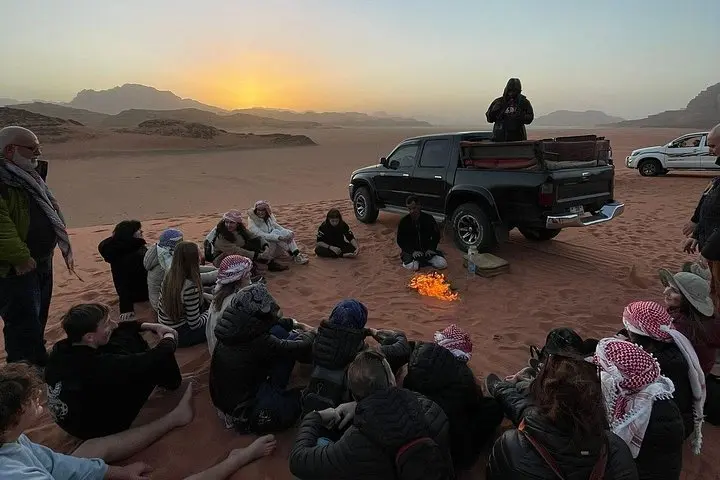
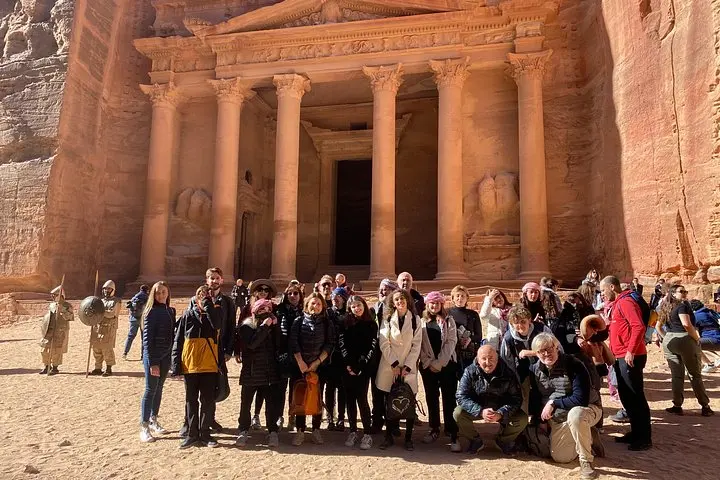
The route threads through layers of history: Roman colonnades at Jerash, Crusader fortresses on volcanic ridgelines, Nabataean façades hewn from rose sandstone in Petra, and the vast granite-and-sand arches of Wadi Rum where Bedouin songs rise with evening wind. Geology governs the scenery — Petra’s soft sandstone holds carved facades and narrow Siq promenades, while Wadi Rum’s harder granite and sandstone towers have been sculpted into bridges and hulks by wind and time. Culture is equally present: local guides tell Nabataean and Bedouin stories at ruins and around campfires, and Amman’s citadel offers a modern pulse between ancient stones.
Expect active days: Jerash sits about 48 km north of Amman and invites level walking through paved Roman streets; Petra requires up to 8–12 km of walking over uneven, often stair-stepped terrain with elevation changes; Wadi Rum’s exploration is by 4x4 and short walks or optional camel treks; the Dead Sea is a low-elevation, buoyant finish where a mud mask and floating are the afternoon’s work. Practical guidance: carry sun protection, a refillable water bottle, sturdy walking shoes, and modest clothing for cultural sites. Book the Jordan Pass to simplify entry fees, and plan travel times to avoid midday heat in summer.
Some sites may be covered if you hold a Jordan Pass; otherwise entrance fees like Petra are typically paid separately—check your booking details.
Petra involves long walks and many steps over varied terrain; plan for 6–12 km and consider using the on-site donkey or cart options for shorter legs if needed.
Luxury camps provide basic comfort—beds, shared or private ablutions, and dinners around a fire—while remote desert conditions remain rustic.
Yes, the itinerary notes child rates when sharing rooms; some activities have optional nature trails or camel rides better suited for older children.
Jordan Nature operates guided outdoor trips and adventures with an emphasis on safety, stewardship, and memorable experiences.

A low sun slants across Amman as travelers gather at a hotel lobby and set out on a week that moves from whitewashed city streets to sea-level salt flats and back into ancient rock.
A low sun slants across Amman as travelers gather at a hotel lobby and set out on a week that moves from whitewashed city streets to sea-level salt flats and back into ancient rock.
The route threads through layers of history: Roman colonnades at Jerash, Crusader fortresses on volcanic ridgelines, Nabataean façades hewn from rose sandstone in Petra, and the vast granite-and-sand arches of Wadi Rum where Bedouin songs rise with evening wind. Geology governs the scenery — Petra’s soft sandstone holds carved facades and narrow Siq promenades, while Wadi Rum’s harder granite and sandstone towers have been sculpted into bridges and hulks by wind and time. Culture is equally present: local guides tell Nabataean and Bedouin stories at ruins and around campfires, and Amman’s citadel offers a modern pulse between ancient stones.
Expect active days: Jerash sits about 48 km north of Amman and invites level walking through paved Roman streets; Petra requires up to 8–12 km of walking over uneven, often stair-stepped terrain with elevation changes; Wadi Rum’s exploration is by 4x4 and short walks or optional camel treks; the Dead Sea is a low-elevation, buoyant finish where a mud mask and floating are the afternoon’s work. Practical guidance: carry sun protection, a refillable water bottle, sturdy walking shoes, and modest clothing for cultural sites. Book the Jordan Pass to simplify entry fees, and plan travel times to avoid midday heat in summer.