THE ADVENTURE COLLECTIVE® · Independent discovery and booking for outdoor travel
From the domes of Istanbul to Cappadocia’s fairy chimneys and the marble streets of Ephesus, this seven-day private tour strings together Turkey’s big draws with private transport, local guides and carefully timed flights. Expect a culture-forward itinerary with practical walking, flight and photo advice.
From the domes of Istanbul to Cappadocia’s fairy chimneys and the marble streets of Ephesus, this seven-day private tour strings together Turkey’s big draws with private transport, local guides and carefully timed flights. Expect a culture-forward itinerary with practical walking, flight and photo advice.
The tour opens in the blue light of Sultanahmet, where the air tastes faintly of cardamom and the domes of mosques cut clean silhouettes against an early sky. A guide meets you at the airport, and by evening you are tracing Ottoman stone through the Blue Mosque and threading the narrow lanes toward the Grand Bazaar — the first of seven days that move you from the city’s shoreline into high plateaus and ancient ruins.
Verified experiences and guided adventures in the surrounding area.
Operated by Pupa Travel · Istanbul, Istanbul
The tour opens in the blue light of Sultanahmet, where the air tastes faintly of cardamom and the domes of mosques cut clean silhouettes against an early sky. A guide meets you at the airport, and by evening you are tracing Ottoman stone through the Blue Mosque and threading the narrow lanes toward the Grand Bazaar — the first of seven days that move you from the city’s shoreline into high plateaus and ancient ruins.
Istanbul is where empires overlap: Roman Hippodrome fragments sit beside Byzantine basilicas and Ottoman courtyards. A two-hour Bosphorus cruise on day three pushes you along a waterway that, for centuries, divided and connected continents. Then an evening flight — roughly 90 minutes — carries you to Cappadocia, whose volcanic geology reads like a slow-motion novel. Fire and ash from eruptions 30 million years ago compacted into tuff; erosion then carved the fairy chimneys and cave churches you’ll see in Devrent, Paşabağ and the Göreme Open Air Museum.
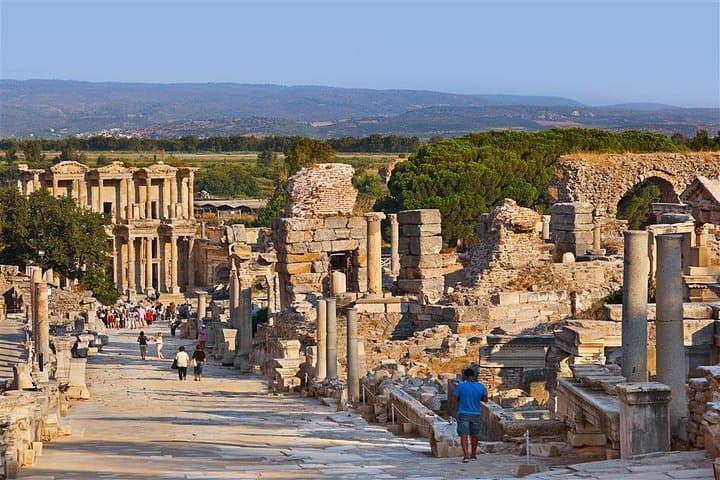
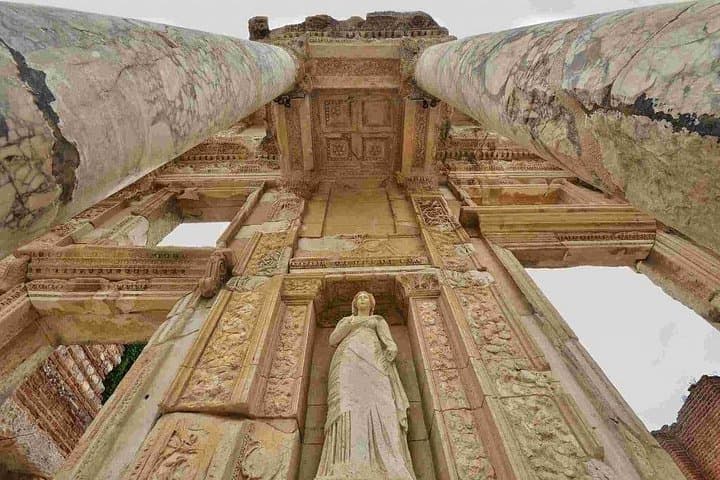
Cappadocia’s landscape is active in a human way: pigeon holes, dovecotes and troglodyte dwellings are the result of long improvisation. You’ll climb to lookouts like Uchisar Castle (around 1,200 m elevation in the region) for sweeping views and photograph valleys that once sheltered early Christian communities. From Cappadocia you fly to İzmir and approach Ephesus, where the marble-led streets and the Celsus Library recall Roman urban planning and trade routes that once threaded the Mediterranean.
Practical edge: expect six days of guided touring with private A/C transfer and three meals daily. Walking in Istanbul’s old town is often 2–4 km per day across uneven cobbles; in Cappadocia, short steep sections and stairs at viewpoints require steady shoes. Transport rhythm matters — several short domestic flights (Istanbul→Nevşehir/Kayseri; Kayseri→İzmir) and several 60–120 minute drives stitch the itinerary together.
Local insights: the best light for Cappadocia photos is dawn and late afternoon; in Ephesus, late afternoon softens the white marble. Bring layered clothing — coastal İzmir is warm but the Cappadocian plateau can be chilly at sunrise. Carry cash for small vendors at the bazaars, but use cards at larger sites.
If you want to add a hot-air balloon, plan that for an early-morning slot in Cappadocia; book ahead. Finally, be prepared for brisk days and fuller mornings: this is a travel tempo that moves you efficiently through history while leaving room to stand and listen to the stones.
Most major entrance fees listed in the itinerary (e.g., Topkapi, Hagia Sophia, Göreme Open Air Museum, Ephesus) are included—confirm specifics with your provider at booking.
Yes — private airport transfers are included; the driver will meet you at arrivals holding a name board.
Balloon flights are not included by default; they can be arranged but should be pre-booked due to limited availability and weather sensitivity.
Expect moderate walking of 2–5 km per day with stairs and some short uphill sections, especially at viewpoints and archaeological sites.
Many nationalities require an e‑visa; check the Turkish government e‑visa portal and secure one before travel if necessary.
Tipping is common: guides and drivers typically expect modest gratuities (5–10% for services), and small tips at restaurants are appreciated.
Pupa Travel operates guided outdoor trips and adventures with an emphasis on safety, stewardship, and memorable experiences.
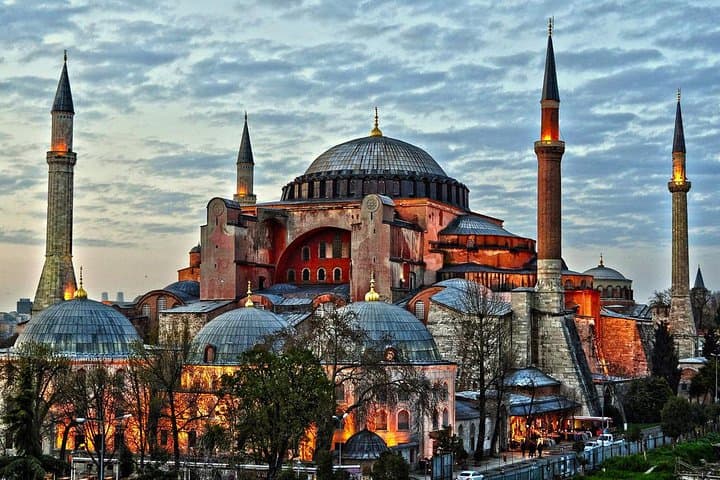
The tour opens in the blue light of Sultanahmet, where the air tastes faintly of cardamom and the domes of mosques cut clean silhouettes against an early sky. A guide meets you at the airport, and by evening you are tracing Ottoman stone through the Blue Mosque and threading the narrow lanes toward the Grand Bazaar — the first of seven days that move you from the city’s shoreline into high plateaus and ancient ruins.
The tour opens in the blue light of Sultanahmet, where the air tastes faintly of cardamom and the domes of mosques cut clean silhouettes against an early sky. A guide meets you at the airport, and by evening you are tracing Ottoman stone through the Blue Mosque and threading the narrow lanes toward the Grand Bazaar — the first of seven days that move you from the city’s shoreline into high plateaus and ancient ruins.
Istanbul is where empires overlap: Roman Hippodrome fragments sit beside Byzantine basilicas and Ottoman courtyards. A two-hour Bosphorus cruise on day three pushes you along a waterway that, for centuries, divided and connected continents. Then an evening flight — roughly 90 minutes — carries you to Cappadocia, whose volcanic geology reads like a slow-motion novel. Fire and ash from eruptions 30 million years ago compacted into tuff; erosion then carved the fairy chimneys and cave churches you’ll see in Devrent, Paşabağ and the Göreme Open Air Museum.
Cappadocia’s landscape is active in a human way: pigeon holes, dovecotes and troglodyte dwellings are the result of long improvisation. You’ll climb to lookouts like Uchisar Castle (around 1,200 m elevation in the region) for sweeping views and photograph valleys that once sheltered early Christian communities. From Cappadocia you fly to İzmir and approach Ephesus, where the marble-led streets and the Celsus Library recall Roman urban planning and trade routes that once threaded the Mediterranean.
Practical edge: expect six days of guided touring with private A/C transfer and three meals daily. Walking in Istanbul’s old town is often 2–4 km per day across uneven cobbles; in Cappadocia, short steep sections and stairs at viewpoints require steady shoes. Transport rhythm matters — several short domestic flights (Istanbul→Nevşehir/Kayseri; Kayseri→İzmir) and several 60–120 minute drives stitch the itinerary together.
Local insights: the best light for Cappadocia photos is dawn and late afternoon; in Ephesus, late afternoon softens the white marble. Bring layered clothing — coastal İzmir is warm but the Cappadocian plateau can be chilly at sunrise. Carry cash for small vendors at the bazaars, but use cards at larger sites.
If you want to add a hot-air balloon, plan that for an early-morning slot in Cappadocia; book ahead. Finally, be prepared for brisk days and fuller mornings: this is a travel tempo that moves you efficiently through history while leaving room to stand and listen to the stones.
