THE ADVENTURE COLLECTIVE® · Independent discovery and booking for outdoor travel

From the first gasp at Petra's Treasury to a starlit jeep ride across Wadi Rum, this seven-day tour threads Jordan's ancient sites and dramatic landscapes into a single, manageable week. Expect long days of walking balanced by expert guides, comfortable transfers and the chance to float in the Dead Sea.
From the first gasp at Petra's Treasury to a starlit jeep ride across Wadi Rum, this seven-day tour threads Jordan's ancient sites and dramatic landscapes into a single, manageable week. Expect long days of walking balanced by expert guides, comfortable transfers and the chance to float in the Dead Sea.
You emerge from the narrow, shadowed throat of the Siq and the rock opens like a stage curtain — the Treasury stands suddenly, carved in rose-hued sandstone, sunlight turning millennia-old chisel marks into lace. That moment in Petra is the heartbeat of a week that moves from Roman colonnades to crusader castles, basalt ridges to a desert that keeps time by stars.
Verified experiences and guided adventures in the surrounding area.
Operated by Plato Tours & Travel · Amman, Amman Governorate
You emerge from the narrow, shadowed throat of the Siq and the rock opens like a stage curtain — the Treasury stands suddenly, carved in rose-hued sandstone, sunlight turning millennia-old chisel marks into lace. That moment in Petra is the heartbeat of a week that moves from Roman colonnades to crusader castles, basalt ridges to a desert that keeps time by stars.
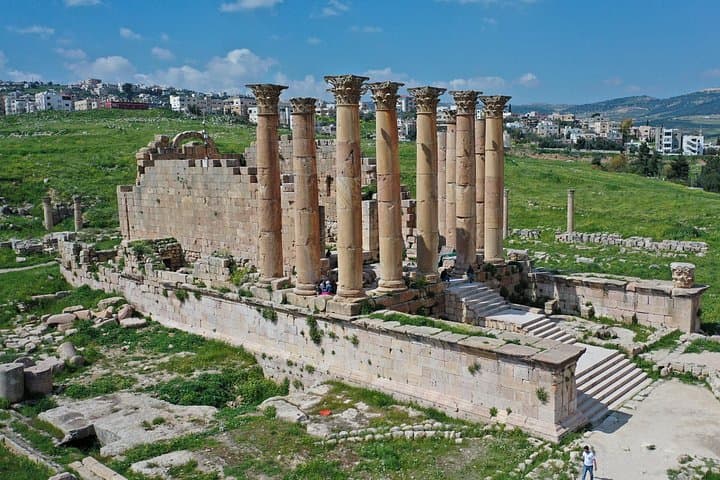
This seven-day route threads Jordan's long history and varied geology. Start in Amman, a city of white limestone houses clinging to hills once crossed by Roman processions. Northward lie Umm Qais and Jerash: Umm Qais perches above the Jordan Valley on black basalt, offering views toward the Sea of Galilee; Jerash preserves an almost complete Roman grid of colonnaded streets, theatres and the Temple of Artemis. The Kings Highway carries you past Madaba's Byzantine mosaics and Mt. Nebo, where early pilgrims looked toward the Holy Land.
Petra is Nabataean engineering writ in stone — a city carved from Jurassic sandstone with water channels, tombs and an amphitheatre. Walking the main trail through the Siq is roughly 1.2 km; for a strenuous reward, climb the 860 steps to the Monastery. Westward, Wadi Rum is a geological contrast: wind-eroded sandstone and granite towers, dunes that shift with every storm. A 4–5 hour jeep safari here lets you reach rock bridges, Lawrence's spring and expansive dune bowls. Finally, the Dead Sea waits: at about 430 meters below sea level its saline water buoyantly refuses you to sink, while mineral-rich mud asks for a face full of slow, healing grit.
Practical edge: buy a Jordan Pass to cover major entry fees and save time at Petra. Expect long driving days — plan for 2–4 hours on the bus between major stops — and early starts to avoid midday heat in summer. Carry 2–3 liters of water, wear sturdy, grippy footwear for loose sand and carved stone, and dress modestly when visiting religious sites. Wadi Rum nights are cool; bring a warm layer even after hot days. Guides and private drivers are included in this itinerary — use them to navigate permits, local etiquette, and the best viewpoints.
Cultural notes: Bedouin hospitality shapes much of the desert experience; try the slow-cooked zarb in Wadi Rum. Be mindful of conservation: stick to marked paths in Petra to protect fragile façades and avoid leaving plastics behind in desert settings.
The trip balances bucket-list monuments with slow moments — a quiet dawn over the Treasury, a jeep engine rolling through rock corridors, and the Dead Sea’s strange, buoyant calm. It’s a week of walking through layered time, with practical logistics smoothed by local guides and short drives between improbable landscapes.
Many nationalities receive a visa on arrival; the operator can assist with airport arrival formalities. Check current visa rules before travel.
The Jordan Pass bundles visa waiver eligibility and entrance fees (including Petra) and usually saves money — buy it before arrival if possible.
The main Petra trail is moderate (about 1.2 km through the Siq), but side climbs like the Monastery involve roughly 860 steps and require good stamina and footwear.
Wadi Rum jeep tours reduce walking by accessing viewpoints by vehicle, but terrain is uneven and the fixed camp areas may not be fully accessible.
Yes — the high salinity allows effortless floating; avoid getting water in eyes or open wounds and rinse off with fresh water after the experience.
Tipping is customary; plan a steady per-day tip for guides and smaller amounts for drivers and hotel staff, adjusted for service quality.
Plato Tours & Travel operates guided outdoor trips and adventures with an emphasis on safety, stewardship, and memorable experiences.


You emerge from the narrow, shadowed throat of the Siq and the rock opens like a stage curtain — the Treasury stands suddenly, carved in rose-hued sandstone, sunlight turning millennia-old chisel marks into lace. That moment in Petra is the heartbeat of a week that moves from Roman colonnades to crusader castles, basalt ridges to a desert that keeps time by stars.
You emerge from the narrow, shadowed throat of the Siq and the rock opens like a stage curtain — the Treasury stands suddenly, carved in rose-hued sandstone, sunlight turning millennia-old chisel marks into lace. That moment in Petra is the heartbeat of a week that moves from Roman colonnades to crusader castles, basalt ridges to a desert that keeps time by stars.
This seven-day route threads Jordan's long history and varied geology. Start in Amman, a city of white limestone houses clinging to hills once crossed by Roman processions. Northward lie Umm Qais and Jerash: Umm Qais perches above the Jordan Valley on black basalt, offering views toward the Sea of Galilee; Jerash preserves an almost complete Roman grid of colonnaded streets, theatres and the Temple of Artemis. The Kings Highway carries you past Madaba's Byzantine mosaics and Mt. Nebo, where early pilgrims looked toward the Holy Land.
Petra is Nabataean engineering writ in stone — a city carved from Jurassic sandstone with water channels, tombs and an amphitheatre. Walking the main trail through the Siq is roughly 1.2 km; for a strenuous reward, climb the 860 steps to the Monastery. Westward, Wadi Rum is a geological contrast: wind-eroded sandstone and granite towers, dunes that shift with every storm. A 4–5 hour jeep safari here lets you reach rock bridges, Lawrence's spring and expansive dune bowls. Finally, the Dead Sea waits: at about 430 meters below sea level its saline water buoyantly refuses you to sink, while mineral-rich mud asks for a face full of slow, healing grit.
Practical edge: buy a Jordan Pass to cover major entry fees and save time at Petra. Expect long driving days — plan for 2–4 hours on the bus between major stops — and early starts to avoid midday heat in summer. Carry 2–3 liters of water, wear sturdy, grippy footwear for loose sand and carved stone, and dress modestly when visiting religious sites. Wadi Rum nights are cool; bring a warm layer even after hot days. Guides and private drivers are included in this itinerary — use them to navigate permits, local etiquette, and the best viewpoints.
Cultural notes: Bedouin hospitality shapes much of the desert experience; try the slow-cooked zarb in Wadi Rum. Be mindful of conservation: stick to marked paths in Petra to protect fragile façades and avoid leaving plastics behind in desert settings.
The trip balances bucket-list monuments with slow moments — a quiet dawn over the Treasury, a jeep engine rolling through rock corridors, and the Dead Sea’s strange, buoyant calm. It’s a week of walking through layered time, with practical logistics smoothed by local guides and short drives between improbable landscapes.