THE ADVENTURE COLLECTIVE® · Independent discovery and booking for outdoor travel

Approaching Kilimanjaro from the north, the Rongai Route offers a quieter seven-day climb with steady ascents, an acclimatization day at Mawenzi Tarn, and a summit via Kibo’s crater rim. This guide outlines what to expect on terrain, logistics, and safety for the trek.
Approaching Kilimanjaro from the north, the Rongai Route offers a quieter seven-day climb with steady ascents, an acclimatization day at Mawenzi Tarn, and a summit via Kibo’s crater rim. This guide outlines what to expect on terrain, logistics, and safety for the trek.
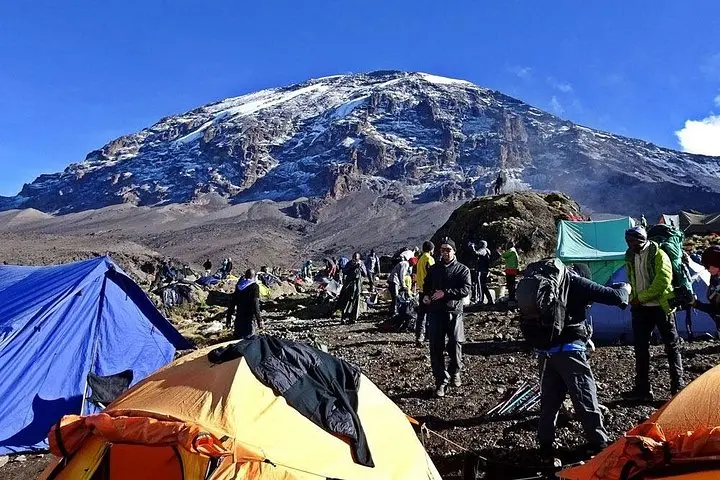
Night at the trailhead smells of diesel and fresh coffee; porters lay out tents under a sky so clear the Milky Way seems to press against the canvas. By dawn the Rongai Route slips northward, through fields of maize and small settlements, then into a cathedral of tall pines that hush the group into a steady, measured pace.
Verified experiences and guided adventures in the surrounding area.
Operated by Gifted African Adventures · Moshi, Kilimanjaro Region
Night at the trailhead smells of diesel and fresh coffee; porters lay out tents under a sky so clear the Milky Way seems to press against the canvas. By dawn the Rongai Route slips northward, through fields of maize and small settlements, then into a cathedral of tall pines that hush the group into a steady, measured pace.
The Rongai Route approaches Kilimanjaro from the Kenyan border, a quieter northern line that lets the mountain reveal itself gradually. Over seven days you move from montane forest (1,950–2,600 m) into moorland and finally the lunar 'Saddle' and Kibo’s alpine desert. Distances are manageable—day hikes of 4–9 km interspersed with a summit push of roughly 6 km up and a 16 km descent—yet altitude is the true challenge: the itinerary tops out at Uhuru Peak, 5,895 m.
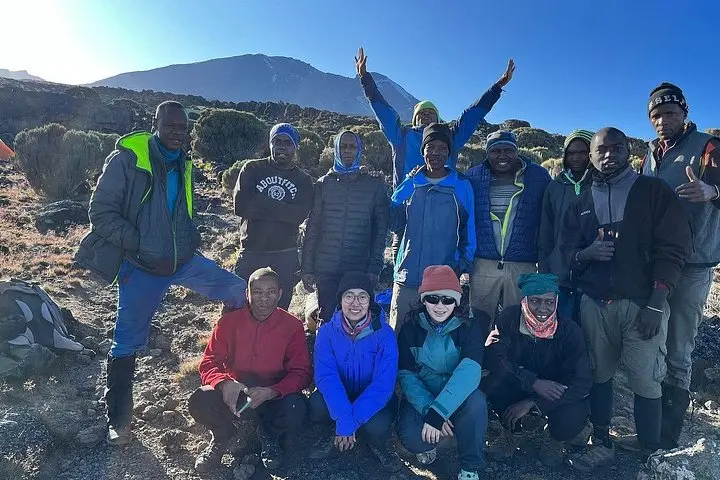
Geologically, Kilimanjaro is a three-coned stratovolcano—Shira, Mawenzi and Kibo—with Kibo holding the summit crater. You’ll cross habitats shaped by glaciation and volcanic rock: moss-draped forest, tussock moorland, the Saddle’s gravel plain, and scree fields approaching the crater rim. Culturally, the climb threads through Chagga farmland and small villages; local guides and porters are often from nearby communities and carry not only gear but centuries of mountain knowledge.
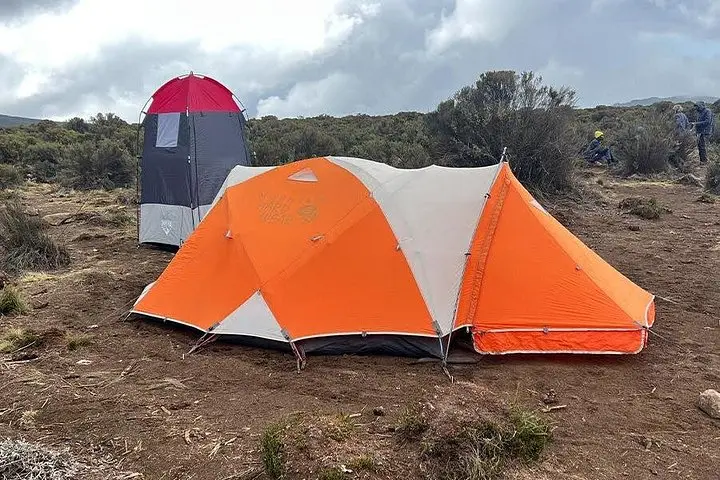
Practically, Rongai is lauded for a gentler gradient and better acclimatization. The extra day at Mawenzi Tarn (4,330 m) helps with acclimatization before the long night ascent from Kibo Camp (4,750 m) to Uhuru Peak. Expect campsite nights in four-season 3-person tents or simple huts on some sections; meals are full-board with breakfasts, lunches and dinners provided.
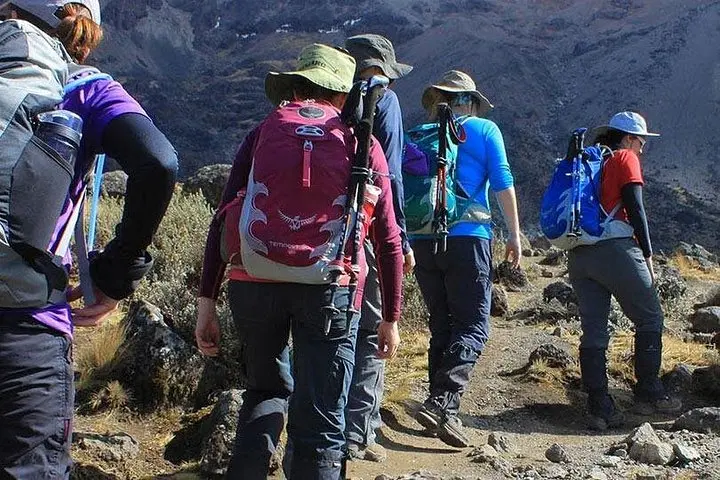
Safety priorities: altitude sickness is the primary risk—listen to your guides, move slowly, and hydrate. Footing on summit night turns to scree and could include icy patches near the crater rim; poles and crampon-capable boots make the slog easier. Respect porter load limits and tipping customs—porters are vital to the success of your climb.
Logistics are straightforward: transfers connect Arusha and the trailheads, permits and rescue fees are included, and mature fitness is required though no technical climbing experience is needed. Best times to climb are during the dry windows for clearer summit views and more stable nights, but the mountain can turn quickly; pack for temperature swings from warm lower slopes to sub-zero summit conditions.
If you want a quieter summit experience without sacrificing panoramic views, the Rongai Route offers a measured, immersive climb—one where the mountain’s moods shift from soft forest whispers to the raw wind that will greet you on the crater rim.
You should have good aerobic fitness and experience with multi-day hikes; training hikes with elevation gain and long back-to-back days will prepare you for the sustained effort and altitude.
No technical skills are required—the route is a non-technical trek, but high-altitude hiking experience and proper gear are essential.
Altitude sickness is common at high elevations; the 7-day itinerary with an acclimatization day at Mawenzi Tarn reduces risk but does not eliminate it—monitor symptoms and follow your guide’s instructions.
Camping in four-season 3-person tents is standard; some sections use basic huts. Meals are provided and included in the trip package.
The clearest windows are the dry seasons (roughly January–March and June–October), but weather can change quickly—book with flexible plans and experienced guides.
Yes—Kilimanjaro National Park permits and rescue fees are required and are included in the trip price as noted in the inclusions.
Gifted African Adventures operates guided outdoor trips and adventures with an emphasis on safety, stewardship, and memorable experiences.
Night at the trailhead smells of diesel and fresh coffee; porters lay out tents under a sky so clear the Milky Way seems to press against the canvas. By dawn the Rongai Route slips northward, through fields of maize and small settlements, then into a cathedral of tall pines that hush the group into a steady, measured pace.
Night at the trailhead smells of diesel and fresh coffee; porters lay out tents under a sky so clear the Milky Way seems to press against the canvas. By dawn the Rongai Route slips northward, through fields of maize and small settlements, then into a cathedral of tall pines that hush the group into a steady, measured pace.
The Rongai Route approaches Kilimanjaro from the Kenyan border, a quieter northern line that lets the mountain reveal itself gradually. Over seven days you move from montane forest (1,950–2,600 m) into moorland and finally the lunar 'Saddle' and Kibo’s alpine desert. Distances are manageable—day hikes of 4–9 km interspersed with a summit push of roughly 6 km up and a 16 km descent—yet altitude is the true challenge: the itinerary tops out at Uhuru Peak, 5,895 m.
Geologically, Kilimanjaro is a three-coned stratovolcano—Shira, Mawenzi and Kibo—with Kibo holding the summit crater. You’ll cross habitats shaped by glaciation and volcanic rock: moss-draped forest, tussock moorland, the Saddle’s gravel plain, and scree fields approaching the crater rim. Culturally, the climb threads through Chagga farmland and small villages; local guides and porters are often from nearby communities and carry not only gear but centuries of mountain knowledge.
Practically, Rongai is lauded for a gentler gradient and better acclimatization. The extra day at Mawenzi Tarn (4,330 m) helps with acclimatization before the long night ascent from Kibo Camp (4,750 m) to Uhuru Peak. Expect campsite nights in four-season 3-person tents or simple huts on some sections; meals are full-board with breakfasts, lunches and dinners provided.
Safety priorities: altitude sickness is the primary risk—listen to your guides, move slowly, and hydrate. Footing on summit night turns to scree and could include icy patches near the crater rim; poles and crampon-capable boots make the slog easier. Respect porter load limits and tipping customs—porters are vital to the success of your climb.
Logistics are straightforward: transfers connect Arusha and the trailheads, permits and rescue fees are included, and mature fitness is required though no technical climbing experience is needed. Best times to climb are during the dry windows for clearer summit views and more stable nights, but the mountain can turn quickly; pack for temperature swings from warm lower slopes to sub-zero summit conditions.
If you want a quieter summit experience without sacrificing panoramic views, the Rongai Route offers a measured, immersive climb—one where the mountain’s moods shift from soft forest whispers to the raw wind that will greet you on the crater rim.