THE ADVENTURE COLLECTIVE® · Independent discovery and booking for outdoor travel

A private, seven-day Machame route ascent to Uhuru Peak that balances steady acclimatization with logistical support—four-season tents, WFR-trained guides, and emergency oxygen. Read on for what to expect day-to-day, local context, and essential packing tips.
A private, seven-day Machame route ascent to Uhuru Peak that balances steady acclimatization with logistical support—four-season tents, WFR-trained guides, and emergency oxygen. Read on for what to expect day-to-day, local context, and essential packing tips.
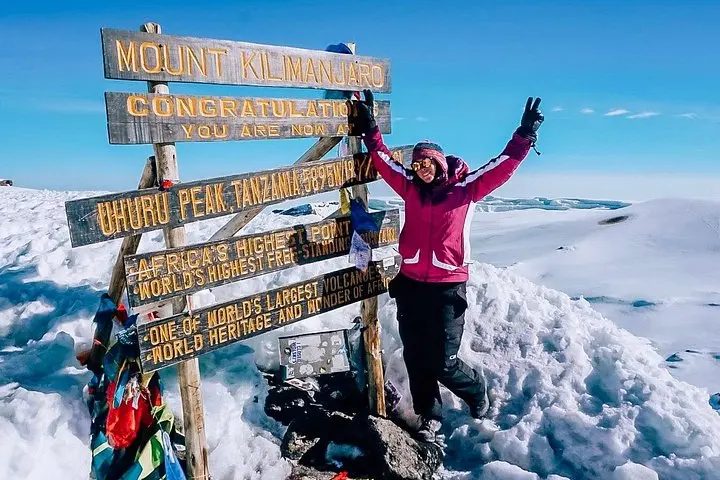
The headlamp washes the scree in a thin white ribbon as the group steps off from Barafu at midnight. Breathing is slow and deliberate; each boot settles into the volcanic sand and then moves on. By the time the horizon lightens, Stella Point appears as a ragged lip on the crater rim and, a few hours later, Uhuru Peak opens like a hard-won view—glaciers glinting, clouds pinned low over the plains.
Verified experiences and guided adventures in the surrounding area.
Operated by Kilimanjaro Trekking Mate · Moshi, Kilimanjaro Region
The headlamp washes the scree in a thin white ribbon as the group steps off from Barafu at midnight. Breathing is slow and deliberate; each boot settles into the volcanic sand and then moves on. By the time the horizon lightens, Stella Point appears as a ragged lip on the crater rim and, a few hours later, Uhuru Peak opens like a hard-won view—glaciers glinting, clouds pinned low over the plains.
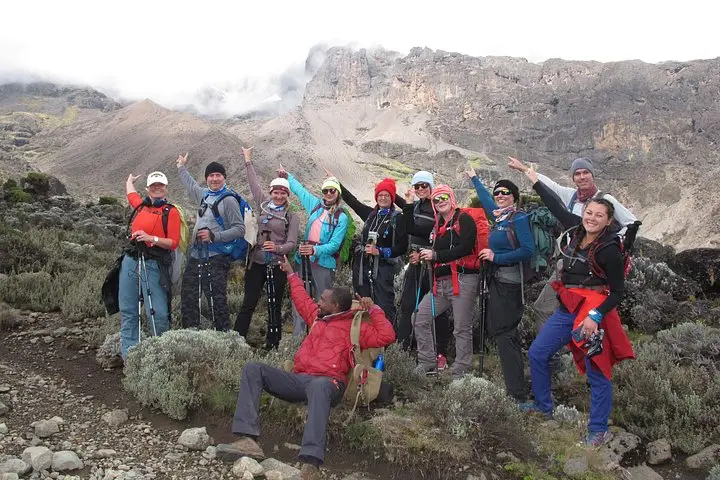
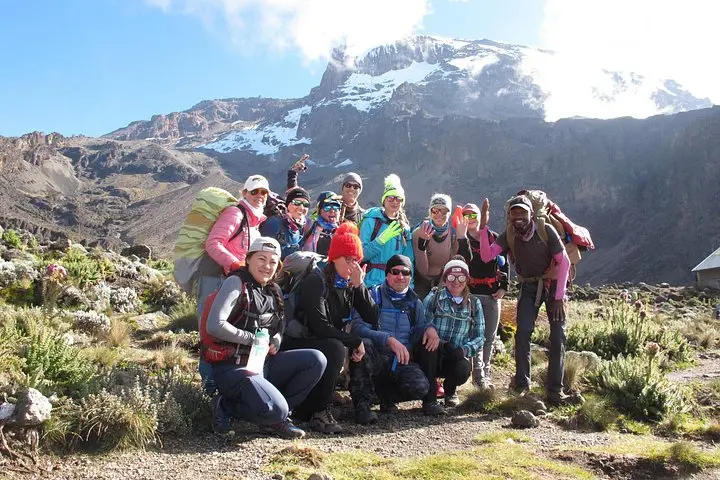
Kilimanjaro’s Machame Route is a seven-day, private itinerary designed to stack acclimatization into a steady ascent—rainforest to moorland, scree slopes to the icy summit. The mountain is the remnant of three volcanoes; Kibo, the highest, holds the crater that defines the true summit. Human history here mixes Chagga agricultural communities on the lower slopes and the early European expeditions of the 19th century; the path itself cuts through zones shaped by glacial retreat, lichen-studded rock, and winds that can change from benign to sharp in minutes.
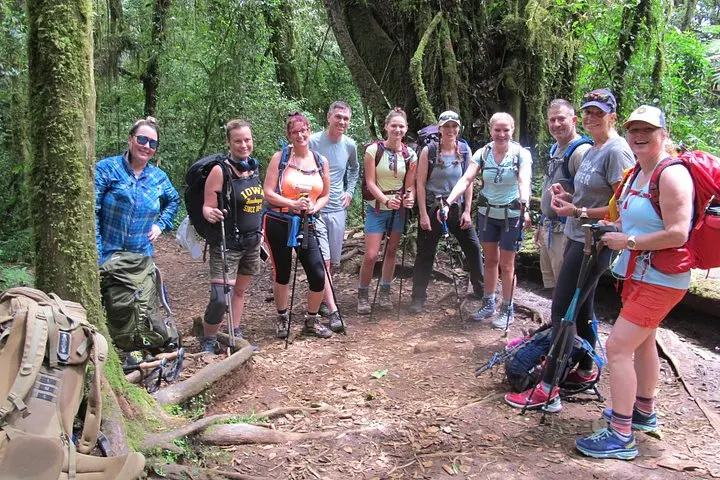
The climb begins near Moshi, with a pickup at Kilimanjaro Airport available and two hotel nights in town included before and after the mountain. Day one threads rainforest to Machame Camp (roughly 11 km, 4.5–5 hours), then moves across heath to the Shira Plateau and onward through moorland and the Barranco Wall—an essential acclimatization climb—before the difficult push to Barafu and the summit. Expect a summit day of 12 or more hours and a final descent to Mweka Gate.
Practical realities are central: altitude is the determining factor on Kilimanjaro, not technical rock climbing. The operator provides four-season 3-person tents, foam sleeping pads, a Wilderness First Responder–trained crew, pulse oximeters, bottled oxygen for emergencies and park rescue fees. Carry 3–4 liters of water daily, break into a series of short, controlled steps on steep scree, and sleep early the night before your summit attempt.
Footwear and layering matter—rigid ankle-support boots, crampons if snow is present, and a windproof shell for the upper slopes. Meals are included on the mountain; guides handle camp setup and logistics so climbers can focus on pacing and hydration. The route rewards those who respect slow, steady ascent: better summit windows, clearer heads, and a safer descent. When you stand on Uhuru Peak, the plain below will look disciplined and small; the mountain will feel like an old, exacting teacher.
No technical rock or ice-climbing skills are required for the Machame route; however, you should be comfortable walking long days at high altitude and using trekking poles.
Guides monitor symptoms with pulse oximeters and follow acclimatization plans; emergency oxygen and park rescue are available and included for emergencies.
The itinerary includes park permits, camping fees, meals on trek, two hotel nights in Moshi, private transfers, tents, sleeping pads, and professional mountain crew.
The clearest windows are during the dry seasons—January–March and June–October—when crevasse and weather risks are lower.
Summit day is long and strenuous—expect 10–12 hours with steep switchbacks and scree; pacing and acclimatization preceding it determine success.
Yes—private transfers from JRO are included; the operator arranges 24-hour pickup and will meet you on arrival.
Kilimanjaro Trekking Mate operates guided outdoor trips and adventures with an emphasis on safety, stewardship, and memorable experiences.
The headlamp washes the scree in a thin white ribbon as the group steps off from Barafu at midnight. Breathing is slow and deliberate; each boot settles into the volcanic sand and then moves on. By the time the horizon lightens, Stella Point appears as a ragged lip on the crater rim and, a few hours later, Uhuru Peak opens like a hard-won view—glaciers glinting, clouds pinned low over the plains.
The headlamp washes the scree in a thin white ribbon as the group steps off from Barafu at midnight. Breathing is slow and deliberate; each boot settles into the volcanic sand and then moves on. By the time the horizon lightens, Stella Point appears as a ragged lip on the crater rim and, a few hours later, Uhuru Peak opens like a hard-won view—glaciers glinting, clouds pinned low over the plains.
Kilimanjaro’s Machame Route is a seven-day, private itinerary designed to stack acclimatization into a steady ascent—rainforest to moorland, scree slopes to the icy summit. The mountain is the remnant of three volcanoes; Kibo, the highest, holds the crater that defines the true summit. Human history here mixes Chagga agricultural communities on the lower slopes and the early European expeditions of the 19th century; the path itself cuts through zones shaped by glacial retreat, lichen-studded rock, and winds that can change from benign to sharp in minutes.
The climb begins near Moshi, with a pickup at Kilimanjaro Airport available and two hotel nights in town included before and after the mountain. Day one threads rainforest to Machame Camp (roughly 11 km, 4.5–5 hours), then moves across heath to the Shira Plateau and onward through moorland and the Barranco Wall—an essential acclimatization climb—before the difficult push to Barafu and the summit. Expect a summit day of 12 or more hours and a final descent to Mweka Gate.
Practical realities are central: altitude is the determining factor on Kilimanjaro, not technical rock climbing. The operator provides four-season 3-person tents, foam sleeping pads, a Wilderness First Responder–trained crew, pulse oximeters, bottled oxygen for emergencies and park rescue fees. Carry 3–4 liters of water daily, break into a series of short, controlled steps on steep scree, and sleep early the night before your summit attempt.
Footwear and layering matter—rigid ankle-support boots, crampons if snow is present, and a windproof shell for the upper slopes. Meals are included on the mountain; guides handle camp setup and logistics so climbers can focus on pacing and hydration. The route rewards those who respect slow, steady ascent: better summit windows, clearer heads, and a safer descent. When you stand on Uhuru Peak, the plain below will look disciplined and small; the mountain will feel like an old, exacting teacher.