THE ADVENTURE COLLECTIVE® · Independent discovery and booking for outdoor travel

A compact, high-mountain trek that delivers classic Himalayan scenery, Tamang and Sherpa village life, and a summit-day option to Cherkhuri Peak. Ideal for trekkers with moderate fitness looking for dramatic views without the long transit of longer Himalayan routes.
A compact, high-mountain trek that delivers classic Himalayan scenery, Tamang and Sherpa village life, and a summit-day option to Cherkhuri Peak. Ideal for trekkers with moderate fitness looking for dramatic views without the long transit of longer Himalayan routes.
The bus peels away from Kathmandu at dawn, and by mid-afternoon the valley opens: rice terraces roll down to the Bhote Koshi, which dares you to follow its braided channels north. By Syabrubesi the traffic and clutter fall away; the trail heads uphill into rhododendron and pine, through Tamang and Sherpa villages where prayer flags snap like small alarms against the sky.
Verified experiences and guided adventures in the surrounding area.
Operated by Himalayan Advisor Pvt. Ltd. · Syabrubesi, Bagmati Province
The bus peels away from Kathmandu at dawn, and by mid-afternoon the valley opens: rice terraces roll down to the Bhote Koshi, which dares you to follow its braided channels north. By Syabrubesi the traffic and clutter fall away; the trail heads uphill into rhododendron and pine, through Tamang and Sherpa villages where prayer flags snap like small alarms against the sky.
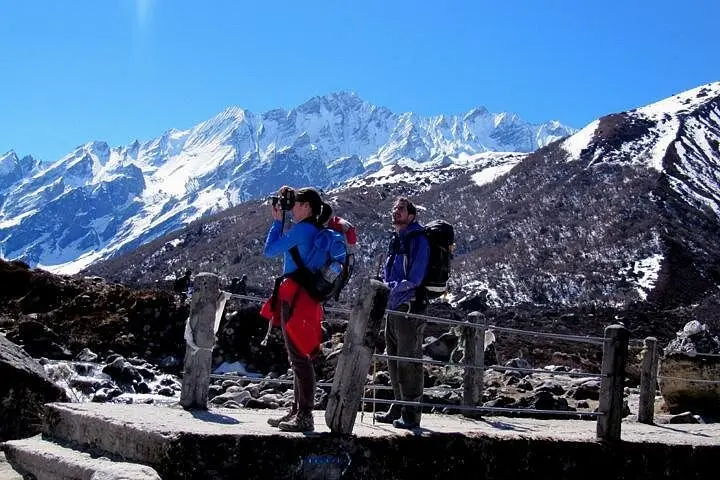
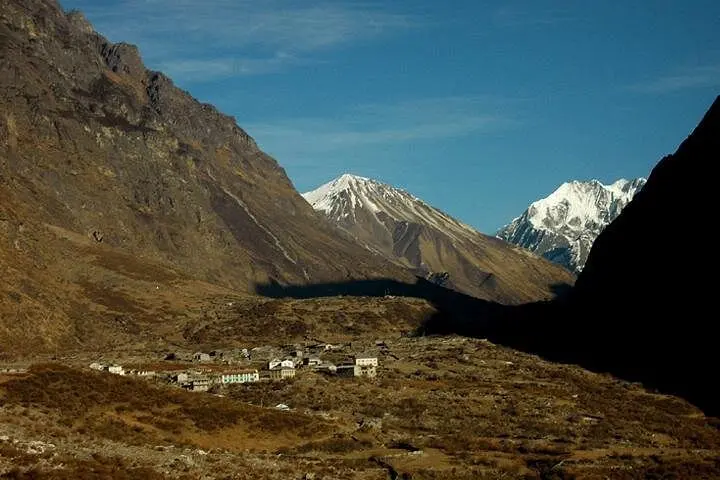
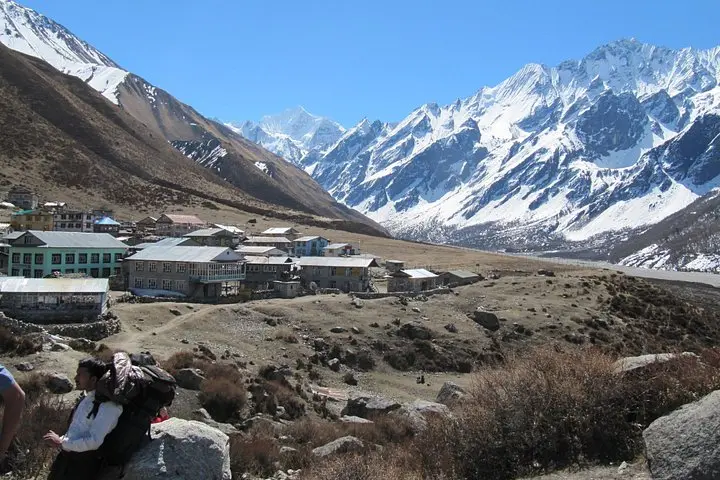
Langtang’s landscape is shaped by ice and time — a steep, glacially carved valley ringed by serrated ridges and compact peaks. The route climbs steadily to Lama Hotel, then above the tree line to Kyanjin Gompa (≈3,870 m), a stone monastery and yak-cheese hub that feels both humble and exposed under the high summits. A day hike to Cherkhuri (≈4,984 m) rewards effort with uninterrupted views of the Langtang range and distant Tibetan plateaus; glaciers and moraine fields are visible from the ridge.
Local culture is predominantly Tamang and Sherpa: mani walls, gompas, and teahouses where stories and dal bhat are exchanged. The 2015 earthquake reshaped parts of the valley and the recovery is evident in rebuilt lodges and renewed conservation efforts.
Practically: expect 4–7 hours walking on most days, uneven stone paths, and simple teahouse lodging with communal meals. Permits for Langtang National Park and a TIMS card are required; acclimatize with a rest day or short hikes on arrival. Pack warm layers, a reliable pair of boots, cash for teahouses and charging, and a guide or porter to ease navigation and altitude stress. Spring and autumn offer the most stable weather; be ready for sudden storms and cold nights year-round.
A licensed guide is recommended for navigation, local logistics, and safety; porters are available if you prefer to carry less.
You need a Langtang National Park permit and a TIMS (Trekkers' Information Management System) card; guides or operators typically arrange these before departure.
Cherkhuri is a non-technical trekking peak; expect a steep 3–5 hour round trip from Kyanjin with altitude challenge near the top.
Basic twin rooms with shared facilities are standard—bring a warm sleeping layer and expect simple hot meals and limited hot water/charging.
Himalayan Advisor Pvt. Ltd. operates guided outdoor trips and adventures with an emphasis on safety, stewardship, and memorable experiences.
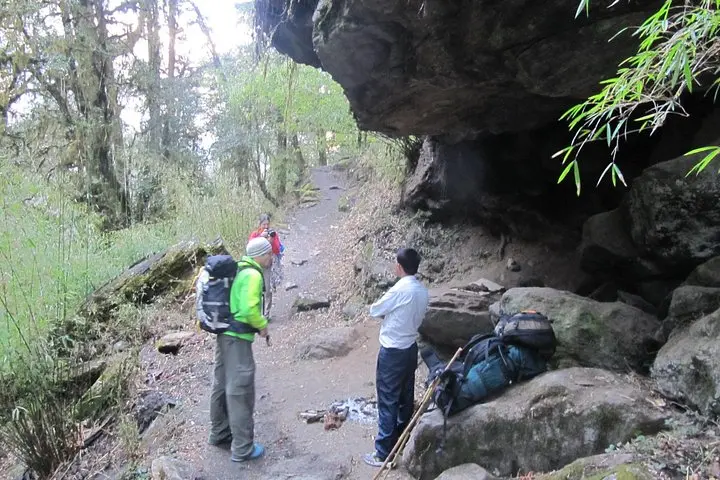
The bus peels away from Kathmandu at dawn, and by mid-afternoon the valley opens: rice terraces roll down to the Bhote Koshi, which dares you to follow its braided channels north. By Syabrubesi the traffic and clutter fall away; the trail heads uphill into rhododendron and pine, through Tamang and Sherpa villages where prayer flags snap like small alarms against the sky.
The bus peels away from Kathmandu at dawn, and by mid-afternoon the valley opens: rice terraces roll down to the Bhote Koshi, which dares you to follow its braided channels north. By Syabrubesi the traffic and clutter fall away; the trail heads uphill into rhododendron and pine, through Tamang and Sherpa villages where prayer flags snap like small alarms against the sky.
Langtang’s landscape is shaped by ice and time — a steep, glacially carved valley ringed by serrated ridges and compact peaks. The route climbs steadily to Lama Hotel, then above the tree line to Kyanjin Gompa (≈3,870 m), a stone monastery and yak-cheese hub that feels both humble and exposed under the high summits. A day hike to Cherkhuri (≈4,984 m) rewards effort with uninterrupted views of the Langtang range and distant Tibetan plateaus; glaciers and moraine fields are visible from the ridge.
Local culture is predominantly Tamang and Sherpa: mani walls, gompas, and teahouses where stories and dal bhat are exchanged. The 2015 earthquake reshaped parts of the valley and the recovery is evident in rebuilt lodges and renewed conservation efforts.
Practically: expect 4–7 hours walking on most days, uneven stone paths, and simple teahouse lodging with communal meals. Permits for Langtang National Park and a TIMS card are required; acclimatize with a rest day or short hikes on arrival. Pack warm layers, a reliable pair of boots, cash for teahouses and charging, and a guide or porter to ease navigation and altitude stress. Spring and autumn offer the most stable weather; be ready for sudden storms and cold nights year-round.