THE ADVENTURE COLLECTIVE® · Independent discovery and booking for outdoor travel

A seven-day private trek from Kathmandu into Langtang Valley, ending at Kyangjin Gompa (≈3,870 m). Expect river gorges, Tamang villages, alpine meadows and lodge-to-lodge trekking with an emphasis on acclimatization and local culture.
A seven-day private trek from Kathmandu into Langtang Valley, ending at Kyangjin Gompa (≈3,870 m). Expect river gorges, Tamang villages, alpine meadows and lodge-to-lodge trekking with an emphasis on acclimatization and local culture.
You leave Kathmandu before dawn, the city shrinking as the road climbs and the Bhote Koshi river begins to dare you with narrow gorges and sudden whitewater.
Verified experiences and guided adventures in the surrounding area.
Operated by Shriyan World Wide Tours Private Limited · Kyangjin Gompa, Bagmati Province
You leave Kathmandu before dawn, the city shrinking as the road climbs and the Bhote Koshi river begins to dare you with narrow gorges and sudden whitewater.
The drive to Syabrubesi (≈1,550 m) takes 7–8 hours, and from there seven days of walking thread you through oak and rhododendron forests, suspension bridges, yak pastures and open alpine meadows until Kyangjin Gompa (≈3,870 m) sits like a highland village beneath Langtang Lirung.
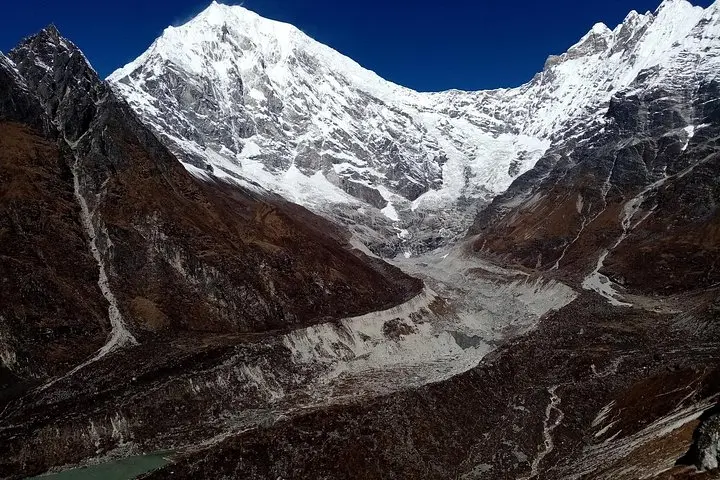
Geology here is raw: uplifted metamorphic rock and active glacial valleys carved during the last Ice Age, with moraines and steep headwalls that frame the high ridgelines. Culturally, the Tamang villages you pass retain Tibetan-Buddhist practices; Kyangjin Gompa is an active monastic center and local cheese-making is a small economy.
Expect 4–6 hours of walking on most days, single-day gains of 700–1,100 m on steeper sections, and narrow trail tread that can be muddy after rain. Tea houses provide simple lodgings and hot meals; TIMS and Langtang Conservation fees are required and commonly handled by the operator.
Practical notes: plan for altitude adjustment, hydrate deliberately, and carry warm layers for nights above 3,000 m. Trekking poles make steep descents gentler; quality boots with ankle support reduce slip risk. Spring and autumn offer the best visibility; winter brings snow and deeper cold.
This private, guided itinerary balances cultural stops with alpine views—it's classic Himalayan trekking: gritty, rewarding, and very much about adapting to the mountain’s pace.
Yes—TIMS and Langtang Conservation Area fees are required; this itinerary notes those fees are included by the operator.
The route is suitable for fit beginners with prior day-hike experience but involves long days, altitude to nearly 3,900 m, and uneven terrain—moderate conditioning is recommended.
Nightly stays are in tea houses/guest houses with basic rooms and shared facilities; hot meals are available but bring cash for extras.
Spring (March–May) and autumn (September–November) offer the best weather and visibility; monsoon months can be wet and winter brings snow at higher elevations.
Shriyan World Wide Tours Private Limited operates guided outdoor trips and adventures with an emphasis on safety, stewardship, and memorable experiences.
You leave Kathmandu before dawn, the city shrinking as the road climbs and the Bhote Koshi river begins to dare you with narrow gorges and sudden whitewater.
You leave Kathmandu before dawn, the city shrinking as the road climbs and the Bhote Koshi river begins to dare you with narrow gorges and sudden whitewater.
The drive to Syabrubesi (≈1,550 m) takes 7–8 hours, and from there seven days of walking thread you through oak and rhododendron forests, suspension bridges, yak pastures and open alpine meadows until Kyangjin Gompa (≈3,870 m) sits like a highland village beneath Langtang Lirung.
Geology here is raw: uplifted metamorphic rock and active glacial valleys carved during the last Ice Age, with moraines and steep headwalls that frame the high ridgelines. Culturally, the Tamang villages you pass retain Tibetan-Buddhist practices; Kyangjin Gompa is an active monastic center and local cheese-making is a small economy.
Expect 4–6 hours of walking on most days, single-day gains of 700–1,100 m on steeper sections, and narrow trail tread that can be muddy after rain. Tea houses provide simple lodgings and hot meals; TIMS and Langtang Conservation fees are required and commonly handled by the operator.
Practical notes: plan for altitude adjustment, hydrate deliberately, and carry warm layers for nights above 3,000 m. Trekking poles make steep descents gentler; quality boots with ankle support reduce slip risk. Spring and autumn offer the best visibility; winter brings snow and deeper cold.
This private, guided itinerary balances cultural stops with alpine views—it's classic Himalayan trekking: gritty, rewarding, and very much about adapting to the mountain’s pace.