THE ADVENTURE COLLECTIVE® · Independent discovery and booking for outdoor travel

Tackle Kilimanjaro’s Lemosho Route in seven days: a gradual, high-success itinerary that guides you from montane rainforest to the icy rim of Uhuru Peak. Read on for what to expect each day, practical gear advice, and local insights to plan your summit bid.
Tackle Kilimanjaro’s Lemosho Route in seven days: a gradual, high-success itinerary that guides you from montane rainforest to the icy rim of Uhuru Peak. Read on for what to expect each day, practical gear advice, and local insights to plan your summit bid.
A cold, thin wind tugs at your hood as you step into the night from Barafu Camp, headlamp cones cutting the black toward a rim that will hold sunrise over an African plain. The Lemosho route stages a slow, patient ascent—forest becoming moorland, moorland giving way to lunar rock—so your legs and lungs learn the mountain before the height demands everything.
Verified experiences and guided adventures in the surrounding area.
Operated by #1 Best Kilimanjaro Airport Transfer - Pick up / Drop Up | BURIGI CHATO SAFARIS CO L.T.D · Moshi, Kilimanjaro Region
A cold, thin wind tugs at your hood as you step into the night from Barafu Camp, headlamp cones cutting the black toward a rim that will hold sunrise over an African plain. The Lemosho route stages a slow, patient ascent—forest becoming moorland, moorland giving way to lunar rock—so your legs and lungs learn the mountain before the height demands everything.
Kilimanjaro is a stratovolcano with three cones—Kibo, Mawenzi and Shira—and a summit at Uhuru Peak (5,895 m). The mountain crosses five climate zones: montane rainforest, heath, moorland, alpine desert and the arctic summit. Local Chagga communities have farmed the lower slopes for generations, and early European explorers reached the heights in the late 19th century; the modern trekking economy revolves around guides, cooks and porters from nearby towns like Moshi.
On this 7-day itinerary you begin at Lemosho Gate (≈2,385 m) and climb roughly 3,500 m to Uhuru Peak, with daily hiking that ranges from short acclimatization walks to a 10–14 hour summit push. Expect narrow switchbacks, scree at high elevation, campsite nights under four-season tents, and a predawn slog to Stella Point before the summit. Guides manage pacing, meals and safety; porters carry heavy loads so you can conserve energy.
Practical notes: train with sustained aerobic sessions, break in waterproof boots, use a layered clothing system for rapidly changing conditions, and prioritize slow ascent and hydration to reduce acute mountain sickness risk. Book in the dry seasons (June–October or Jan–Feb) and choose operators that prioritize porter welfare and leave-no-trace practices.
Challenging—physically and altitude-wise. The route is designed for acclimatization, but summit success depends on pacing, fitness and how your body handles high altitude.
The two main dry windows are June–October and late December–February; weather is more stable then and trails are less muddy.
No technical mountaineering skills are required for the Lemosho route; you’ll need sturdy boots and cold-weather clothing but not ropes or crampons for the standard path.
Typical inclusions are park fees/permits, professional guides, cooks and porters, campsite accommodations, and meals as listed in the itinerary—confirm specifics with the operator before booking.
#1 Best Kilimanjaro Airport Transfer - Pick up / Drop Up | BURIGI CHATO SAFARIS CO L.T.D operates guided outdoor trips and adventures with an emphasis on safety, stewardship, and memorable experiences.
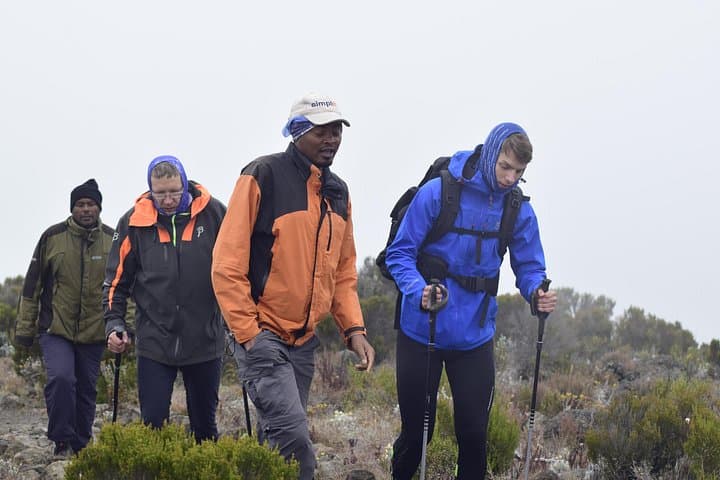
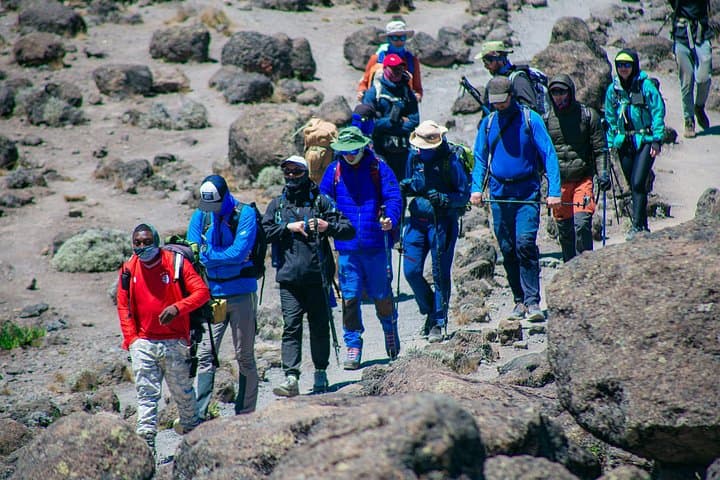


A cold, thin wind tugs at your hood as you step into the night from Barafu Camp, headlamp cones cutting the black toward a rim that will hold sunrise over an African plain. The Lemosho route stages a slow, patient ascent—forest becoming moorland, moorland giving way to lunar rock—so your legs and lungs learn the mountain before the height demands everything.
A cold, thin wind tugs at your hood as you step into the night from Barafu Camp, headlamp cones cutting the black toward a rim that will hold sunrise over an African plain. The Lemosho route stages a slow, patient ascent—forest becoming moorland, moorland giving way to lunar rock—so your legs and lungs learn the mountain before the height demands everything.
Kilimanjaro is a stratovolcano with three cones—Kibo, Mawenzi and Shira—and a summit at Uhuru Peak (5,895 m). The mountain crosses five climate zones: montane rainforest, heath, moorland, alpine desert and the arctic summit. Local Chagga communities have farmed the lower slopes for generations, and early European explorers reached the heights in the late 19th century; the modern trekking economy revolves around guides, cooks and porters from nearby towns like Moshi.
On this 7-day itinerary you begin at Lemosho Gate (≈2,385 m) and climb roughly 3,500 m to Uhuru Peak, with daily hiking that ranges from short acclimatization walks to a 10–14 hour summit push. Expect narrow switchbacks, scree at high elevation, campsite nights under four-season tents, and a predawn slog to Stella Point before the summit. Guides manage pacing, meals and safety; porters carry heavy loads so you can conserve energy.
Practical notes: train with sustained aerobic sessions, break in waterproof boots, use a layered clothing system for rapidly changing conditions, and prioritize slow ascent and hydration to reduce acute mountain sickness risk. Book in the dry seasons (June–October or Jan–Feb) and choose operators that prioritize porter welfare and leave-no-trace practices.