THE ADVENTURE COLLECTIVE® · Independent discovery and booking for outdoor travel

The Lemosho Route offers a quieter, scenic 7-day ascent of Mount Kilimanjaro that prioritizes acclimatization and a higher summit success rate. Hikers pass rainforest, moorland and alpine desert before attempting Uhuru Peak.
The Lemosho Route offers a quieter, scenic 7-day ascent of Mount Kilimanjaro that prioritizes acclimatization and a higher summit success rate. Hikers pass rainforest, moorland and alpine desert before attempting Uhuru Peak.
Night on the trail begins with headlamps weaving through a rainforest that coughs mist over your boots. By day three the trees thin and the mountain bares its volcanic ribs — volcanic scree grinding underfoot — until the white crown of Kibo pierces the sky. On the Lemosho Route, hikers move from montane forest to heather moorland, then into alpine desert before the final, bone-deep push to Uhuru Peak.
Verified experiences and guided adventures in the surrounding area.
Operated by PINNACLE ADVENTURES & SAFARIS LTD. · Moshi, Kilimanjaro Region
Night on the trail begins with headlamps weaving through a rainforest that coughs mist over your boots. By day three the trees thin and the mountain bares its volcanic ribs — volcanic scree grinding underfoot — until the white crown of Kibo pierces the sky. On the Lemosho Route, hikers move from montane forest to heather moorland, then into alpine desert before the final, bone-deep push to Uhuru Peak.
Kilimanjaro is a dormant stratovolcano built of three cones: Mawenzi, Shira and Kibo. The Lemosho approach was developed to increase acclimatization, giving climbers more gradual altitude gain and better summit success. The mountain sits on ancestral Chagga lands; villages below still mark seasonal rains and harvests by the flanks of the massif.
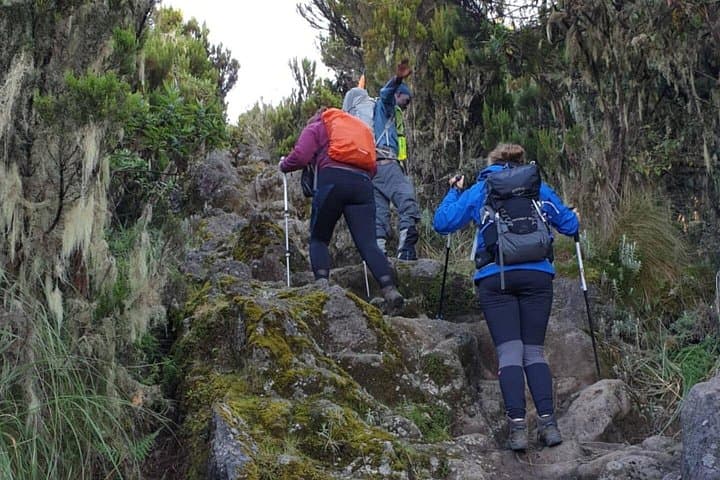
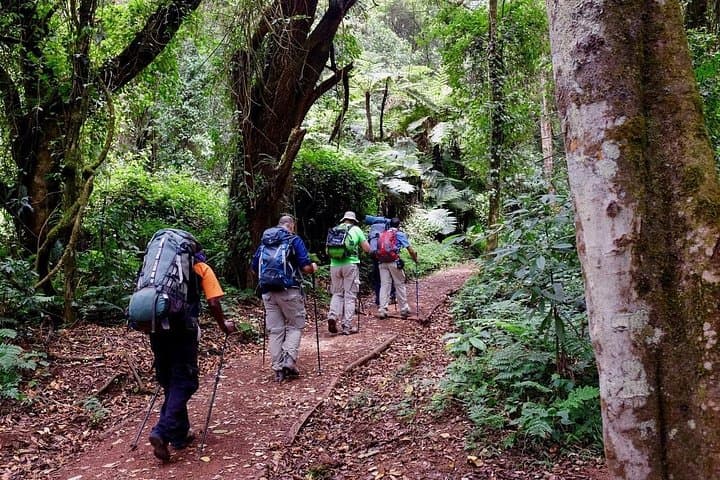
Expect varied terrain: packed dirt and root-strewn forest tracks, boggy moorland, rocky scree and occasional snow near 5,800 m. Weather shifts quickly — the mountain breathes cold at night and pushes sun at midday. Guides carry tents, meals, and emergency oxygen; porters set up camp before clients arrive.
Practical guidance: train with multi-hour hikes and stair or treadmill sessions carrying a daypack; practice walking on loose scree. Hydrate consistently and pace the summit night — slow, steady steps beat fast spurts. Bring layered clothing for desert wind and sub-freezing summit temps, a sleeping bag rated for cold, and reliable hiking boots with ankle support.
This seven-day itinerary balances scenery and acclimatization to maximize the chance of reaching Africa’s rooftop while keeping logistics compact and focused.
Dry months (January–March and June–October) offer more stable weather and clearer summit windows, though conditions can change at any time.
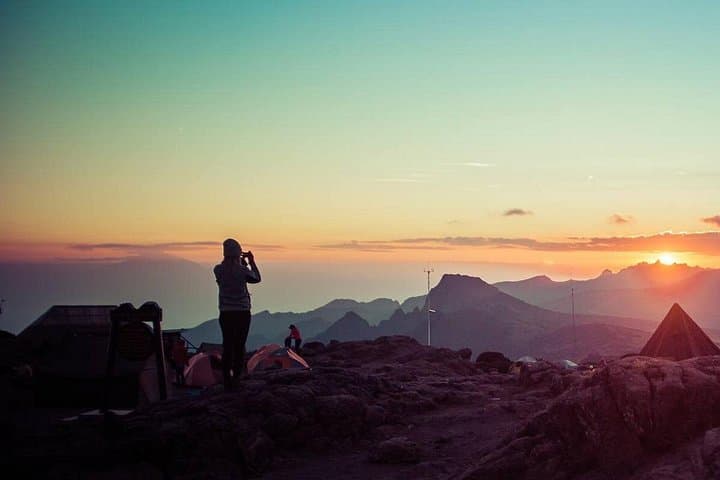
Summit night typically starts around midnight and reaches Uhuru Peak after 6–8 hours of slow ascent, followed by a long descent; it’s the most physically and mentally demanding section.
Yes—this itinerary includes a qualified guide team, assistant guides, porters and cook; tipping is customary and important to their livelihoods.
Acute mountain sickness can occur; this route improves acclimatization and guides monitor symptoms. Emergency oxygen and first-aid kits are carried, but descent is the primary treatment for severe cases.
PINNACLE ADVENTURES & SAFARIS LTD. operates guided outdoor trips and adventures with an emphasis on safety, stewardship, and memorable experiences.

Night on the trail begins with headlamps weaving through a rainforest that coughs mist over your boots. By day three the trees thin and the mountain bares its volcanic ribs — volcanic scree grinding underfoot — until the white crown of Kibo pierces the sky. On the Lemosho Route, hikers move from montane forest to heather moorland, then into alpine desert before the final, bone-deep push to Uhuru Peak.
Night on the trail begins with headlamps weaving through a rainforest that coughs mist over your boots. By day three the trees thin and the mountain bares its volcanic ribs — volcanic scree grinding underfoot — until the white crown of Kibo pierces the sky. On the Lemosho Route, hikers move from montane forest to heather moorland, then into alpine desert before the final, bone-deep push to Uhuru Peak.
Kilimanjaro is a dormant stratovolcano built of three cones: Mawenzi, Shira and Kibo. The Lemosho approach was developed to increase acclimatization, giving climbers more gradual altitude gain and better summit success. The mountain sits on ancestral Chagga lands; villages below still mark seasonal rains and harvests by the flanks of the massif.
Expect varied terrain: packed dirt and root-strewn forest tracks, boggy moorland, rocky scree and occasional snow near 5,800 m. Weather shifts quickly — the mountain breathes cold at night and pushes sun at midday. Guides carry tents, meals, and emergency oxygen; porters set up camp before clients arrive.
Practical guidance: train with multi-hour hikes and stair or treadmill sessions carrying a daypack; practice walking on loose scree. Hydrate consistently and pace the summit night — slow, steady steps beat fast spurts. Bring layered clothing for desert wind and sub-freezing summit temps, a sleeping bag rated for cold, and reliable hiking boots with ankle support.
This seven-day itinerary balances scenery and acclimatization to maximize the chance of reaching Africa’s rooftop while keeping logistics compact and focused.