THE ADVENTURE COLLECTIVE® · Independent discovery and booking for outdoor travel

A seven-day Lemosho Route trek takes you from Londorossi Gate through forest, moorland and scree to Uhuru Peak. This pragmatic guide walks you through what to expect — distances, terrain, acclimatization and logistics — so you can plan for summit night and the descent back to Moshi.
A seven-day Lemosho Route trek takes you from Londorossi Gate through forest, moorland and scree to Uhuru Peak. This pragmatic guide walks you through what to expect — distances, terrain, acclimatization and logistics — so you can plan for summit night and the descent back to Moshi.
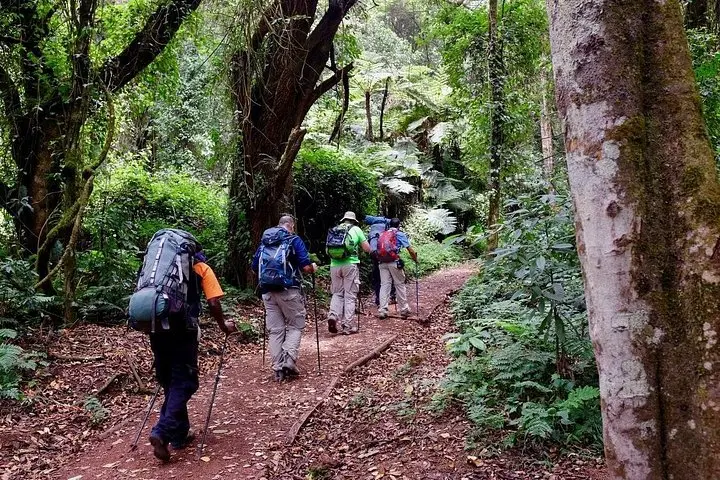
The day begins at Londorossi Gate with mist trimming the edge of an ancient forest and the low hum of porters packing kettles and tents. You push through moss-draped trees, sunlight fragmenting into ribbons, and the trail narrows into heather and volcanic scree that seem to lean toward Kibo like an expectant crowd. Over seven days the mountain changes character: rainforest gives way to moorland, then jagged lava ridges; the air thins and the summit becomes an objective that commands patience as much as strength.
Verified experiences and guided adventures in the surrounding area.
Operated by Intrepid Explorer Tanzania · Moshi, Kilimanjaro Region
The day begins at Londorossi Gate with mist trimming the edge of an ancient forest and the low hum of porters packing kettles and tents. You push through moss-draped trees, sunlight fragmenting into ribbons, and the trail narrows into heather and volcanic scree that seem to lean toward Kibo like an expectant crowd. Over seven days the mountain changes character: rainforest gives way to moorland, then jagged lava ridges; the air thins and the summit becomes an objective that commands patience as much as strength.
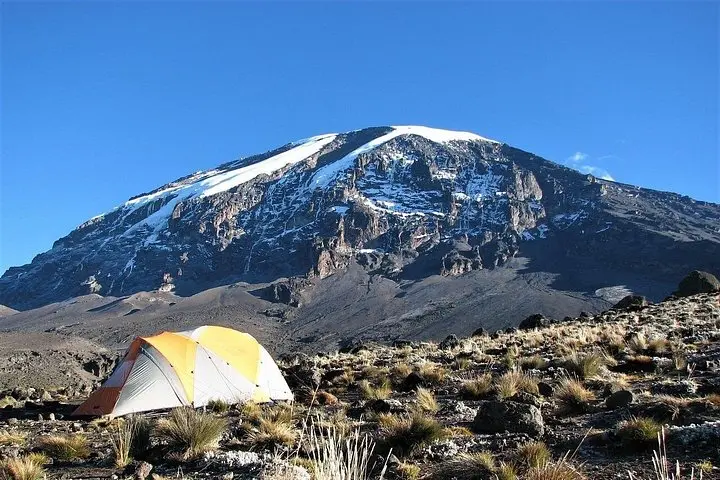
Geologically, Kilimanjaro is a composite of three volcanic cones — Shira, Mawenzi and the sleeping giant, Kibo — whose glaciers have carved the crater rim you’ll reach at Stella Point. The Lemosho Route opens on the less-traveled western flank, preserving wild habitats where buffalo, forest elephants and black-and-white colobus still roam in the foothills. Culturally, the surrounding slopes are worked by the Chagga people whose coffee farms and terraced fields frame the approach to Moshi; their histories and mountain lore are woven into every campfire conversation.
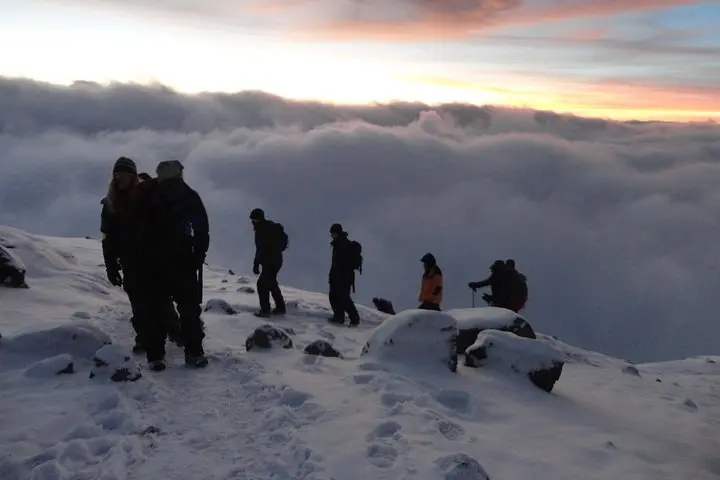
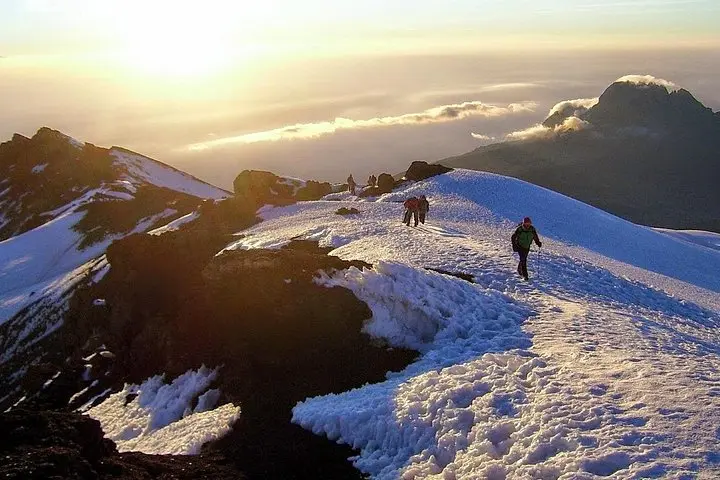
The itinerary moves steadily: Lemosho Glades (2,385 m) to Big Tree Camp; across Shira Plateau to Shira 1 and 2 (3,500–3,900 m); up to Lava Tower (4,640 m) and down to Barranco Camp; then over the Barranco Wall, through Karanga to Barafu (4,640 m) for summit preparation. Summit night starts around midnight, a gruelling 4–6 hour slog on scree to Stella Point and then Uhuru Peak at 5,895 m. Descent follows Mweka for rain forest relief and a celebratory shower in Moshi.
Practical edge: distance and altitude matter more than technical difficulty. Expect cumulative gain of roughly 3,500 m from gate to summit, varied terrain (muddy forest trails, rocky moorland, loose scree) and long summit-night exertion — plan for 12–15 hours total on summit day. Acclimatization is built into the schedule but stay disciplined: hydrate, eat, and move slowly. The operator includes guides, porters, meals, park fees, emergency oxygen and two hotel nights; bring layered insulation, a 4-season sleeping bag, sturdy boots and a headlamp.
Logistics and tips: fly into Kilimanjaro International Airport or land in Arusha and transfer to Moshi. Book the trek in advance for peak windows — June–September and December–February — and ensure travel insurance covers high-altitude evacuation. Respect porter weight limits and local culture, pack out waste, and prepare for rapid weather swings: the mountain can change mood in an hour. If you keep pace, manage your breathing and trust the crew, the summit sunrise at Uhuru Peak is an earned clarity — the horizon cracking open beneath you — and a reminder why climbers return to this raw, uplifted place.
No ropes or technical ice gear are required on the Lemosho Route; it's a non-technical high-altitude trek, but crampons are not normally used for the standard route.
Success depends on fitness and acclimatization; a 7-day itinerary has lower summit rates than 8–9 day plans, so expect moderate-to-good odds with disciplined pacing and good weather.
Yes — reputable operators include Kilimanjaro National Park fees and camping fees in the package; confirm specific inclusions before booking.
The clearest windows are June–September and December–February; March–May brings long rains and can make trails slippery.
Yes — get insurance that covers high-altitude trekking and emergency helicopter evacuation to be safe.
Professional outfits supply licensed guides, assistant guides and porters; check that porter loads adhere to weight limits and that crews receive fair wages and tips.
Intrepid Explorer Tanzania operates guided outdoor trips and adventures with an emphasis on safety, stewardship, and memorable experiences.
The day begins at Londorossi Gate with mist trimming the edge of an ancient forest and the low hum of porters packing kettles and tents. You push through moss-draped trees, sunlight fragmenting into ribbons, and the trail narrows into heather and volcanic scree that seem to lean toward Kibo like an expectant crowd. Over seven days the mountain changes character: rainforest gives way to moorland, then jagged lava ridges; the air thins and the summit becomes an objective that commands patience as much as strength.
The day begins at Londorossi Gate with mist trimming the edge of an ancient forest and the low hum of porters packing kettles and tents. You push through moss-draped trees, sunlight fragmenting into ribbons, and the trail narrows into heather and volcanic scree that seem to lean toward Kibo like an expectant crowd. Over seven days the mountain changes character: rainforest gives way to moorland, then jagged lava ridges; the air thins and the summit becomes an objective that commands patience as much as strength.
Geologically, Kilimanjaro is a composite of three volcanic cones — Shira, Mawenzi and the sleeping giant, Kibo — whose glaciers have carved the crater rim you’ll reach at Stella Point. The Lemosho Route opens on the less-traveled western flank, preserving wild habitats where buffalo, forest elephants and black-and-white colobus still roam in the foothills. Culturally, the surrounding slopes are worked by the Chagga people whose coffee farms and terraced fields frame the approach to Moshi; their histories and mountain lore are woven into every campfire conversation.
The itinerary moves steadily: Lemosho Glades (2,385 m) to Big Tree Camp; across Shira Plateau to Shira 1 and 2 (3,500–3,900 m); up to Lava Tower (4,640 m) and down to Barranco Camp; then over the Barranco Wall, through Karanga to Barafu (4,640 m) for summit preparation. Summit night starts around midnight, a gruelling 4–6 hour slog on scree to Stella Point and then Uhuru Peak at 5,895 m. Descent follows Mweka for rain forest relief and a celebratory shower in Moshi.
Practical edge: distance and altitude matter more than technical difficulty. Expect cumulative gain of roughly 3,500 m from gate to summit, varied terrain (muddy forest trails, rocky moorland, loose scree) and long summit-night exertion — plan for 12–15 hours total on summit day. Acclimatization is built into the schedule but stay disciplined: hydrate, eat, and move slowly. The operator includes guides, porters, meals, park fees, emergency oxygen and two hotel nights; bring layered insulation, a 4-season sleeping bag, sturdy boots and a headlamp.
Logistics and tips: fly into Kilimanjaro International Airport or land in Arusha and transfer to Moshi. Book the trek in advance for peak windows — June–September and December–February — and ensure travel insurance covers high-altitude evacuation. Respect porter weight limits and local culture, pack out waste, and prepare for rapid weather swings: the mountain can change mood in an hour. If you keep pace, manage your breathing and trust the crew, the summit sunrise at Uhuru Peak is an earned clarity — the horizon cracking open beneath you — and a reminder why climbers return to this raw, uplifted place.