THE ADVENTURE COLLECTIVE® · Independent discovery and booking for outdoor travel

A seven-day west-flank climb that favors scenery and acclimatization: the Lemosho Route combines quiet forest approaches, the high Shira Plateau, and a classic summit push from Barafu to Uhuru Peak. Expect steady days, dramatic viewpoints, and an emphasis on pacing to beat altitude.
A seven-day west-flank climb that favors scenery and acclimatization: the Lemosho Route combines quiet forest approaches, the high Shira Plateau, and a classic summit push from Barafu to Uhuru Peak. Expect steady days, dramatic viewpoints, and an emphasis on pacing to beat altitude.
On a cool, clear morning the trail peels away from the mossy fringe of montane forest and climbs into a thinner, sharper air. The Lemosho Route begins quietly — porters and guides moving with practiced economy, birds calling from the canopy — and for two days you hike through a world that still seems reluctant to reveal the mountain’s full scale. Then the path opens onto the Shira Plateau: a broad, windswept shelf of heath and alpine grass where Kibo’s black bulk finally steps into view.
Verified experiences and guided adventures in the surrounding area.
Operated by Golden Summit Adventures · Moshi, Kilimanjaro Region
On a cool, clear morning the trail peels away from the mossy fringe of montane forest and climbs into a thinner, sharper air. The Lemosho Route begins quietly — porters and guides moving with practiced economy, birds calling from the canopy — and for two days you hike through a world that still seems reluctant to reveal the mountain’s full scale. Then the path opens onto the Shira Plateau: a broad, windswept shelf of heath and alpine grass where Kibo’s black bulk finally steps into view.
Approaching Kilimanjaro from the west, the Lemosho Route is prized for scenery and a gentle profile that favors acclimatization. The route was popularized in the late 20th century as climbers looked for lower-traffic alternatives to Machame. Geologically, you are walking over ancient volcanic deposits; Kibo’s summit sits above a crater rim rimmed with rock and permanent ice remnants from the glaciers that have sculpted the mountain for millennia. Culturally, the climb threads through land of the Chagga people, whose villages and irrigation terraces lie on Kilimanjaro’s lower slopes; many climbing crews are drawn from these communities, and their knowledge of weather, water sources, and trail rhythm is part of the route’s safety fabric.
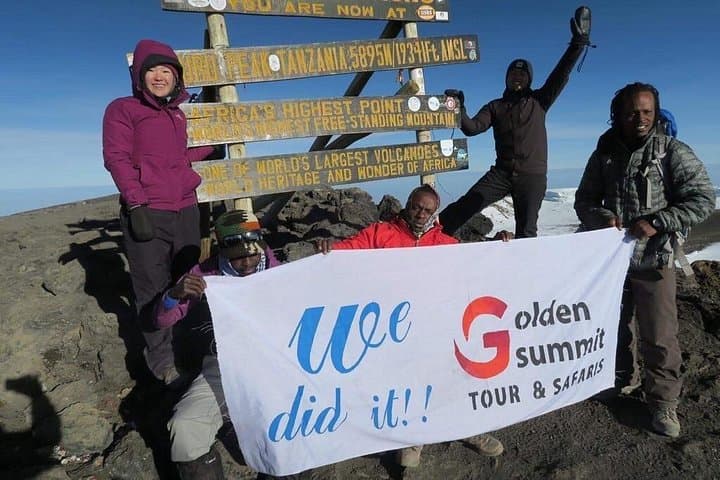
Days on Lemosho are paced to give your body time to adjust: long, steady ascents, short afternoons, a memorable climb to Lava Tower and the dramatic Barranco Wall. The summit push leaves Barafu in the small hours; the moon and stars feel close enough to touch as you pick your way up scree to Stella Point, where the sunrise spills gold over Mawenzi and Kibo’s ice fields. Descending through moorland and then into forest, the mountain shifts personality — from exposed alpine to green shelter — as the earth seems to coax you back down.
Practical guidance: plan for 6–8 hours of hiking on most days, with summit day closer to 10–14 hours round trip. Expect altitudes from roughly 2,000 m at trailhead to 5,895 m at Uhuru Peak; acclimatization is the critical variable. Hydrate early, snack frequently, and treat altitude symptoms seriously — guides will evaluate and act if signs progress. Choose sturdy, broken-in boots and a down jacket for summit night; layers are your best strategy for the sharply changing temperature band between forest and summit.
Logistics and local notes: most climbers base in Moshi or Arusha, with transfers arranged to Londorossi/Lemosho gates. Park regulations require registered guides and porters; tipping is customary and helps sustain local mountain economies. Respect trail closures, pack out non-biodegradable waste where possible, and be prepared for rain any time of year above 2,500 m. For many, the Lemosho Route is less about speed and more about presence — the slow reveal of a mountain you will remember long after the certificate is in your hand.
Success depends on fitness and acclimatization but 7-day itineraries have a solid summit rate when climbers follow pacing and crew guidance; expect variations with weather.
No ropes or technical mountaineering skills are required on the standard Lemosho route; crampons are not typically necessary but check conditions at high altitude.
Permits and park fees are usually handled by the operator—confirm during booking and keep proof of registration with you.
Plan to tip guides, assistant guides, and porters at the end of the trek; many recommend a per-person pool distributed by the head guide.
Yellow fever vaccination is required for some travelers; carry personal medications and consult a travel clinic about altitude medications like acetazolamide if recommended.
The longest dry windows are June–October and January–February; conditions can be reasonable in shoulder months but expect more rain in March–May and November.
Golden Summit Adventures operates guided outdoor trips and adventures with an emphasis on safety, stewardship, and memorable experiences.
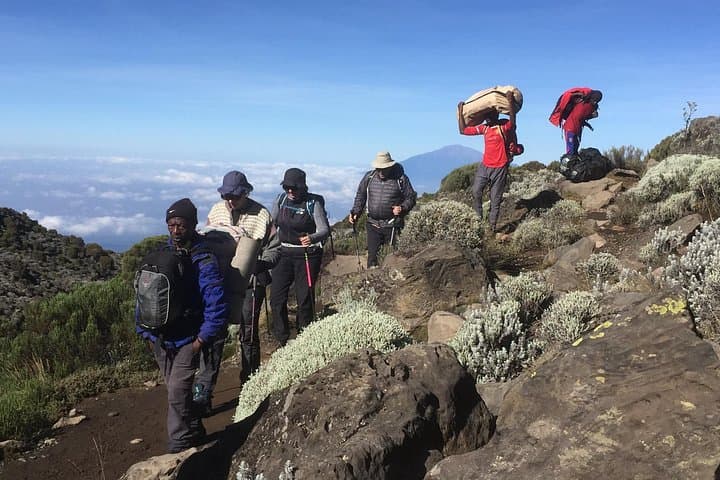

On a cool, clear morning the trail peels away from the mossy fringe of montane forest and climbs into a thinner, sharper air. The Lemosho Route begins quietly — porters and guides moving with practiced economy, birds calling from the canopy — and for two days you hike through a world that still seems reluctant to reveal the mountain’s full scale. Then the path opens onto the Shira Plateau: a broad, windswept shelf of heath and alpine grass where Kibo’s black bulk finally steps into view.
On a cool, clear morning the trail peels away from the mossy fringe of montane forest and climbs into a thinner, sharper air. The Lemosho Route begins quietly — porters and guides moving with practiced economy, birds calling from the canopy — and for two days you hike through a world that still seems reluctant to reveal the mountain’s full scale. Then the path opens onto the Shira Plateau: a broad, windswept shelf of heath and alpine grass where Kibo’s black bulk finally steps into view.
Approaching Kilimanjaro from the west, the Lemosho Route is prized for scenery and a gentle profile that favors acclimatization. The route was popularized in the late 20th century as climbers looked for lower-traffic alternatives to Machame. Geologically, you are walking over ancient volcanic deposits; Kibo’s summit sits above a crater rim rimmed with rock and permanent ice remnants from the glaciers that have sculpted the mountain for millennia. Culturally, the climb threads through land of the Chagga people, whose villages and irrigation terraces lie on Kilimanjaro’s lower slopes; many climbing crews are drawn from these communities, and their knowledge of weather, water sources, and trail rhythm is part of the route’s safety fabric.
Days on Lemosho are paced to give your body time to adjust: long, steady ascents, short afternoons, a memorable climb to Lava Tower and the dramatic Barranco Wall. The summit push leaves Barafu in the small hours; the moon and stars feel close enough to touch as you pick your way up scree to Stella Point, where the sunrise spills gold over Mawenzi and Kibo’s ice fields. Descending through moorland and then into forest, the mountain shifts personality — from exposed alpine to green shelter — as the earth seems to coax you back down.
Practical guidance: plan for 6–8 hours of hiking on most days, with summit day closer to 10–14 hours round trip. Expect altitudes from roughly 2,000 m at trailhead to 5,895 m at Uhuru Peak; acclimatization is the critical variable. Hydrate early, snack frequently, and treat altitude symptoms seriously — guides will evaluate and act if signs progress. Choose sturdy, broken-in boots and a down jacket for summit night; layers are your best strategy for the sharply changing temperature band between forest and summit.
Logistics and local notes: most climbers base in Moshi or Arusha, with transfers arranged to Londorossi/Lemosho gates. Park regulations require registered guides and porters; tipping is customary and helps sustain local mountain economies. Respect trail closures, pack out non-biodegradable waste where possible, and be prepared for rain any time of year above 2,500 m. For many, the Lemosho Route is less about speed and more about presence — the slow reveal of a mountain you will remember long after the certificate is in your hand.