THE ADVENTURE COLLECTIVE® · Independent discovery and booking for outdoor travel

Cross a week of Jordan’s essential landscapes—from Roman colonnades and Byzantine mosaics to Petra’s carved canyons and Wadi Rum’s desert moonscapes—while staying in private, comfortable hotels and floating at the Dead Sea. This seven-day luxury tour pairs cultural depth with practical pacing.
Cross a week of Jordan’s essential landscapes—from Roman colonnades and Byzantine mosaics to Petra’s carved canyons and Wadi Rum’s desert moonscapes—while staying in private, comfortable hotels and floating at the Dead Sea. This seven-day luxury tour pairs cultural depth with practical pacing.
You arrive at Queen Alia International as the late afternoon sun slants over Amman’s limestone facades, and the driver steps forward with a sign bearing your name. The city hums with minivans and vendors, but within an hour you’re in a leather-upholstered vehicle that will be your quiet companion for the next week. Over seven days you move from the capital’s layered streets to pine-covered Ajloun, the Roman colonnades of Jerash, the mosaic rooms of Madaba, the buoyant hush of the Dead Sea, the rose-red corridors of Petra, and finally the alien dunes of Wadi Rum.
Verified experiences and guided adventures in the surrounding area.
Operated by Petra Limo · Amman, Amman Governorate
You arrive at Queen Alia International as the late afternoon sun slants over Amman’s limestone facades, and the driver steps forward with a sign bearing your name. The city hums with minivans and vendors, but within an hour you’re in a leather-upholstered vehicle that will be your quiet companion for the next week. Over seven days you move from the capital’s layered streets to pine-covered Ajloun, the Roman colonnades of Jerash, the mosaic rooms of Madaba, the buoyant hush of the Dead Sea, the rose-red corridors of Petra, and finally the alien dunes of Wadi Rum.
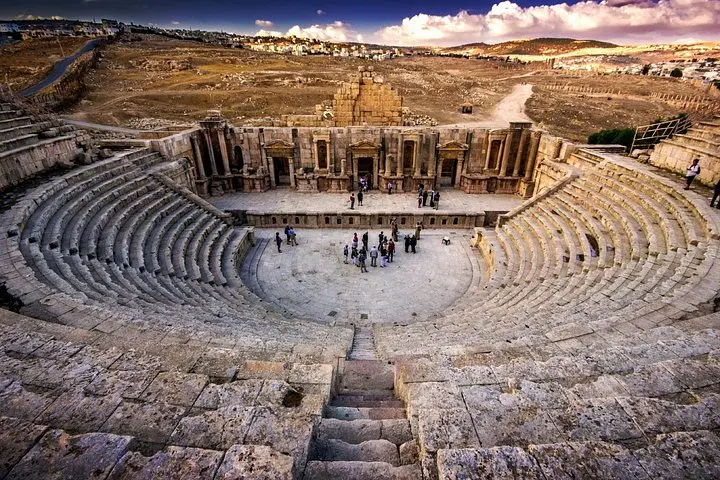
The route reads like a condensed history of the Levant. Jerash preserves Roman engineering—streets, arches and theaters still aligned to an imperial grid—while Ajloun’s fortress, perched on a green ridge, was built to check Crusader advances with medieval Arab military design. Madaba’s Byzantine mosaics map an older world, and Mount Nebo offers the kind of long-view geography that shaped pilgrimage routes: from its summit you can see the Dead Sea’s reflective slick and, on clear days, the outline of Jerusalem.
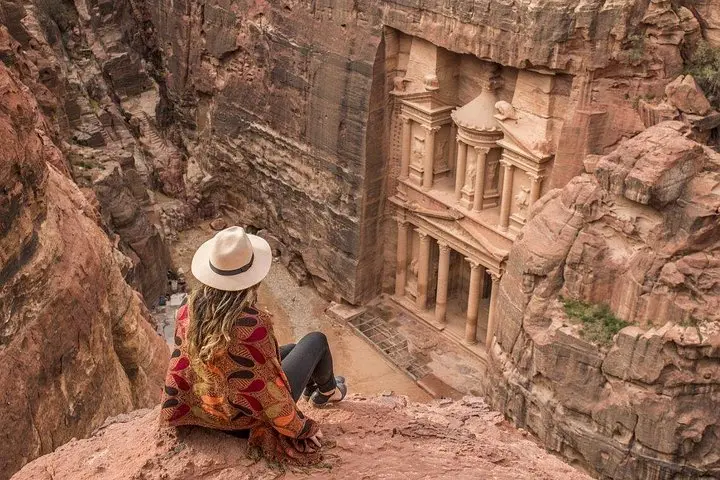
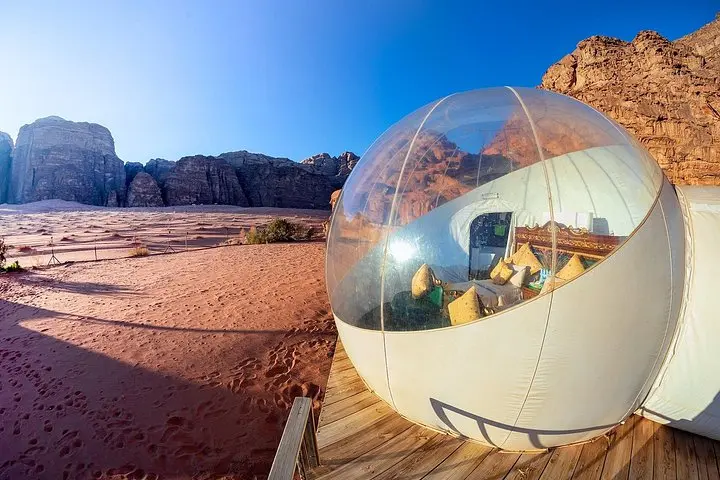
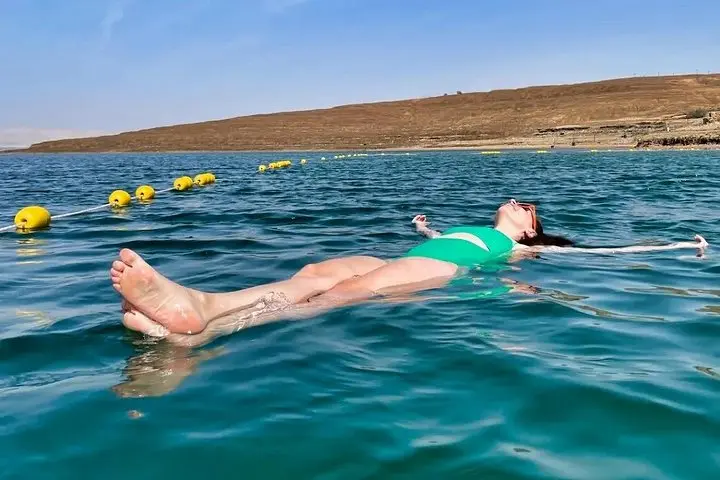
Geology shapes each stop. The Dead Sea is the world’s lowest point, a trapped basin whose mineral-rich mud and dense water famously support an effortless float. Petra’s sandstone has been sculpted into striated facades and narrow siqs by wind and rare flash floods, while Wadi Rum’s granite and sandstone slabs stand like sculpted bones—wind as an artist, carving arches and towers.
Along the way you meet Jordanian hospitality: tea poured in small glasses, Bedouin guides in Wadi Rum sharing stories beside a campfire, and chef-driven hotel breakfasts that reframe hummus and fresh za’atar as essential fuel. The trip is private and paced to combine sightseeing with downtime—expect a relaxation day at the Dead Sea and an evening under a desert sky.
Practical edge: bring a valid Jordan Pass or be prepared to pay individual site fees, and schedule Petra early to avoid midday crowds and heat. Hydration matters—carry a reusable bottle and use supplied bottled water for long drives. Footwear should be sturdy but flexible; Petra’s uneven paths and Wadi Rum’s sand demand different traction. For Dead Sea time, bring reef-safe sunscreen and a swimsuit you don’t mind staining with mineral-rich mud. Budget for tips to drivers and local guides—small gestures go a long way.
This itinerary balances curated comfort (hotel tiers from 3* to super-luxury, private transfers, and an English-speaking driver) with authentic moments: a three-hour local guide in Petra, a jeep safari in Wadi Rum and the quiet buoyancy of floating in the world’s lowest sea.
You don’t strictly need it, but the Jordan Pass often saves money by bundling entry to Petra and other sites and excludes the visa fee if purchased before arrival.
Entrance fees are not included unless you buy the Jordan Pass; the itinerary notes that site admissions may be required separately.
Yes—there’s a dedicated leisure day at the Dead Sea for floating, spa treatments, and hotel relaxation.
The operator lists wheelchair-accessible options for transport and sites, but accessibility at ancient sites like Petra is limited; contact the supplier for details and customization.
Expect several hours of walking on uneven stone surfaces; Petra’s main sightseeing often covers 2–4 miles depending on how far you explore.
Local currency is the Jordanian dinar (JOD); credit cards are widely accepted, but carry small bills for tips—drivers and guides typically expect modest gratuities.
Petra Limo operates guided outdoor trips and adventures with an emphasis on safety, stewardship, and memorable experiences.
You arrive at Queen Alia International as the late afternoon sun slants over Amman’s limestone facades, and the driver steps forward with a sign bearing your name. The city hums with minivans and vendors, but within an hour you’re in a leather-upholstered vehicle that will be your quiet companion for the next week. Over seven days you move from the capital’s layered streets to pine-covered Ajloun, the Roman colonnades of Jerash, the mosaic rooms of Madaba, the buoyant hush of the Dead Sea, the rose-red corridors of Petra, and finally the alien dunes of Wadi Rum.
You arrive at Queen Alia International as the late afternoon sun slants over Amman’s limestone facades, and the driver steps forward with a sign bearing your name. The city hums with minivans and vendors, but within an hour you’re in a leather-upholstered vehicle that will be your quiet companion for the next week. Over seven days you move from the capital’s layered streets to pine-covered Ajloun, the Roman colonnades of Jerash, the mosaic rooms of Madaba, the buoyant hush of the Dead Sea, the rose-red corridors of Petra, and finally the alien dunes of Wadi Rum.
The route reads like a condensed history of the Levant. Jerash preserves Roman engineering—streets, arches and theaters still aligned to an imperial grid—while Ajloun’s fortress, perched on a green ridge, was built to check Crusader advances with medieval Arab military design. Madaba’s Byzantine mosaics map an older world, and Mount Nebo offers the kind of long-view geography that shaped pilgrimage routes: from its summit you can see the Dead Sea’s reflective slick and, on clear days, the outline of Jerusalem.
Geology shapes each stop. The Dead Sea is the world’s lowest point, a trapped basin whose mineral-rich mud and dense water famously support an effortless float. Petra’s sandstone has been sculpted into striated facades and narrow siqs by wind and rare flash floods, while Wadi Rum’s granite and sandstone slabs stand like sculpted bones—wind as an artist, carving arches and towers.
Along the way you meet Jordanian hospitality: tea poured in small glasses, Bedouin guides in Wadi Rum sharing stories beside a campfire, and chef-driven hotel breakfasts that reframe hummus and fresh za’atar as essential fuel. The trip is private and paced to combine sightseeing with downtime—expect a relaxation day at the Dead Sea and an evening under a desert sky.
Practical edge: bring a valid Jordan Pass or be prepared to pay individual site fees, and schedule Petra early to avoid midday crowds and heat. Hydration matters—carry a reusable bottle and use supplied bottled water for long drives. Footwear should be sturdy but flexible; Petra’s uneven paths and Wadi Rum’s sand demand different traction. For Dead Sea time, bring reef-safe sunscreen and a swimsuit you don’t mind staining with mineral-rich mud. Budget for tips to drivers and local guides—small gestures go a long way.
This itinerary balances curated comfort (hotel tiers from 3* to super-luxury, private transfers, and an English-speaking driver) with authentic moments: a three-hour local guide in Petra, a jeep safari in Wadi Rum and the quiet buoyancy of floating in the world’s lowest sea.