THE ADVENTURE COLLECTIVE® · Independent discovery and booking for outdoor travel

A seven-day, private-guided ascent of Kilimanjaro via the Machame Route that balances acclimatization with challenging terrain. Follow rainforest, moorland and alpine desert to reach Uhuru Peak with expert guides, porters and full-camp support.
A seven-day, private-guided ascent of Kilimanjaro via the Machame Route that balances acclimatization with challenging terrain. Follow rainforest, moorland and alpine desert to reach Uhuru Peak with expert guides, porters and full-camp support.
Just before dawn at Machame Gate the cloud forest breathes cold mist across the trail and the western face of Kibo looms like a hulking promise. The Machame Route quickly leaves the busy gate behind, threading through moss-draped trees, then opens onto the wind-buffed moorland of Shira Plateau where dark volcanic rock meets pale lobelia.
Verified experiences and guided adventures in the surrounding area.
Operated by Gifted African Adventures · Moshi, Kilimanjaro Region
Just before dawn at Machame Gate the cloud forest breathes cold mist across the trail and the western face of Kibo looms like a hulking promise. The Machame Route quickly leaves the busy gate behind, threading through moss-draped trees, then opens onto the wind-buffed moorland of Shira Plateau where dark volcanic rock meets pale lobelia.
The route traces one flank of Africa’s highest freestanding mountain, built from three volcanic cones—Kibo, Mawenzi and Shira—shaped by eruptions tens of thousands of years ago. Chagga villages ring the lower slopes; porters and guides from the Kilimanjaro region carry both load and local knowledge that make summit day possible. Hans Meyer’s 1889 ascent made Uhuru Peak famous, but the mountain remains a living landscape, where glacier tongues still dare the equatorial sun.
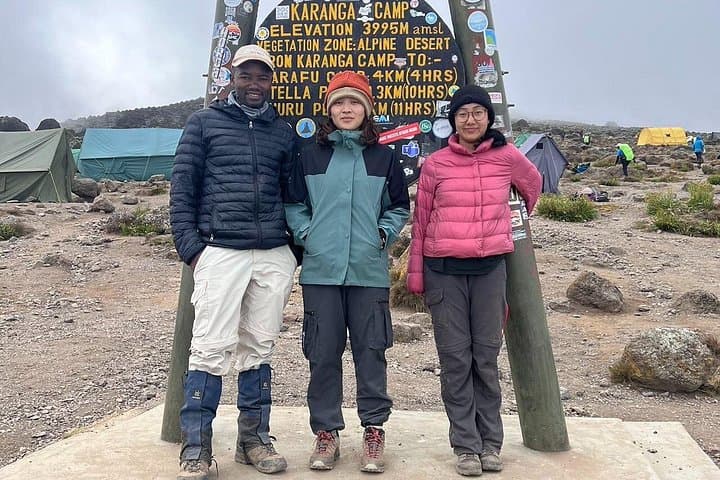
Expect daily gains that range from gentle forest climbs to steep, rocky scrambles—the itinerary averages 4–7 hours of hiking per day, with summit night a long lunar-style push from Barafu (4,556 m) to Uhuru (5,895 m). Camps are basic four-season tents; food is prepared on site. Acclimatization is built into the seven-day schedule to improve summit odds.
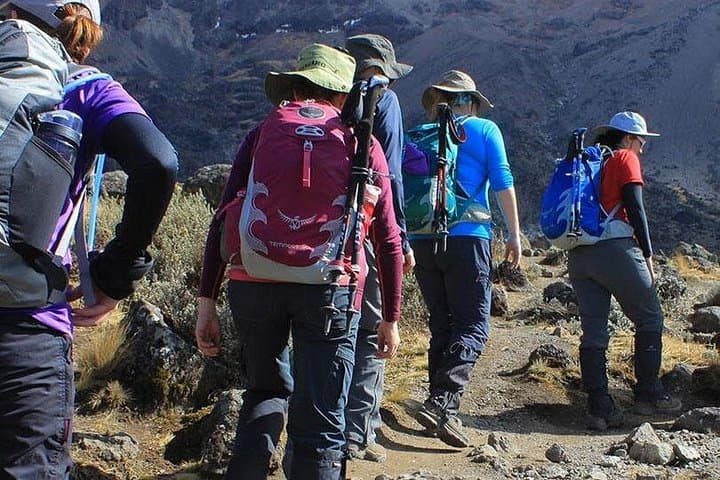
Practical guidance: layer for wide temperature swings, use waterproof boots with stiff soles for scree and stepping on icy patches, and carry a 2–3 liter hydration system plus electrolytes. Start summit attempts around midnight, pace conservatively, and listen to guides on turnaround decisions—altitude, not ambition, determines success. With proper fitness and respect for the mountain, the Machame Route delivers both wild terrain and a clear path to the roof of Africa.
No technical climbing skills are required; the route is a strenuous hike with sections of steep scree and basic scrambling—good fitness and acclimatization are essential.
Seven days improves acclimatization compared to shorter itineraries and therefore increases summit probability, but success depends on fitness, acclimatization response and weather conditions.
Yes—Kilimanjaro National Park permits, camping/hut fees and rescue fees are included in the trip inclusions.
Temperatures at or near Uhuru Peak can drop well below freezing, often between -10°C and -20°C with wind chill; appropriate insulation is critical.
Gifted African Adventures operates guided outdoor trips and adventures with an emphasis on safety, stewardship, and memorable experiences.


Just before dawn at Machame Gate the cloud forest breathes cold mist across the trail and the western face of Kibo looms like a hulking promise. The Machame Route quickly leaves the busy gate behind, threading through moss-draped trees, then opens onto the wind-buffed moorland of Shira Plateau where dark volcanic rock meets pale lobelia.
Just before dawn at Machame Gate the cloud forest breathes cold mist across the trail and the western face of Kibo looms like a hulking promise. The Machame Route quickly leaves the busy gate behind, threading through moss-draped trees, then opens onto the wind-buffed moorland of Shira Plateau where dark volcanic rock meets pale lobelia.
The route traces one flank of Africa’s highest freestanding mountain, built from three volcanic cones—Kibo, Mawenzi and Shira—shaped by eruptions tens of thousands of years ago. Chagga villages ring the lower slopes; porters and guides from the Kilimanjaro region carry both load and local knowledge that make summit day possible. Hans Meyer’s 1889 ascent made Uhuru Peak famous, but the mountain remains a living landscape, where glacier tongues still dare the equatorial sun.
Expect daily gains that range from gentle forest climbs to steep, rocky scrambles—the itinerary averages 4–7 hours of hiking per day, with summit night a long lunar-style push from Barafu (4,556 m) to Uhuru (5,895 m). Camps are basic four-season tents; food is prepared on site. Acclimatization is built into the seven-day schedule to improve summit odds.
Practical guidance: layer for wide temperature swings, use waterproof boots with stiff soles for scree and stepping on icy patches, and carry a 2–3 liter hydration system plus electrolytes. Start summit attempts around midnight, pace conservatively, and listen to guides on turnaround decisions—altitude, not ambition, determines success. With proper fitness and respect for the mountain, the Machame Route delivers both wild terrain and a clear path to the roof of Africa.