THE ADVENTURE COLLECTIVE® · Independent discovery and booking for outdoor travel

A seven-day ascent of Kilimanjaro via the Machame Route that balances acclimatization and ambition. Expect forest, moorland, scree and a midnight summit push to Uhuru Peak.
A seven-day ascent of Kilimanjaro via the Machame Route that balances acclimatization and ambition. Expect forest, moorland, scree and a midnight summit push to Uhuru Peak.
Dawn on Kilimanjaro arrives slow and feathered — first a band of pink at the rim of the crater, then hard light that finds the scree and turns glaciers to silver. On the Machame Route, that light catches you as you leave rainforest, climb shale and moorland, and finally grind up the stone fields toward Stella Point and Uhuru Peak. Porters move like a practiced tide ahead of you, tents rising where the mountain allows, while guides read the weather and the rhythm of bodies the way a captain reads a sea.
Verified experiences and guided adventures in the surrounding area.
Operated by majali.tours · Moshi, Kilimanjaro Region
Dawn on Kilimanjaro arrives slow and feathered — first a band of pink at the rim of the crater, then hard light that finds the scree and turns glaciers to silver. On the Machame Route, that light catches you as you leave rainforest, climb shale and moorland, and finally grind up the stone fields toward Stella Point and Uhuru Peak. Porters move like a practiced tide ahead of you, tents rising where the mountain allows, while guides read the weather and the rhythm of bodies the way a captain reads a sea.
The Machame Route is one of the island-like trails that wrap Mount Kilimanjaro, Africa’s extinct stratovolcano. Built from successive eruptions, Kibo’s crater rim holds ancient ice and modern stories — the Chagga people of the slopes have long considered the mountain a living presence, and European climbers began recording attempts here in the early 20th century. Geologically, you ascend from dense montane forest (expect dripping moss and Colobus monkeys) through heath and moorland, then across the Shira plateau and semi-desert toward the volcanic cone and its remaining glaciers.
Culturally the approach is grounded in Moshi — a town of coffee farms and friendly inns where guides brief you and porters strap bellies full of gear. The crew on this seven-day itinerary handles logistics: meals, water treatment, tents and navigation, freeing climbers to focus on pacing, hydration and sleep. The route demands patience: days are measured by elevation gain more than kilometers, with key acclimatization moves at Lava Tower and Barranco Wall designed to keep the summit in reach.
Practically, expect seven days of mixed terrain and big altitude swings. Machame Gate sits around 1,800–1,900 m; Uhuru Peak reaches 5,895 m. Daily hiking ranges from short, steep pushes (Barranco Wall) to long summit-night efforts beginning at midnight and climbing through stone scree and wind. Weather can flip quickly — rain in the forest, sun on the plateau, and below-freezing nights above 3,500 m. Footwear with solid ankle support, a warm sleeping system, and trekking poles will make the difference between slog and stride.
Plan to move deliberately: take the offered acclimatization breaks, drink more than you think (aim for 3–4 liters daily), and listen closely to your guide about pacing and symptoms of altitude illness. Respect the crew — tipping is customary and supports local livelihoods — and take care of the mountain by packing out waste and using park-sanctioned services. The view from the crater at sunrise is reward enough, and when you stand on Uhuru Peak you’ll know why so many call this climb the most accessible of the world’s great high mountains — brutal, beautiful and utterly earned.
No. The Machame Route is a non-technical trek — ropes and technical gear are not required — but high-altitude fitness and good judgment are essential.
Acute Mountain Sickness can affect anyone; guides manage risk by pacing, scheduled acclimatization stops, and by monitoring symptoms. Immediate descent is the standard treatment if serious symptoms arise.
The operator provides park fees, guides, porters, meals on trek, tents, water treatment and transport to/from Moshi; confirm specifics like oxygen availability and hotel nights in advance.
Dry seasons (January–March and June–October) offer the most stable conditions; brief rains occur in November and April–May.
Tipping is customary. Typical recommendations are $10–$20 per day for lead guides and $5–$10 for porters, adjusted by group size and service quality.
Camps use portable or pit toilets where available; at remote sites you may use designated areas following Leave No Trace practices—ask your guide for details.
majali.tours operates guided outdoor trips and adventures with an emphasis on safety, stewardship, and memorable experiences.
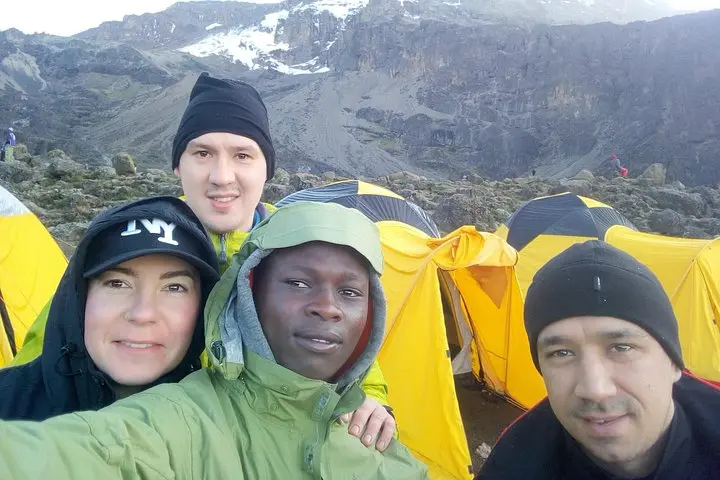
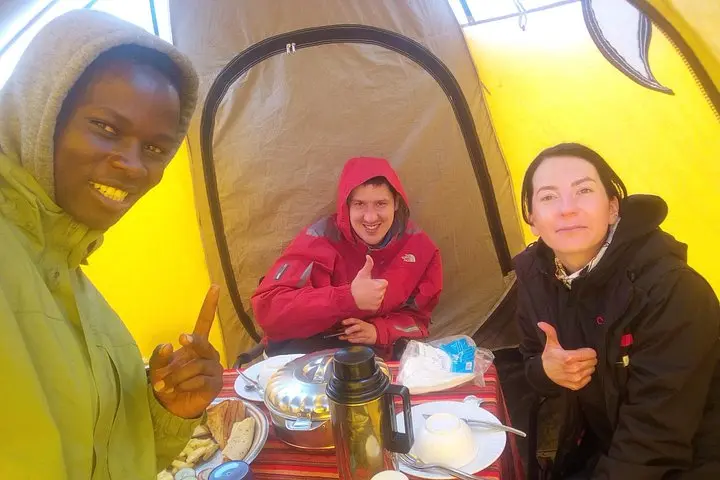
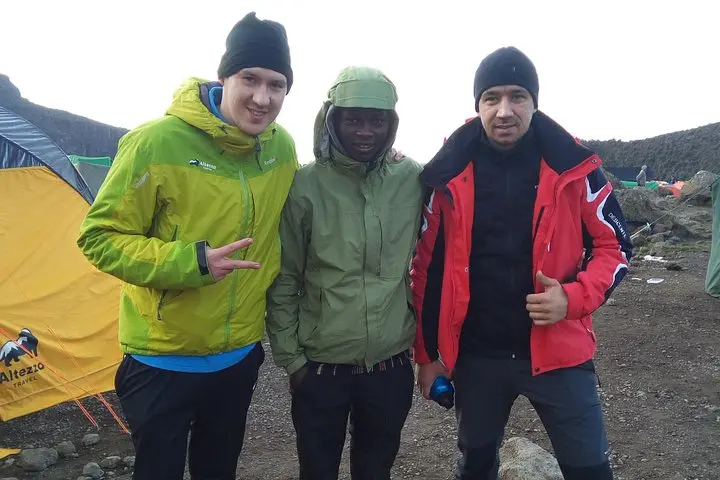
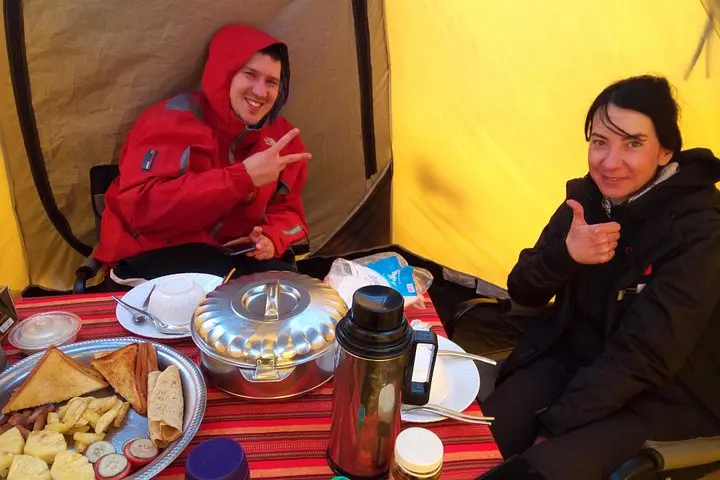
Dawn on Kilimanjaro arrives slow and feathered — first a band of pink at the rim of the crater, then hard light that finds the scree and turns glaciers to silver. On the Machame Route, that light catches you as you leave rainforest, climb shale and moorland, and finally grind up the stone fields toward Stella Point and Uhuru Peak. Porters move like a practiced tide ahead of you, tents rising where the mountain allows, while guides read the weather and the rhythm of bodies the way a captain reads a sea.
Dawn on Kilimanjaro arrives slow and feathered — first a band of pink at the rim of the crater, then hard light that finds the scree and turns glaciers to silver. On the Machame Route, that light catches you as you leave rainforest, climb shale and moorland, and finally grind up the stone fields toward Stella Point and Uhuru Peak. Porters move like a practiced tide ahead of you, tents rising where the mountain allows, while guides read the weather and the rhythm of bodies the way a captain reads a sea.
The Machame Route is one of the island-like trails that wrap Mount Kilimanjaro, Africa’s extinct stratovolcano. Built from successive eruptions, Kibo’s crater rim holds ancient ice and modern stories — the Chagga people of the slopes have long considered the mountain a living presence, and European climbers began recording attempts here in the early 20th century. Geologically, you ascend from dense montane forest (expect dripping moss and Colobus monkeys) through heath and moorland, then across the Shira plateau and semi-desert toward the volcanic cone and its remaining glaciers.
Culturally the approach is grounded in Moshi — a town of coffee farms and friendly inns where guides brief you and porters strap bellies full of gear. The crew on this seven-day itinerary handles logistics: meals, water treatment, tents and navigation, freeing climbers to focus on pacing, hydration and sleep. The route demands patience: days are measured by elevation gain more than kilometers, with key acclimatization moves at Lava Tower and Barranco Wall designed to keep the summit in reach.
Practically, expect seven days of mixed terrain and big altitude swings. Machame Gate sits around 1,800–1,900 m; Uhuru Peak reaches 5,895 m. Daily hiking ranges from short, steep pushes (Barranco Wall) to long summit-night efforts beginning at midnight and climbing through stone scree and wind. Weather can flip quickly — rain in the forest, sun on the plateau, and below-freezing nights above 3,500 m. Footwear with solid ankle support, a warm sleeping system, and trekking poles will make the difference between slog and stride.
Plan to move deliberately: take the offered acclimatization breaks, drink more than you think (aim for 3–4 liters daily), and listen closely to your guide about pacing and symptoms of altitude illness. Respect the crew — tipping is customary and supports local livelihoods — and take care of the mountain by packing out waste and using park-sanctioned services. The view from the crater at sunrise is reward enough, and when you stand on Uhuru Peak you’ll know why so many call this climb the most accessible of the world’s great high mountains — brutal, beautiful and utterly earned.