THE ADVENTURE COLLECTIVE® · Independent discovery and booking for outdoor travel

A seven‑day Machame ascent spaces acclimatization across rainforest, moorland and alpine desert before an early‑morning push to Uhuru Peak. This guide explains what to expect on each stage, plus practical gear and safety tips to increase your summit odds.
A seven‑day Machame ascent spaces acclimatization across rainforest, moorland and alpine desert before an early‑morning push to Uhuru Peak. This guide explains what to expect on each stage, plus practical gear and safety tips to increase your summit odds.
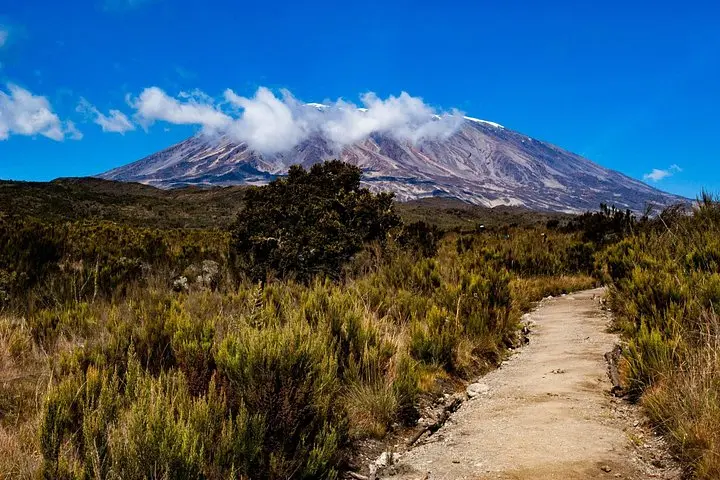
Rain and mist lift off the rainforest as your group files through Machame Gate, crampons of boots settling into a trail that climbs through green canopies toward open moorland. The mountain seems to breathe—low clouds rolling down the flanks, gusts fingering the heather—and every step raises the air’s thinness a little more.
Verified experiences and guided adventures in the surrounding area.
Operated by Spirit of Kilimanjaro · Moshi, Kilimanjaro Region
Rain and mist lift off the rainforest as your group files through Machame Gate, crampons of boots settling into a trail that climbs through green canopies toward open moorland. The mountain seems to breathe—low clouds rolling down the flanks, gusts fingering the heather—and every step raises the air’s thinness a little more.
The Machame Route traces paths that were long used by local porters and guides before becoming one of Kilimanjaro’s most popular routes. Geologically, Kilimanjaro is a dormant stratovolcano with layers of lava and ash that created distinct ecological zones: montane forest, heather and moorland, alpine desert, and the summit’s crater and remnants of its glaciers.
Culturally, the trail runs through lands of the Chagga people; villages around Moshi serve as logistical hubs and offer a glimpse into subsistence agriculture and coffee traditions. Expect to see unique flora—heath, giant lobelia—and hear the wind across the shale as the mountain asserts its scale.
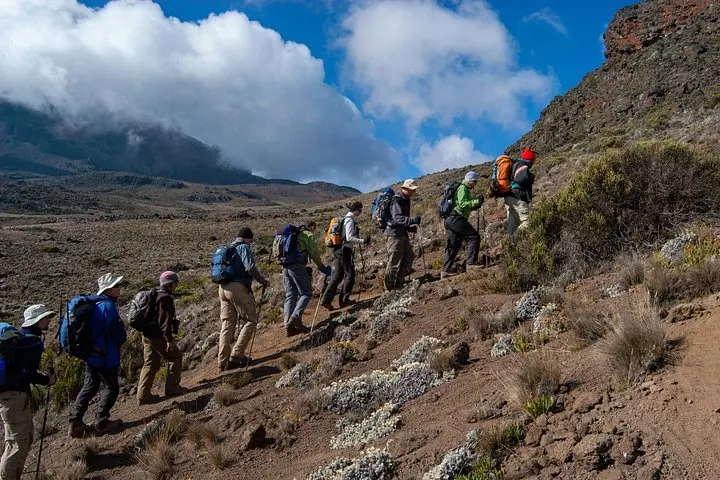
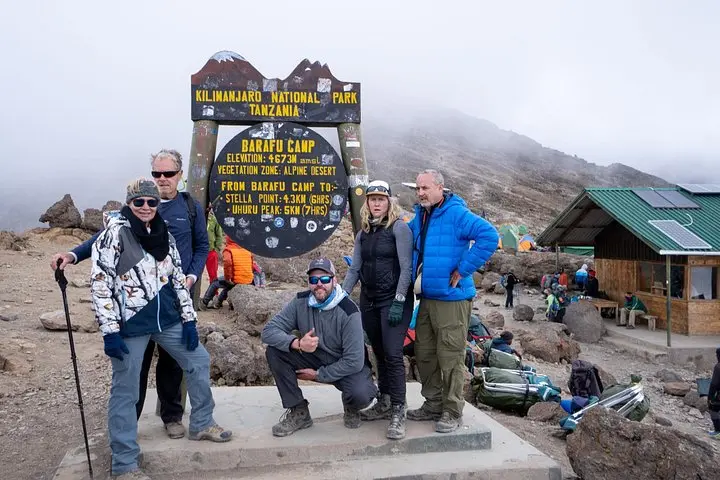
Practically: the 7‑day Machame itinerary spaces climbs to aid acclimatization (Shira Plateau, Lava Tower, Barranco Wall), with summit day an alpine push from Barafu to Uhuru Peak and a long descent to Mweka. Daily distances vary from short 4 km moves to long 18 km summit days; expect significant elevation gain and thin air above 4,000 m. Guides, porters, full board meals and camp accommodations are standard; a supplemental oxygen cylinder is often carried.
Prepare with layered clothing, sturdy waterproof boots, headlamp, and a sleeping bag rated for high‑altitude cold. Hydrate steadily, walk slowly on summit night, and respect turnaround times. The mountain rewards patience: every careful step increases the chance you’ll stand on Africa’s roof at dawn.
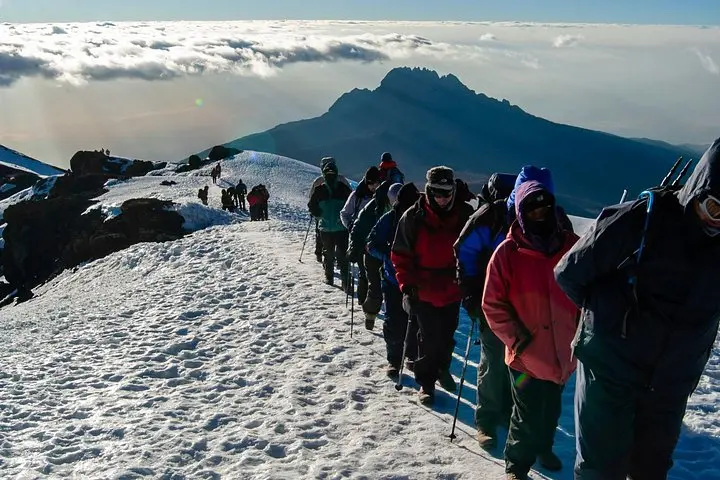
Summit day is the longest and most demanding: an alpine night ascent from Barafu, significant elevation gain, cold temperatures and up to 18 km of hiking—expect 10–16 hours including both ascent and descent.
Typical inclusions are park fees, licensed English‑speaking guides, porters, camp accommodations, full board meals, potable water and often a supplemental oxygen cylinder; confirm specifics with the operator.
No technical climbing experience is required, but prior multi‑day trekking and good fitness improve your acclimatization response and summit chances.
A 7‑day Machame itinerary balances acclimatization for a higher success rate than shorter routes, but summit success depends on individual acclimatization, weather and adherence to guide safety decisions.
Spirit of Kilimanjaro operates guided outdoor trips and adventures with an emphasis on safety, stewardship, and memorable experiences.
Rain and mist lift off the rainforest as your group files through Machame Gate, crampons of boots settling into a trail that climbs through green canopies toward open moorland. The mountain seems to breathe—low clouds rolling down the flanks, gusts fingering the heather—and every step raises the air’s thinness a little more.
Rain and mist lift off the rainforest as your group files through Machame Gate, crampons of boots settling into a trail that climbs through green canopies toward open moorland. The mountain seems to breathe—low clouds rolling down the flanks, gusts fingering the heather—and every step raises the air’s thinness a little more.
The Machame Route traces paths that were long used by local porters and guides before becoming one of Kilimanjaro’s most popular routes. Geologically, Kilimanjaro is a dormant stratovolcano with layers of lava and ash that created distinct ecological zones: montane forest, heather and moorland, alpine desert, and the summit’s crater and remnants of its glaciers.
Culturally, the trail runs through lands of the Chagga people; villages around Moshi serve as logistical hubs and offer a glimpse into subsistence agriculture and coffee traditions. Expect to see unique flora—heath, giant lobelia—and hear the wind across the shale as the mountain asserts its scale.
Practically: the 7‑day Machame itinerary spaces climbs to aid acclimatization (Shira Plateau, Lava Tower, Barranco Wall), with summit day an alpine push from Barafu to Uhuru Peak and a long descent to Mweka. Daily distances vary from short 4 km moves to long 18 km summit days; expect significant elevation gain and thin air above 4,000 m. Guides, porters, full board meals and camp accommodations are standard; a supplemental oxygen cylinder is often carried.
Prepare with layered clothing, sturdy waterproof boots, headlamp, and a sleeping bag rated for high‑altitude cold. Hydrate steadily, walk slowly on summit night, and respect turnaround times. The mountain rewards patience: every careful step increases the chance you’ll stand on Africa’s roof at dawn.