THE ADVENTURE COLLECTIVE® · Independent discovery and booking for outdoor travel

Slow ascent, varied ecosystems and a midnight summit push define the Machame Route. This seven-day private trek balances acclimatization with immersive mountain terrain en route to Uhuru Peak.
Slow ascent, varied ecosystems and a midnight summit push define the Machame Route. This seven-day private trek balances acclimatization with immersive mountain terrain en route to Uhuru Peak.
The first light on Kilimanjaro comes slow and cold, painting the volcanic shoulders in pale gold as you leave Moshi and drive to Machame Gate. The forest greets you—wet leaves and moss that seem to breathe—before the trail opens into moorland, then the jagged profile of the Shira Plateau, and finally the lunar scree above Barafu.
Verified experiences and guided adventures in the surrounding area.
Operated by Bush Lion Trekking and Tours · Moshi, Kilimanjaro Region
The first light on Kilimanjaro comes slow and cold, painting the volcanic shoulders in pale gold as you leave Moshi and drive to Machame Gate. The forest greets you—wet leaves and moss that seem to breathe—before the trail opens into moorland, then the jagged profile of the Shira Plateau, and finally the lunar scree above Barafu.
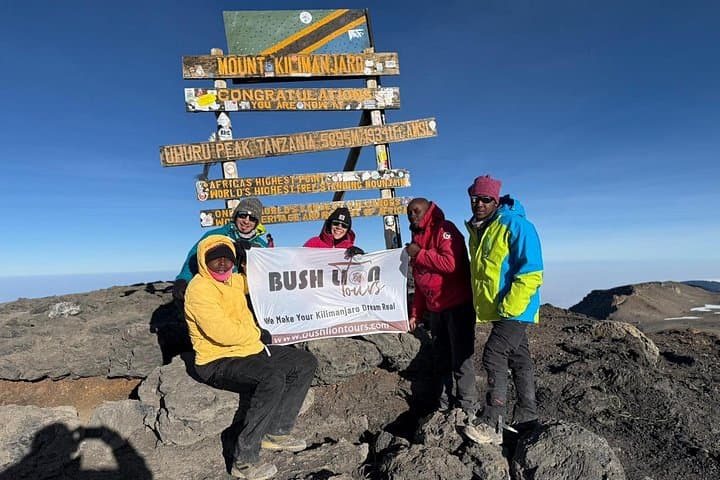
This seven-day Machame itinerary trades speed for acclimatization: rainforest to 3,010 m (Machame Camp), alpine moorland to 3,840 m (Shira), a crucial ascent-and-descent to Lava Tower at 4,630 m, and the steep Barafu saddle at 4,640 m before the midnight push to Uhuru Peak at 5,895 m. Geologically Kilimanjaro is a multi-vent stratovolcano; glaciers and eroded cliffs tell the story of ice and lava over millennia. Culturally, the mountain sits in Chagga country—villages around Moshi have long guided and supported climbers.
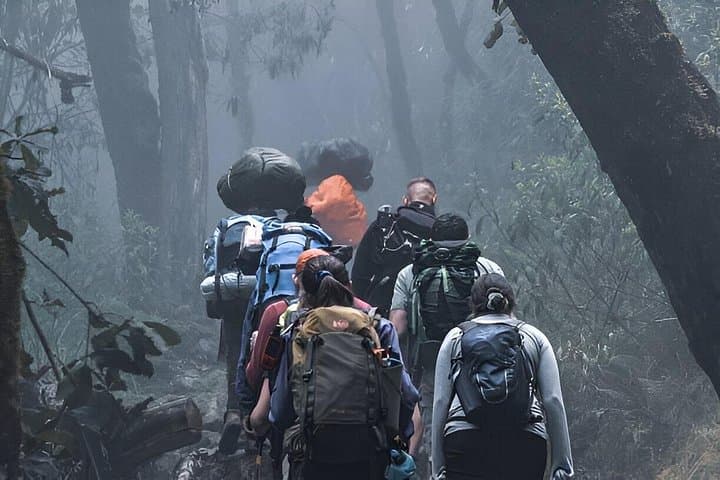
Expect varied terrain: slippery roots and mud in the forest, tussock and heather on the moorland, rocky scree near the summit. Weather swings fast—sun can warm your pack while wind scours your face an hour later. Guides and porters are standard; park fees, camping gear, meals, and summit certificates are typically included in commercial climbs.
Practical guidance: train with long hikes and stair sessions, prioritize slow ascent and hydration for altitude, use a layered system (warm insulation for summit night), and carry a reliable headlamp for the nocturnal summit push. Footwear with firm ankle support and trekking poles for scree will make descents kinder. Choose a reputable operator that emphasizes acclimatization and safety—these choices determine whether the mountain rewards you with the roof-of-Africa sunrise.
Machame is more scenic and slightly steeper than Marangu but offers better acclimatization than shorter routes; it’s considered challenging due to altitude and summit day length.
No technical climbing is required for the Machame Route, though crampons may be used in unusual icy conditions; guides supply safety equipment as needed.
With proper fitness, adherence to the 7-day schedule, and attention to acclimatization, Machame has a high summit success rate, but weather and altitude illness can prevent summits.
Meals (breakfast, lunch, dinner) and camping equipment including tents, sleeping mats, and two nights’ hotel accommodation (pre- and post-trek) are typically included.
Bush Lion Trekking and Tours operates guided outdoor trips and adventures with an emphasis on safety, stewardship, and memorable experiences.
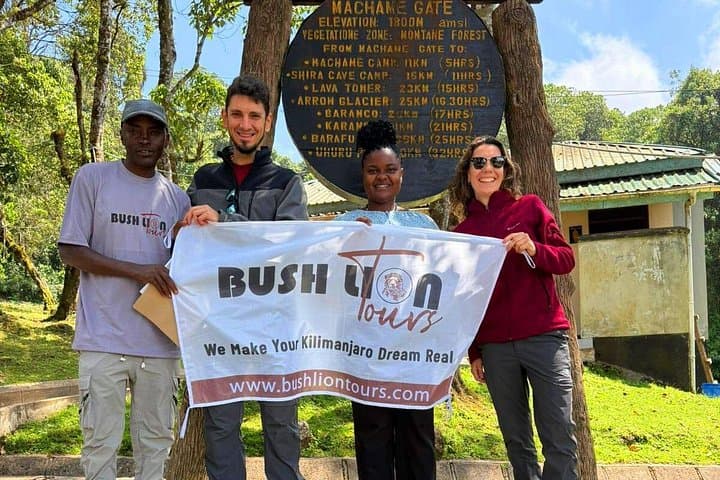
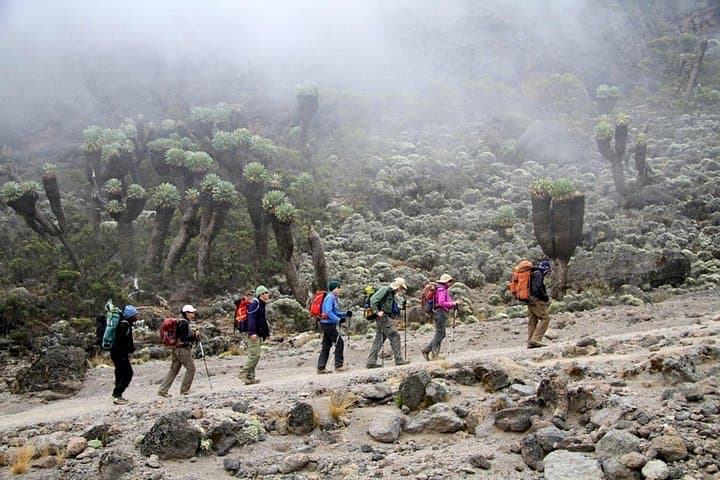
The first light on Kilimanjaro comes slow and cold, painting the volcanic shoulders in pale gold as you leave Moshi and drive to Machame Gate. The forest greets you—wet leaves and moss that seem to breathe—before the trail opens into moorland, then the jagged profile of the Shira Plateau, and finally the lunar scree above Barafu.
The first light on Kilimanjaro comes slow and cold, painting the volcanic shoulders in pale gold as you leave Moshi and drive to Machame Gate. The forest greets you—wet leaves and moss that seem to breathe—before the trail opens into moorland, then the jagged profile of the Shira Plateau, and finally the lunar scree above Barafu.
This seven-day Machame itinerary trades speed for acclimatization: rainforest to 3,010 m (Machame Camp), alpine moorland to 3,840 m (Shira), a crucial ascent-and-descent to Lava Tower at 4,630 m, and the steep Barafu saddle at 4,640 m before the midnight push to Uhuru Peak at 5,895 m. Geologically Kilimanjaro is a multi-vent stratovolcano; glaciers and eroded cliffs tell the story of ice and lava over millennia. Culturally, the mountain sits in Chagga country—villages around Moshi have long guided and supported climbers.
Expect varied terrain: slippery roots and mud in the forest, tussock and heather on the moorland, rocky scree near the summit. Weather swings fast—sun can warm your pack while wind scours your face an hour later. Guides and porters are standard; park fees, camping gear, meals, and summit certificates are typically included in commercial climbs.
Practical guidance: train with long hikes and stair sessions, prioritize slow ascent and hydration for altitude, use a layered system (warm insulation for summit night), and carry a reliable headlamp for the nocturnal summit push. Footwear with firm ankle support and trekking poles for scree will make descents kinder. Choose a reputable operator that emphasizes acclimatization and safety—these choices determine whether the mountain rewards you with the roof-of-Africa sunrise.