THE ADVENTURE COLLECTIVE® · Independent discovery and booking for outdoor travel

Take the Machame — Whiskey — Route and let Kilimanjaro reveal itself in stages: rainforest, Shira Plateau, Lava Tower, Barranco Wall and a summit under starlight. This 7‑day itinerary balances scenic variety with careful acclimatization to give climbers the best shot at Uhuru Peak.
Take the Machame — Whiskey — Route and let Kilimanjaro reveal itself in stages: rainforest, Shira Plateau, Lava Tower, Barranco Wall and a summit under starlight. This 7‑day itinerary balances scenic variety with careful acclimatization to give climbers the best shot at Uhuru Peak.
Night on the Machame trail feels like someone turned the world down to a low, steady hum — headlamps bob like fireflies through afro‑montane forest, porters' songs trail off into eucalyptus, and the silhouette of Kilimanjaro looms, dark and patient. By dawn the trail peels open into green tiers: rainforest gives way to heather country on Shira Plateau, then to the moonlike scree that guards the approach to Barafu. Over seven days the Whiskey Route doesn't rush you; it stages the mountain so that each shift in vegetation, geology and weather becomes an objective on the map of ascent.
Verified experiences and guided adventures in the surrounding area.
Operated by Kiliclimb Africa Safaris · Moshi, Kilimanjaro Region
Night on the Machame trail feels like someone turned the world down to a low, steady hum — headlamps bob like fireflies through afro‑montane forest, porters' songs trail off into eucalyptus, and the silhouette of Kilimanjaro looms, dark and patient. By dawn the trail peels open into green tiers: rainforest gives way to heather country on Shira Plateau, then to the moonlike scree that guards the approach to Barafu. Over seven days the Whiskey Route doesn't rush you; it stages the mountain so that each shift in vegetation, geology and weather becomes an objective on the map of ascent.
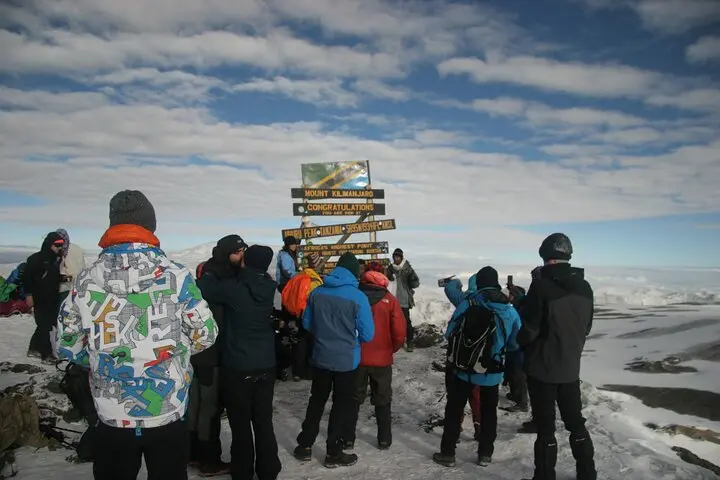
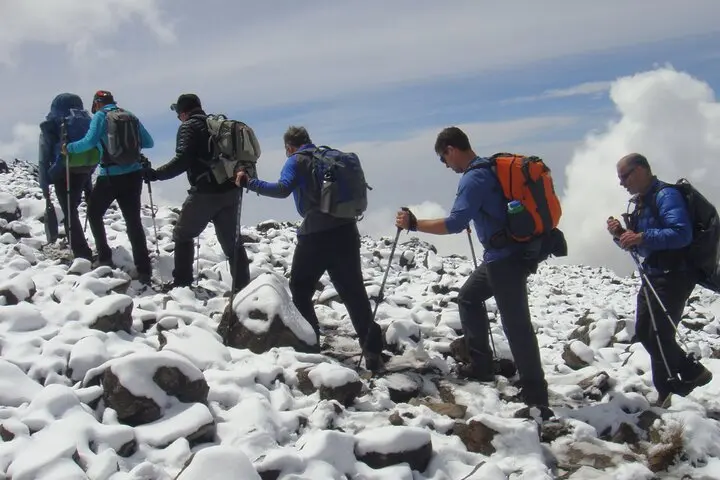
Machame is prized because it balances drama with acclimatization. You enter through Machame Gate, push up through dense rainforest to Machame Camp, climb to the Shira Plateau with its lobelia and helichrysum, then cross the semi‑desert to Lava Tower (4,630 m) before descending to the Barranco Valley to rest below the Great Barranco Wall. From Karanga the trail climbs to exposed ridges at Barafu (4,600 m), the launchpad for the midnight summit push: Stella Point (5,685 m) and on to Uhuru Peak (5,895 m).
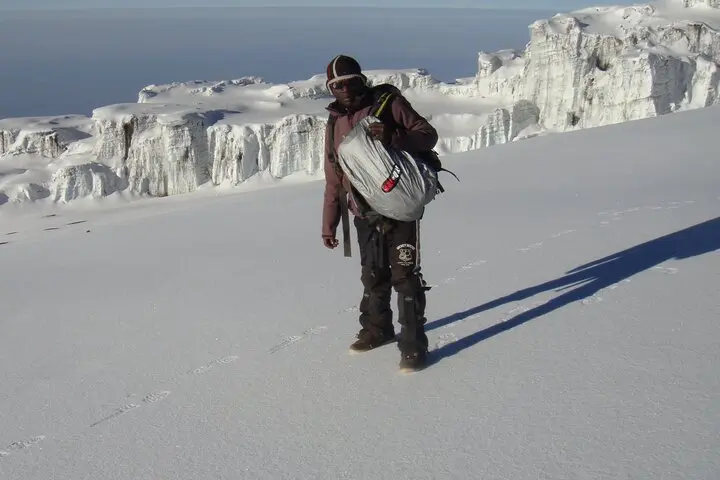
Geology and climate tell the mountain’s story: Kilimanjaro is a dormant stratovolcano capped now by remnant glaciers and carved by ancient eruptions. Soil and microclimate shift rapidly — rainforest, moorland, alpine desert — so footwear and layering must be adaptable. Culturally, the climb intersects Chagga agricultural terraces and the hospitality economy of Moshi and smaller trail villages; porters and guides are local experts whose knowledge of weather and altitudinal pacing is critical to success.
Practical guidance: expect 6–8 hours on tough days (Lava Tower day is a long acclimatization push), and a summit night that begins around 23:30 with a 6–8 hour ascent to Stella Point. Distances vary — the final descent to Mweka covers roughly 15 km and drops to ~1,980 m — so plan on steep descents. Hydrate constantly, chew on salty snacks to replace electrolytes, and heed your guide about symptoms of AMS; an oximeter and oxygen cylinders are carried on this itinerary.
Tips for planning: train on long uphill hikes with a loaded pack, break in waterproof boots, and practice sleeping in cooler temps. Respect porter limits and tip fairly — ethical porter treatment is included in this operator’s package, but extra gratitude goes a long way.
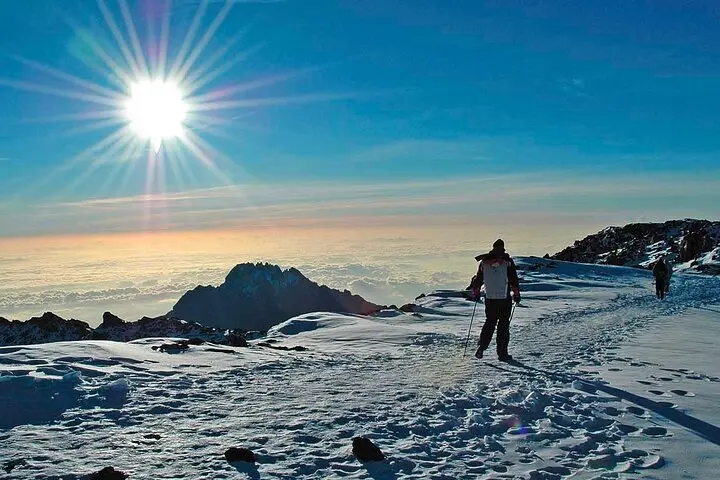
Why choose Machame? It’s scenic, tactically paced for acclimatization, and offers varied terrain that makes each day feel distinct. On summit morning, as the east horizon brightens at Stella Point, the effort condenses into a single, wide view — and the climb’s payoff is simple and absolute: the ground beneath you, and the sky expanding forever above it.
Success varies with fitness, acclimatization and weather; typical guided success rates for 7‑day Machame climbs range from 60–75% for reaching Uhuru Peak.
No technical mountaineering gear is required for the Machame route; however, warm layers, a good sleeping bag and sturdy boots are essential. Basic crampon use is rare but sometimes helpful near the summit in icy conditions.
Guides monitor symptoms closely; oximeters and oxygen cylinders are carried, and descent is the primary treatment. Proper pacing and hydration are your best prevention.
Tipping for guides and porters is not included; plan a fair tip on summit day and at the end of the trek — many climbers budget $120–200 total depending on group size and service.
You’ll need a valid passport and national park entry permits handled by the operator; bring passport details and vaccination/visa info as requested at booking.
The driest and most popular windows are late June–October and late December–February; weather can be unpredictable outside those months.
Kiliclimb Africa Safaris operates guided outdoor trips and adventures with an emphasis on safety, stewardship, and memorable experiences.
Night on the Machame trail feels like someone turned the world down to a low, steady hum — headlamps bob like fireflies through afro‑montane forest, porters' songs trail off into eucalyptus, and the silhouette of Kilimanjaro looms, dark and patient. By dawn the trail peels open into green tiers: rainforest gives way to heather country on Shira Plateau, then to the moonlike scree that guards the approach to Barafu. Over seven days the Whiskey Route doesn't rush you; it stages the mountain so that each shift in vegetation, geology and weather becomes an objective on the map of ascent.
Night on the Machame trail feels like someone turned the world down to a low, steady hum — headlamps bob like fireflies through afro‑montane forest, porters' songs trail off into eucalyptus, and the silhouette of Kilimanjaro looms, dark and patient. By dawn the trail peels open into green tiers: rainforest gives way to heather country on Shira Plateau, then to the moonlike scree that guards the approach to Barafu. Over seven days the Whiskey Route doesn't rush you; it stages the mountain so that each shift in vegetation, geology and weather becomes an objective on the map of ascent.
Machame is prized because it balances drama with acclimatization. You enter through Machame Gate, push up through dense rainforest to Machame Camp, climb to the Shira Plateau with its lobelia and helichrysum, then cross the semi‑desert to Lava Tower (4,630 m) before descending to the Barranco Valley to rest below the Great Barranco Wall. From Karanga the trail climbs to exposed ridges at Barafu (4,600 m), the launchpad for the midnight summit push: Stella Point (5,685 m) and on to Uhuru Peak (5,895 m).
Geology and climate tell the mountain’s story: Kilimanjaro is a dormant stratovolcano capped now by remnant glaciers and carved by ancient eruptions. Soil and microclimate shift rapidly — rainforest, moorland, alpine desert — so footwear and layering must be adaptable. Culturally, the climb intersects Chagga agricultural terraces and the hospitality economy of Moshi and smaller trail villages; porters and guides are local experts whose knowledge of weather and altitudinal pacing is critical to success.
Practical guidance: expect 6–8 hours on tough days (Lava Tower day is a long acclimatization push), and a summit night that begins around 23:30 with a 6–8 hour ascent to Stella Point. Distances vary — the final descent to Mweka covers roughly 15 km and drops to ~1,980 m — so plan on steep descents. Hydrate constantly, chew on salty snacks to replace electrolytes, and heed your guide about symptoms of AMS; an oximeter and oxygen cylinders are carried on this itinerary.
Tips for planning: train on long uphill hikes with a loaded pack, break in waterproof boots, and practice sleeping in cooler temps. Respect porter limits and tip fairly — ethical porter treatment is included in this operator’s package, but extra gratitude goes a long way.
Why choose Machame? It’s scenic, tactically paced for acclimatization, and offers varied terrain that makes each day feel distinct. On summit morning, as the east horizon brightens at Stella Point, the effort condenses into a single, wide view — and the climb’s payoff is simple and absolute: the ground beneath you, and the sky expanding forever above it.