THE ADVENTURE COLLECTIVE® · Independent discovery and booking for outdoor travel

A 7-day guided ascent of Mount Kilimanjaro via the Machame Route, moving from rainforest to glaciated summit. Expect tented camps, steady altitude gain and a midnight summit push to Uhuru Peak (5,895 m).
A 7-day guided ascent of Mount Kilimanjaro via the Machame Route, moving from rainforest to glaciated summit. Expect tented camps, steady altitude gain and a midnight summit push to Uhuru Peak (5,895 m).
Rainforest gives way to moorland and then a brittle, high desert as the team winds up the Machame Route — known as the "Whiskey Route" for its tougher, wilder profile. Early on, hikers move beneath a green canopy where damp trails tug at boots; by day three the air thins and the landscape hardens into volcanic rock, and Kibo’s glaciated summit looms like a challenge the mountain dares you to meet.
Verified experiences and guided adventures in the surrounding area.
Operated by Kilimanjaro Safari Experience · Moshi, Kilimanjaro Region
Rainforest gives way to moorland and then a brittle, high desert as the team winds up the Machame Route — known as the "Whiskey Route" for its tougher, wilder profile. Early on, hikers move beneath a green canopy where damp trails tug at boots; by day three the air thins and the landscape hardens into volcanic rock, and Kibo’s glaciated summit looms like a challenge the mountain dares you to meet.
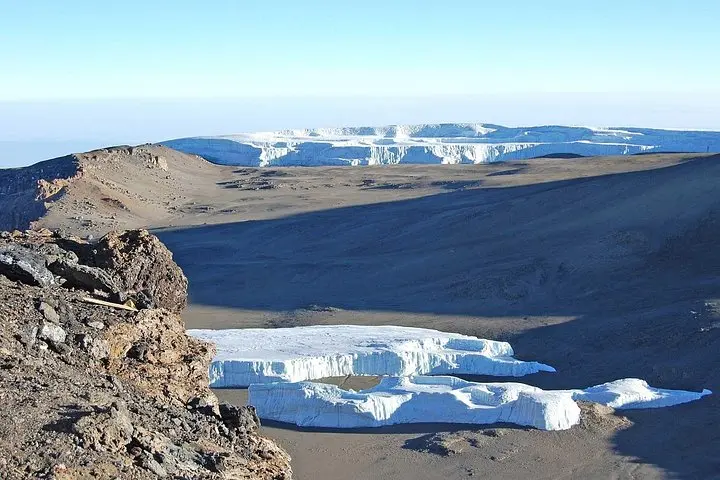
Kilimanjaro is a dormant stratovolcano with three cones—Kibo, Mawenzi and Shira—whose glaciers are remnants of a colder past. Hans Meyer made the first documented ascent in 1889; today the climb threads through habitats from rain forest to alpine desert, offering views of the Western Breach and the Shira plateau. The ascent is shaped by local culture too: the Chagga towns on the lower slopes and the mountain crews whose role is central to every summit effort.
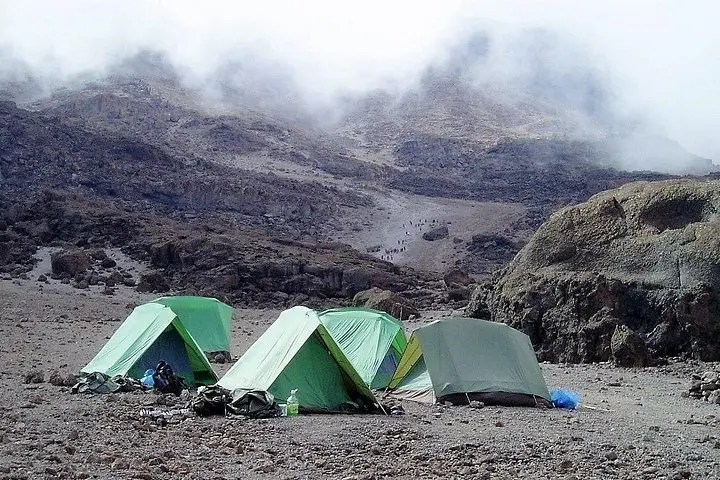
This itinerary covers roughly 11 km on day one, shorter mule tracks on day two, the high-altitude gain to Lava Tower (~4,600 m) and the summit push to Uhuru Peak at 5,895 m, before a multi-hour descent to Mweka Gate. Camps are tented — Machame, Shira, Barranco, Karanga, Barafu and Mweka — and services include filtered water, hot wash water and porter support with fair wages.
Practical guidance: train for sustained elevation gain and long days, pack layered clothing and a warm 0°C (or colder) sleeping system, and plan for an alpine night summit starting around midnight. Acclimatize, hydrate, and treat permits and crew tips as part of the cost of responsible trekking.
Machame is steeper and more variable than Marangu; it offers better acclimatization via a longer profile but requires tent camping and stronger fitness.
No technical climbing is required for the standard Machame route, though an ice-axe or ski pole can help on icy sections near the summit.
Kilimanjaro National Park permits and rescue fees are mandatory; reputable operators include park fees and crew wages in the package.
Pacing, hydration, gradual ascent profile and a strong support crew are the biggest determinants of reaching Uhuru Peak; weather and individual acclimatization also matter.
Kilimanjaro Safari Experience operates guided outdoor trips and adventures with an emphasis on safety, stewardship, and memorable experiences.
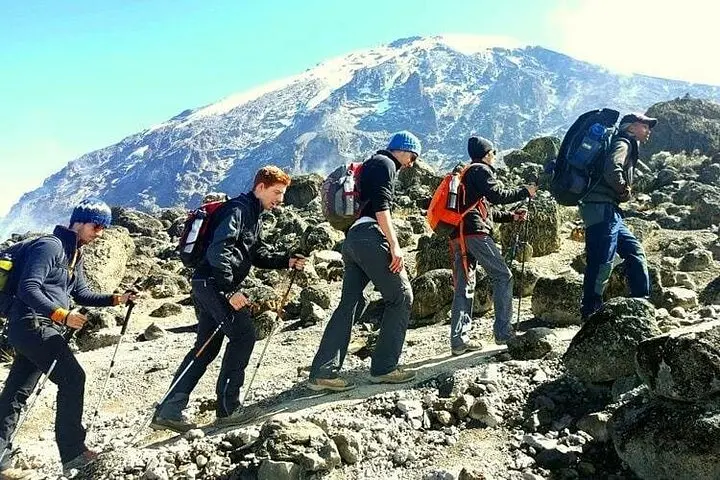
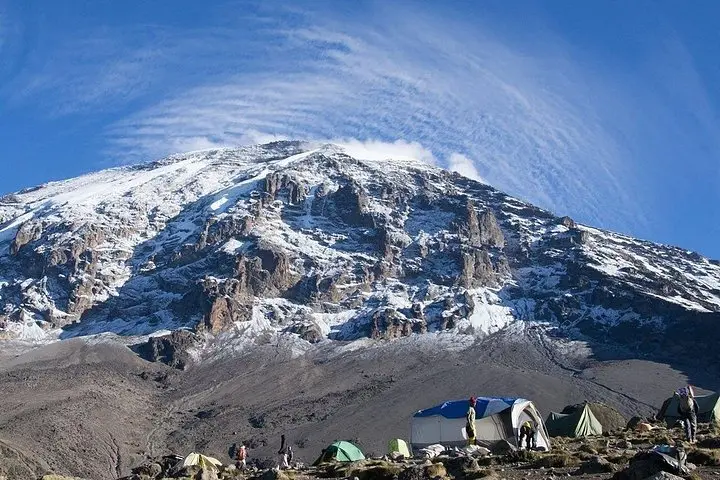
Rainforest gives way to moorland and then a brittle, high desert as the team winds up the Machame Route — known as the "Whiskey Route" for its tougher, wilder profile. Early on, hikers move beneath a green canopy where damp trails tug at boots; by day three the air thins and the landscape hardens into volcanic rock, and Kibo’s glaciated summit looms like a challenge the mountain dares you to meet.
Rainforest gives way to moorland and then a brittle, high desert as the team winds up the Machame Route — known as the "Whiskey Route" for its tougher, wilder profile. Early on, hikers move beneath a green canopy where damp trails tug at boots; by day three the air thins and the landscape hardens into volcanic rock, and Kibo’s glaciated summit looms like a challenge the mountain dares you to meet.
Kilimanjaro is a dormant stratovolcano with three cones—Kibo, Mawenzi and Shira—whose glaciers are remnants of a colder past. Hans Meyer made the first documented ascent in 1889; today the climb threads through habitats from rain forest to alpine desert, offering views of the Western Breach and the Shira plateau. The ascent is shaped by local culture too: the Chagga towns on the lower slopes and the mountain crews whose role is central to every summit effort.
This itinerary covers roughly 11 km on day one, shorter mule tracks on day two, the high-altitude gain to Lava Tower (~4,600 m) and the summit push to Uhuru Peak at 5,895 m, before a multi-hour descent to Mweka Gate. Camps are tented — Machame, Shira, Barranco, Karanga, Barafu and Mweka — and services include filtered water, hot wash water and porter support with fair wages.
Practical guidance: train for sustained elevation gain and long days, pack layered clothing and a warm 0°C (or colder) sleeping system, and plan for an alpine night summit starting around midnight. Acclimatize, hydrate, and treat permits and crew tips as part of the cost of responsible trekking.