THE ADVENTURE COLLECTIVE® · Independent discovery and booking for outdoor travel

Follow the classic Machame Route on a 7-day guided trek from Arusha to Uhuru Peak. This itinerary balances acclimatization, expert guides and varied terrain—rainforest to scree—aimed at helping trekkers reach Africa’s highest summit.
Follow the classic Machame Route on a 7-day guided trek from Arusha to Uhuru Peak. This itinerary balances acclimatization, expert guides and varied terrain—rainforest to scree—aimed at helping trekkers reach Africa’s highest summit.
You step off the dusty vehicle into a cool, dripping rainforest; mist threads through moss-laden branches and the trail ahead climbs in a ribbon of dark soil. The Machame Route presses upward, moving from ferned jungle to open moorland and finally the brittle, wind-scoured band of alpine desert that guards Kibo's glaciers. Wind and sky seem to test your pace, the mountain answering with shifting light and a pressure in your chest that reminds you altitude is part of the climb.
Verified experiences and guided adventures in the surrounding area.
Operated by Suricata Safaris · Arusha, Arusha Region
You step off the dusty vehicle into a cool, dripping rainforest; mist threads through moss-laden branches and the trail ahead climbs in a ribbon of dark soil. The Machame Route presses upward, moving from ferned jungle to open moorland and finally the brittle, wind-scoured band of alpine desert that guards Kibo's glaciers. Wind and sky seem to test your pace, the mountain answering with shifting light and a pressure in your chest that reminds you altitude is part of the climb.
Kilimanjaro is a stratovolcano with three cones—Kibo, Mawenzi and Shira—whose volcanic geology creates stark ecological bands. The Chagga people have farmed the lower slopes for generations; Kilimanjaro National Park, a UNESCO site, protects the fragile upper zones where glacial ice has retreated visibly over recent decades.
Practically, the Machame 7-day itinerary builds acclimatization: expect 4–7 hours of hiking most days, a high point at Uhuru Peak (5,895 m/19,341 ft), and nights in tented camps. Terrain varies—muddy rainforest tracks demand gaiters, porous moorlands shift to rocky ridges, and scree fields above Barafu require careful footwork. Guides and porters handle camp logistics and food; the company provides meals and permits, but personal layering, a warm sleeping bag, and a headlamp are essential.
Tips for success: move deliberately, drink frequently to counter altitude, and communicate any symptoms early. Summit day is long and cold—mental pacing and steady breathing count more than speed. Finish with a hot lunch in Mweka Village and the relief of having met the mountain on its own terms.
No technical climbing equipment is required for the Machame Route; the route is a non-technical trek though sturdy boots and warm gear are essential.
Uhuru Peak sits at 5,895 m (19,341 ft); summit day typically takes 10–14 hours round trip from Barafu to Uhuru and down to Mweka Camp depending on pace.
This itinerary includes daily meals while on the mountain and park/guide fees arranged by the operator, but confirm specifics with your booking contact before departure.
Follow the climb’s acclimatization schedule, stay hydrated, eat regularly, move at a steady pace, and alert your guide to symptoms early; they may carry oxygen and medications.
Suricata Safaris operates guided outdoor trips and adventures with an emphasis on safety, stewardship, and memorable experiences.


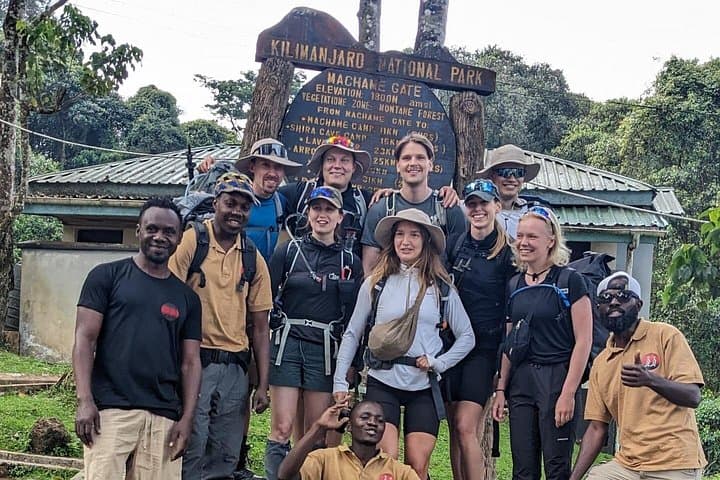

You step off the dusty vehicle into a cool, dripping rainforest; mist threads through moss-laden branches and the trail ahead climbs in a ribbon of dark soil. The Machame Route presses upward, moving from ferned jungle to open moorland and finally the brittle, wind-scoured band of alpine desert that guards Kibo's glaciers. Wind and sky seem to test your pace, the mountain answering with shifting light and a pressure in your chest that reminds you altitude is part of the climb.
You step off the dusty vehicle into a cool, dripping rainforest; mist threads through moss-laden branches and the trail ahead climbs in a ribbon of dark soil. The Machame Route presses upward, moving from ferned jungle to open moorland and finally the brittle, wind-scoured band of alpine desert that guards Kibo's glaciers. Wind and sky seem to test your pace, the mountain answering with shifting light and a pressure in your chest that reminds you altitude is part of the climb.
Kilimanjaro is a stratovolcano with three cones—Kibo, Mawenzi and Shira—whose volcanic geology creates stark ecological bands. The Chagga people have farmed the lower slopes for generations; Kilimanjaro National Park, a UNESCO site, protects the fragile upper zones where glacial ice has retreated visibly over recent decades.
Practically, the Machame 7-day itinerary builds acclimatization: expect 4–7 hours of hiking most days, a high point at Uhuru Peak (5,895 m/19,341 ft), and nights in tented camps. Terrain varies—muddy rainforest tracks demand gaiters, porous moorlands shift to rocky ridges, and scree fields above Barafu require careful footwork. Guides and porters handle camp logistics and food; the company provides meals and permits, but personal layering, a warm sleeping bag, and a headlamp are essential.
Tips for success: move deliberately, drink frequently to counter altitude, and communicate any symptoms early. Summit day is long and cold—mental pacing and steady breathing count more than speed. Finish with a hot lunch in Mweka Village and the relief of having met the mountain on its own terms.