THE ADVENTURE COLLECTIVE® · Independent discovery and booking for outdoor travel

A seven-day climb on the Machame Route offers gradual acclimatization, dramatic habitat shifts from rain forest to alpine desert, and a midnight summit push to Uhuru Peak. This guide outlines what to expect on-trail, cultural context, and practical prep for a safe ascent.
A seven-day climb on the Machame Route offers gradual acclimatization, dramatic habitat shifts from rain forest to alpine desert, and a midnight summit push to Uhuru Peak. This guide outlines what to expect on-trail, cultural context, and practical prep for a safe ascent.
At first light the forest breathes around the party—moist air clings to sleeves, the trail a dark ribbon winding upward through moss-covered trunks. Guides sort gear beside the tents; porters move like a practiced current, hauling canvas and rice for seven days. On Day 1 the Machame Gate swallows the last lowland smells and the trail threads steeply into rain forest. By Day 6 the world has thinned to wind and stone, and the summit waits like a pale promise above the ridgeline.
Verified experiences and guided adventures in the surrounding area.
Operated by Kili Team Adventures · Moshi, Kilimanjaro Region
At first light the forest breathes around the party—moist air clings to sleeves, the trail a dark ribbon winding upward through moss-covered trunks. Guides sort gear beside the tents; porters move like a practiced current, hauling canvas and rice for seven days. On Day 1 the Machame Gate swallows the last lowland smells and the trail threads steeply into rain forest. By Day 6 the world has thinned to wind and stone, and the summit waits like a pale promise above the ridgeline.
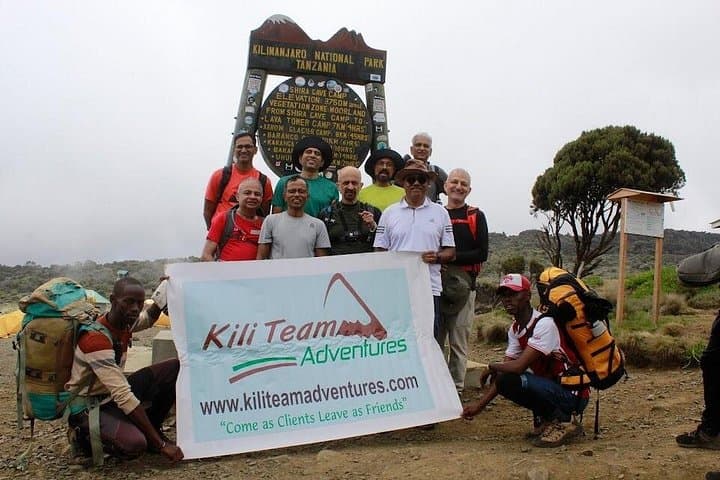
This seven-day Machame Route is engineered for acclimatization: a steep first day into rain forest, gradual gain across the Shira Plateau, an altitude-training swing past the 15,190-ft Lava Tower, and the long midnight push from Barafu to Uhuru Peak (19,341 ft). Geologically, Kilimanjaro is a dormant stratovolcano made of three cones—Shira, Mawenzi and Kibo—whose glaciers and volcanic scree shape the alpine desert above 4,000 meters. Culturally the lower slopes are Chagga country; terraced farms and coffee plots around Moshi supply local guides and porters whose mountain knowledge is the route’s backbone.
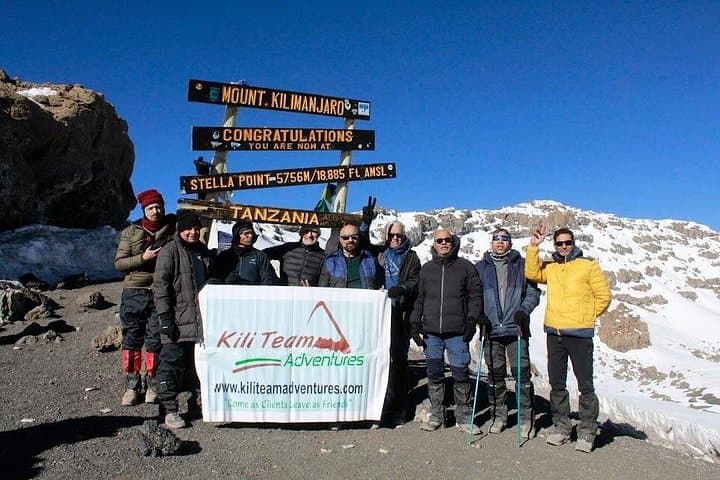
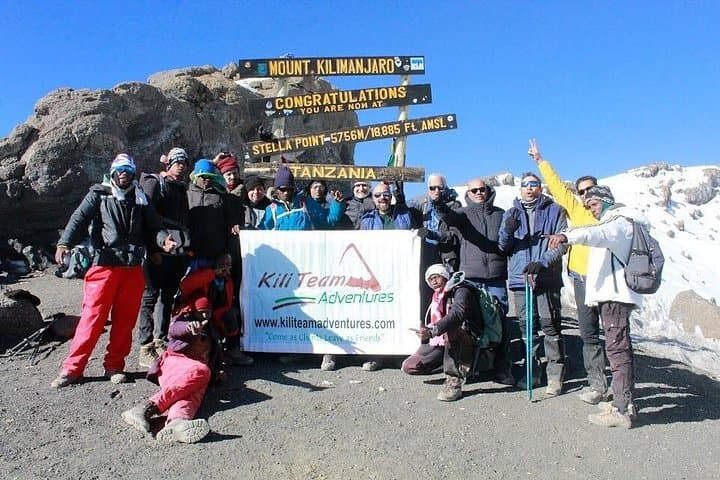
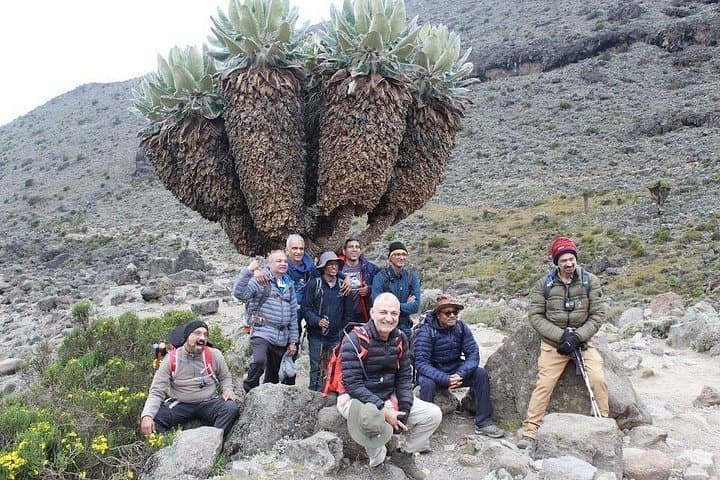
Expect landscapes to change like chapters: dense, dripping canopy; heather and moorland on Shira; bizarre giant lobelias and senecio in the high alpine; then the lunar, hard-packed scree below Stella Point. Weather swings fast—rain forests hold humidity and mud; the upper mountain can deliver biting wind and temperatures well below freezing. The itinerary includes three meals a day on the mountain, hot water for washing, a portable flushing toilet, oxygen and a pulse oximeter—elements that make summit attempts safer and more comfortable when managed by an experienced team.
Practical planning is straightforward but strict. Physical preparation should focus on aerobic conditioning and long ascents with a loaded pack; the summit night is a test of sleep-deprived climbing and mental grit. Break in waterproof boots, bring a layered system for temps that range from 20°C in camp to -10°C near the summit, and practice hiking with poles—both to save knees on descent and to steady steps at altitude.
Logistics: meeting is at Kilimanjaro International Airport or hotels in Moshi; transport to Machame Gate is roughly 50 minutes. Permits, park fees, camping equipment, rescue fees and porter wages are included by the operator. Tip the mountain team separately and budget extra time in Moshi for gear checks and last-minute acclimatization plans.
For travelers ready to trade comfort for altitude and a real summit shot at Africa’s roof, the Machame Route offers a balanced, rigorous route—beautiful, demanding and profoundly reliant on local guides who keep the mountain human-scale.
The summit night is the hardest: a 4–8 hour pre-dawn climb to Stella Point and Uhuru Peak in very cold conditions, followed by a long descent—expect 12–16 total hours on summit day.
Acute mountain sickness is possible; this 7-day itinerary builds acclimatization through gradual gain and a high-altitude night at Lava Tower to reduce risk, but listen to guides and report symptoms immediately.
Yes — the itinerary states that entry fees, camping fees and rescue fees are included in the package price.
You don’t need technical mountaineering experience, but prior multi-day hiking and good cardiovascular conditioning are important for success.
Operators usually limit porter loads to about 15–20 kg per person; pack light and use the provided porter service for heavy items.
June–October and January–February are the most reliable windows for drier weather and clearer summit views.
Kili Team Adventures operates guided outdoor trips and adventures with an emphasis on safety, stewardship, and memorable experiences.
At first light the forest breathes around the party—moist air clings to sleeves, the trail a dark ribbon winding upward through moss-covered trunks. Guides sort gear beside the tents; porters move like a practiced current, hauling canvas and rice for seven days. On Day 1 the Machame Gate swallows the last lowland smells and the trail threads steeply into rain forest. By Day 6 the world has thinned to wind and stone, and the summit waits like a pale promise above the ridgeline.
At first light the forest breathes around the party—moist air clings to sleeves, the trail a dark ribbon winding upward through moss-covered trunks. Guides sort gear beside the tents; porters move like a practiced current, hauling canvas and rice for seven days. On Day 1 the Machame Gate swallows the last lowland smells and the trail threads steeply into rain forest. By Day 6 the world has thinned to wind and stone, and the summit waits like a pale promise above the ridgeline.
This seven-day Machame Route is engineered for acclimatization: a steep first day into rain forest, gradual gain across the Shira Plateau, an altitude-training swing past the 15,190-ft Lava Tower, and the long midnight push from Barafu to Uhuru Peak (19,341 ft). Geologically, Kilimanjaro is a dormant stratovolcano made of three cones—Shira, Mawenzi and Kibo—whose glaciers and volcanic scree shape the alpine desert above 4,000 meters. Culturally the lower slopes are Chagga country; terraced farms and coffee plots around Moshi supply local guides and porters whose mountain knowledge is the route’s backbone.
Expect landscapes to change like chapters: dense, dripping canopy; heather and moorland on Shira; bizarre giant lobelias and senecio in the high alpine; then the lunar, hard-packed scree below Stella Point. Weather swings fast—rain forests hold humidity and mud; the upper mountain can deliver biting wind and temperatures well below freezing. The itinerary includes three meals a day on the mountain, hot water for washing, a portable flushing toilet, oxygen and a pulse oximeter—elements that make summit attempts safer and more comfortable when managed by an experienced team.
Practical planning is straightforward but strict. Physical preparation should focus on aerobic conditioning and long ascents with a loaded pack; the summit night is a test of sleep-deprived climbing and mental grit. Break in waterproof boots, bring a layered system for temps that range from 20°C in camp to -10°C near the summit, and practice hiking with poles—both to save knees on descent and to steady steps at altitude.
Logistics: meeting is at Kilimanjaro International Airport or hotels in Moshi; transport to Machame Gate is roughly 50 minutes. Permits, park fees, camping equipment, rescue fees and porter wages are included by the operator. Tip the mountain team separately and budget extra time in Moshi for gear checks and last-minute acclimatization plans.
For travelers ready to trade comfort for altitude and a real summit shot at Africa’s roof, the Machame Route offers a balanced, rigorous route—beautiful, demanding and profoundly reliant on local guides who keep the mountain human-scale.