THE ADVENTURE COLLECTIVE® · Independent discovery and booking for outdoor travel

Traverse beige cliffs, salt flats and underground mosques across seven days in Mangystau. This guided loop combines short canyon hikes, yurt stays and nights under huge, clear skies—ideal for photographers and curious travelers.
Traverse beige cliffs, salt flats and underground mosques across seven days in Mangystau. This guided loop combines short canyon hikes, yurt stays and nights under huge, clear skies—ideal for photographers and curious travelers.
You step out of the jeep into a hush of beige cliffs and white salt stretching to the horizon—the wind here gives the landscape a sharp, moving edge. Early mornings bring pale light across the Dragon Crest; after dark the sky opens and the Milky Way drops down to the valley like a ribbon.
Verified experiences and guided adventures in the surrounding area.
Operated by RedMaya Travel · Aktau, Mangystau Region
You step out of the jeep into a hush of beige cliffs and white salt stretching to the horizon—the wind here gives the landscape a sharp, moving edge. Early mornings bring pale light across the Dragon Crest; after dark the sky opens and the Milky Way drops down to the valley like a ribbon.
Mangystau’s geology reads like a layered field guide: Jurassic clays, limestone arches, and the beige walls of Bozjyra carved by millennia of wind and salt. The region has long been a crossroads—burial mounds, underground mosques like Beket Ata and Shakpak-Ata, and centuries of nomadic practice that continue in yurt hospitality and camel-milk traditions.
On this seven-day loop from Aktau you’ll traverse 4x4 tracks, short canyon hikes and a few 1–2 km descents to underground sites; expect dry, loose surfaces and abrupt elevation steps rather than long alpine climbs. Nights alternate between simple guesthouses, yurt villages and tent camps beneath clear skies.
Practical guidance: travel in layers—days are hot, nights cold—carry sun protection and 3–4 liters of water per day, and bring a headlamp for canyon exits. Vehicles handle the long transfers; be prepared for dusty conditions and uneven trails when walking. Photography opportunities are excellent at sunrise and sunset; drones may be restricted near cultural sites. The trip is accessible to fit travelers comfortable with multi-day field travel, modest hikes, and camping comforts rather than full wilderness backcountry gear.
Expect long 4x4 transfers between highlights—several days include multiple hours on unpaved roads; drives are part of the experience.
Stays alternate between simple guesthouses, shared felt yurts and tent camps; amenities are basic but safe and organized by the tour team.
The operator notes it’s not recommended for pregnant travelers; families with children should evaluate long drives and uneven walking sections.
Most international travelers to Kazakhstan need a visa depending on nationality—check entry requirements before booking; no extra permits are typically required for these public natural sites.
RedMaya Travel operates guided outdoor trips and adventures with an emphasis on safety, stewardship, and memorable experiences.
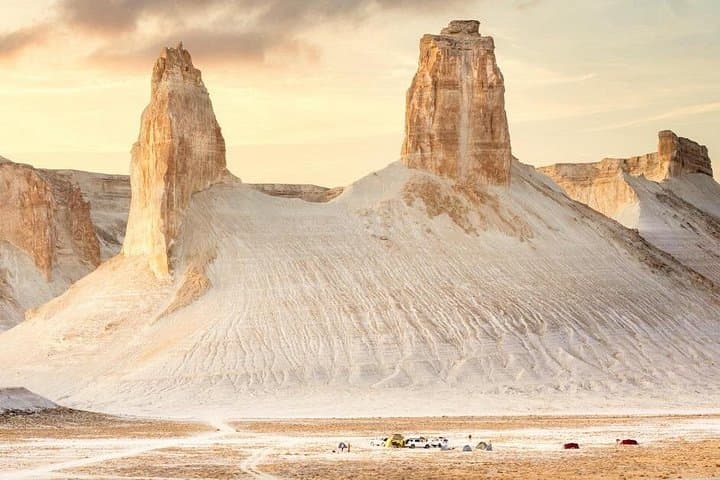


You step out of the jeep into a hush of beige cliffs and white salt stretching to the horizon—the wind here gives the landscape a sharp, moving edge. Early mornings bring pale light across the Dragon Crest; after dark the sky opens and the Milky Way drops down to the valley like a ribbon.
You step out of the jeep into a hush of beige cliffs and white salt stretching to the horizon—the wind here gives the landscape a sharp, moving edge. Early mornings bring pale light across the Dragon Crest; after dark the sky opens and the Milky Way drops down to the valley like a ribbon.
Mangystau’s geology reads like a layered field guide: Jurassic clays, limestone arches, and the beige walls of Bozjyra carved by millennia of wind and salt. The region has long been a crossroads—burial mounds, underground mosques like Beket Ata and Shakpak-Ata, and centuries of nomadic practice that continue in yurt hospitality and camel-milk traditions.
On this seven-day loop from Aktau you’ll traverse 4x4 tracks, short canyon hikes and a few 1–2 km descents to underground sites; expect dry, loose surfaces and abrupt elevation steps rather than long alpine climbs. Nights alternate between simple guesthouses, yurt villages and tent camps beneath clear skies.
Practical guidance: travel in layers—days are hot, nights cold—carry sun protection and 3–4 liters of water per day, and bring a headlamp for canyon exits. Vehicles handle the long transfers; be prepared for dusty conditions and uneven trails when walking. Photography opportunities are excellent at sunrise and sunset; drones may be restricted near cultural sites. The trip is accessible to fit travelers comfortable with multi-day field travel, modest hikes, and camping comforts rather than full wilderness backcountry gear.