THE ADVENTURE COLLECTIVE® · Independent discovery and booking for outdoor travel

Seven days across Morocco—from Marrakech’s bustling souks to the silent dunes of Merzouga and the blue lanes of Chefchaouen—this route combines imperial cities, Atlas passes, and a luxury desert camp. Expect long drives, dramatic landscapes, and cultural immersion with guided highlights and free time to explore.
Seven days across Morocco—from Marrakech’s bustling souks to the silent dunes of Merzouga and the blue lanes of Chefchaouen—this route combines imperial cities, Atlas passes, and a luxury desert camp. Expect long drives, dramatic landscapes, and cultural immersion with guided highlights and free time to explore.
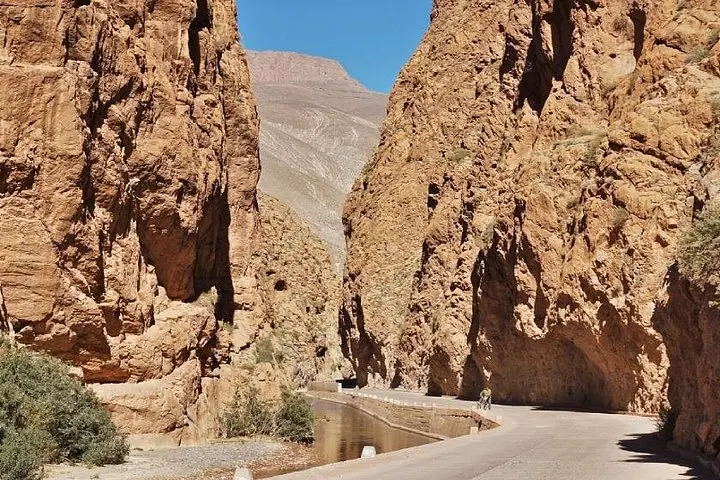
You arrive in Marrakech as the call to prayer threads through the heat; alleys hum with spice stalls, and the city’s red walls glow in late afternoon light. By the second day you’re climbing the Tizi n’Tichka pass, where the Atlas Mountains press against the road and the air cools, and within days you’ll stand on wind-sculpted dunes watching the desert sky tilt into a wash of stars.
Verified experiences and guided adventures in the surrounding area.
Operated by Desert Jewel Tours · Marrakech, Marrakesh-Safi
You arrive in Marrakech as the call to prayer threads through the heat; alleys hum with spice stalls, and the city’s red walls glow in late afternoon light. By the second day you’re climbing the Tizi n’Tichka pass, where the Atlas Mountains press against the road and the air cools, and within days you’ll stand on wind-sculpted dunes watching the desert sky tilt into a wash of stars.
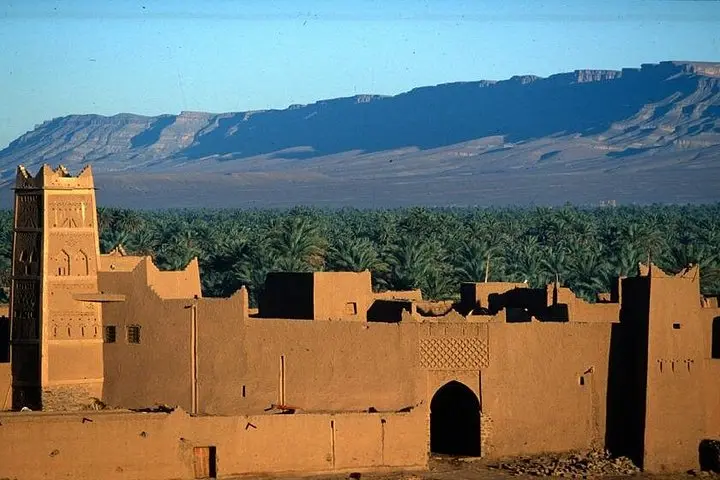
This seven-day route stitches Morocco’s imperial heritage with geological extremes: Marrakech’s Almohad minarets and riad courtyards, the High Atlas carved by tectonic uplift and erosion, and the Erg Chebbi dunes formed by Saharan winds. Ait Ben Haddou offers mud-brick kasbah architecture—centuries-old caravan architecture that later doubled as Hollywood’s desert set—while Fes preserves medieval craft lanes and the world’s oldest university.
Culturally the trip crosses Berber villages, palm oases and French colonial influences in planned cities like Rabat. Expect markets where argan oil and handwoven wool speak of local livelihoods, and fossil workshops near Erfoud that point to an ancient seabed beneath the present desert.
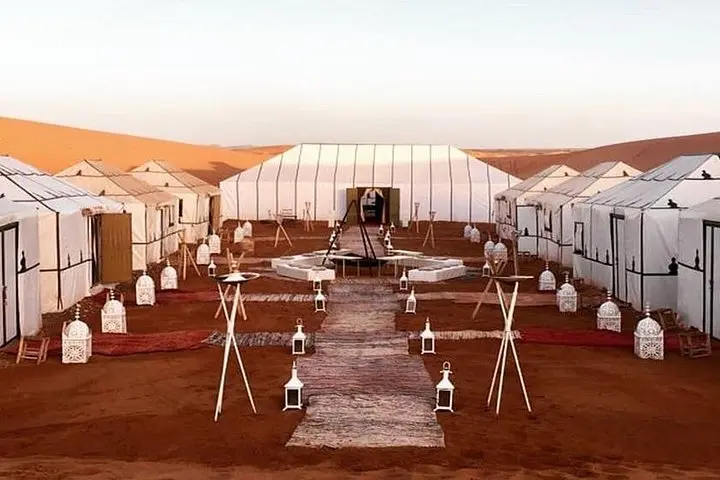
Practical guidance: plan light layers for big temperature swings, allow full days for driving between the Atlas and the desert, and budget free time to explore Chefchaouen’s blue alleys on foot. Hydrate in dry stretches, carry sun protection and a small first-aid kit, and book a camel transfer or 4x4 for the camp arrival—sunrise over the dunes is the reward for an early wake-up.
This itinerary balances guided highlights with pockets of independent exploration—ideal for travelers who want structure without missing the unplanned moments that make Morocco vivid.
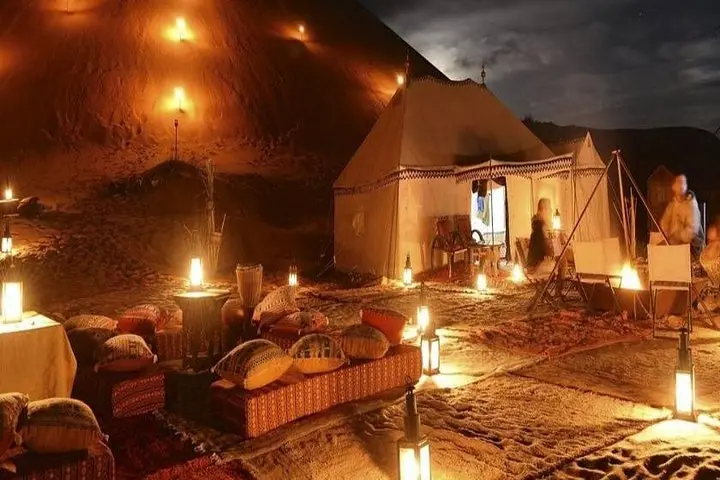
Yes—luxury camps included typically offer private tents with beds, blankets, and shared restroom facilities; options vary so check specific camp amenities.
The tour balances guided visits (Marrakech, Fes, Ait Ben Haddou) with free time—Chefchaouen is a full free day for independent exploration.
Some driving days are long (4–7+ hours) when crossing the Atlas or moving from the desert to Fes; expect scenic but extended road time.
The Moroccan dirham (MAD) is used locally; Arabic and Tamazight are primary languages, with French widely spoken and English common in tourist areas.
Desert Jewel Tours operates guided outdoor trips and adventures with an emphasis on safety, stewardship, and memorable experiences.
You arrive in Marrakech as the call to prayer threads through the heat; alleys hum with spice stalls, and the city’s red walls glow in late afternoon light. By the second day you’re climbing the Tizi n’Tichka pass, where the Atlas Mountains press against the road and the air cools, and within days you’ll stand on wind-sculpted dunes watching the desert sky tilt into a wash of stars.
You arrive in Marrakech as the call to prayer threads through the heat; alleys hum with spice stalls, and the city’s red walls glow in late afternoon light. By the second day you’re climbing the Tizi n’Tichka pass, where the Atlas Mountains press against the road and the air cools, and within days you’ll stand on wind-sculpted dunes watching the desert sky tilt into a wash of stars.
This seven-day route stitches Morocco’s imperial heritage with geological extremes: Marrakech’s Almohad minarets and riad courtyards, the High Atlas carved by tectonic uplift and erosion, and the Erg Chebbi dunes formed by Saharan winds. Ait Ben Haddou offers mud-brick kasbah architecture—centuries-old caravan architecture that later doubled as Hollywood’s desert set—while Fes preserves medieval craft lanes and the world’s oldest university.
Culturally the trip crosses Berber villages, palm oases and French colonial influences in planned cities like Rabat. Expect markets where argan oil and handwoven wool speak of local livelihoods, and fossil workshops near Erfoud that point to an ancient seabed beneath the present desert.
Practical guidance: plan light layers for big temperature swings, allow full days for driving between the Atlas and the desert, and budget free time to explore Chefchaouen’s blue alleys on foot. Hydrate in dry stretches, carry sun protection and a small first-aid kit, and book a camel transfer or 4x4 for the camp arrival—sunrise over the dunes is the reward for an early wake-up.
This itinerary balances guided highlights with pockets of independent exploration—ideal for travelers who want structure without missing the unplanned moments that make Morocco vivid.