THE ADVENTURE COLLECTIVE® · Independent discovery and booking for outdoor travel

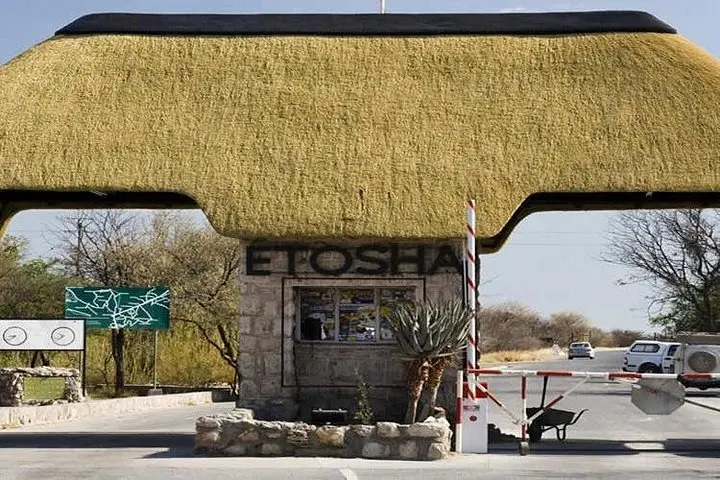
Traverse Namibia’s dramatic contrasts in seven days: climb sculpted dunes at Sossusvlei, watch flamingos at Walvis Bay, visit Cape Cross’s seal colony, and game-drive Etosha’s waterholes. This camping itinerary pairs intense landscapes with practical logistics.
Traverse Namibia’s dramatic contrasts in seven days: climb sculpted dunes at Sossusvlei, watch flamingos at Walvis Bay, visit Cape Cross’s seal colony, and game-drive Etosha’s waterholes. This camping itinerary pairs intense landscapes with practical logistics.
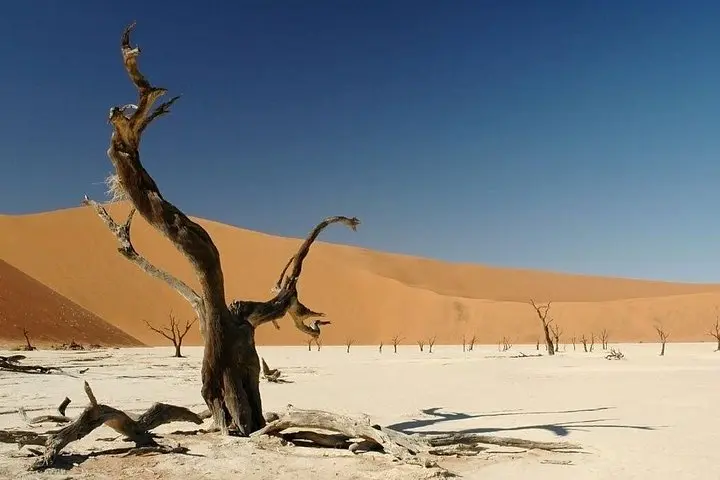
Dawn breaks over the Namib and the Land Cruiser slips out of Windhoek toward the first great orange wave: Sossusvlei’s dunes. Sand warms from deep ruby to bright copper as you climb Dune 45 or test your legs on Big Daddy; currents of wind push and sculpt the slopes while the silent acacia skeletons of Dead Vlei watch from the pan.
Verified experiences and guided adventures in the surrounding area.
Operated by Discovery Transfer and Tours Namibia · Windhoek, Khomas
Dawn breaks over the Namib and the Land Cruiser slips out of Windhoek toward the first great orange wave: Sossusvlei’s dunes. Sand warms from deep ruby to bright copper as you climb Dune 45 or test your legs on Big Daddy; currents of wind push and sculpt the slopes while the silent acacia skeletons of Dead Vlei watch from the pan.
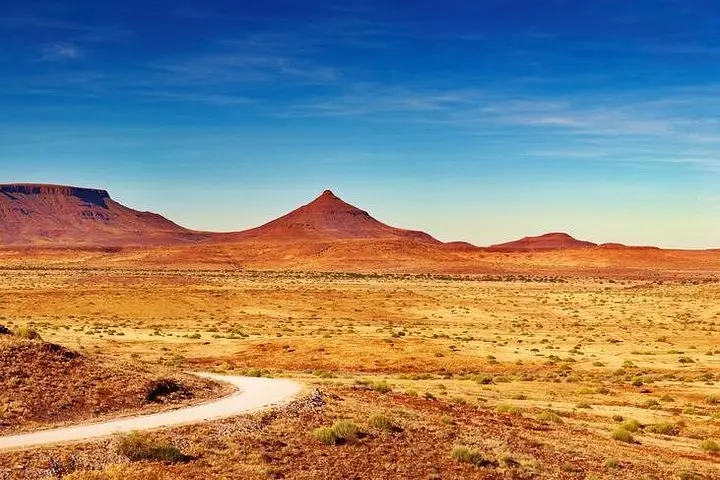
This route threads geological time and human history — the Namib is one of the world’s oldest deserts, its dunes fed by Atlantic sands and steady offshore winds. German colonial architecture still marks Swakopmund, a coastal contrast where flamingo-lined lagoons at Walvis Bay meet the cold Benguela current. Cape Cross’s seal colony speaks to the region’s maritime ecology, while Etosha’s salt pan and surrounding savanna have supported indigenous communities and wildlife for millennia.
Expect long drives between highlights, early-morning starts for dune sunrises and game drives, and nights at basic campsites or budget lodgings. Etosha concentrates animals around waterholes; game viewing peaks in the dry winter months when wildlife gathers. Bring layered clothing for big temperature swings, a broad-brim hat and high-SPF sunscreen for desert days, and quiet patience at waterholes — animals often appear at first light or dusk.
Practical notes: pickup in Windhoek usually between 07:00–08:00, camping is budget-level, and some dune climbs are optional. Keep water capacity high (2–3L daily), respect park rules, and carry a small daypack for hikes. The trip balances stark desert scenery with coastal birdlife and classic African game drives — compact, dynamic, and logistically straightforward for an active traveler.
Accommodation is budget camping and simple lodges as listed in the itinerary; expect basic facilities and shared camping areas.
Breakfasts and many lunches are included across the seven days; some dinners (for example in Swakopmund) may be at your own expense — confirm at booking.
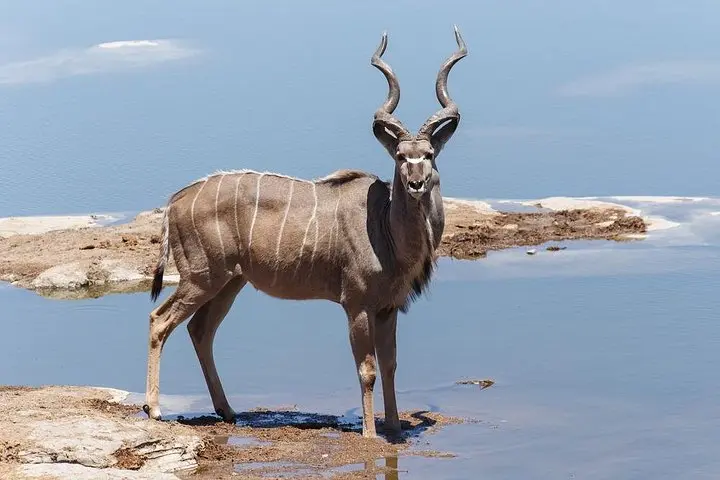
Etosha offers strong chances for elephants, lion and rhino, but wildlife sightings are never guaranteed; dry season concentrates animals at waterholes for more predictable viewing.
Pickup from Windhoek is typically between 07:00–08:00 with long driving days between major sites; bring patience for transit and enjoy roadside viewpoints en route.
Discovery Transfer and Tours Namibia operates guided outdoor trips and adventures with an emphasis on safety, stewardship, and memorable experiences.
Dawn breaks over the Namib and the Land Cruiser slips out of Windhoek toward the first great orange wave: Sossusvlei’s dunes. Sand warms from deep ruby to bright copper as you climb Dune 45 or test your legs on Big Daddy; currents of wind push and sculpt the slopes while the silent acacia skeletons of Dead Vlei watch from the pan.
Dawn breaks over the Namib and the Land Cruiser slips out of Windhoek toward the first great orange wave: Sossusvlei’s dunes. Sand warms from deep ruby to bright copper as you climb Dune 45 or test your legs on Big Daddy; currents of wind push and sculpt the slopes while the silent acacia skeletons of Dead Vlei watch from the pan.
This route threads geological time and human history — the Namib is one of the world’s oldest deserts, its dunes fed by Atlantic sands and steady offshore winds. German colonial architecture still marks Swakopmund, a coastal contrast where flamingo-lined lagoons at Walvis Bay meet the cold Benguela current. Cape Cross’s seal colony speaks to the region’s maritime ecology, while Etosha’s salt pan and surrounding savanna have supported indigenous communities and wildlife for millennia.
Expect long drives between highlights, early-morning starts for dune sunrises and game drives, and nights at basic campsites or budget lodgings. Etosha concentrates animals around waterholes; game viewing peaks in the dry winter months when wildlife gathers. Bring layered clothing for big temperature swings, a broad-brim hat and high-SPF sunscreen for desert days, and quiet patience at waterholes — animals often appear at first light or dusk.
Practical notes: pickup in Windhoek usually between 07:00–08:00, camping is budget-level, and some dune climbs are optional. Keep water capacity high (2–3L daily), respect park rules, and carry a small daypack for hikes. The trip balances stark desert scenery with coastal birdlife and classic African game drives — compact, dynamic, and logistically straightforward for an active traveler.