THE ADVENTURE COLLECTIVE® · Independent discovery and booking for outdoor travel

Seven days across Namibia’s most dramatic landscapes — camp among Spitzkoppe’s granite guardians, track desert-adapted elephants in Damaraland, and watch predators gather at Etosha’s waterholes. This compact route blends rock art, cultural meeting, and classic safari viewing.
Seven days across Namibia’s most dramatic landscapes — camp among Spitzkoppe’s granite guardians, track desert-adapted elephants in Damaraland, and watch predators gather at Etosha’s waterholes. This compact route blends rock art, cultural meeting, and classic safari viewing.
Sunlight slices between granite monoliths as you arrive at Spitzkoppe, dust motes suspended in the wake of the vehicle and the smell of dry grass sharpening your senses.
Verified experiences and guided adventures in the surrounding area.
Operated by C Africa Safaris & Tours · Windhoek, Khomas
Sunlight slices between granite monoliths as you arrive at Spitzkoppe, dust motes suspended in the wake of the vehicle and the smell of dry grass sharpening your senses.
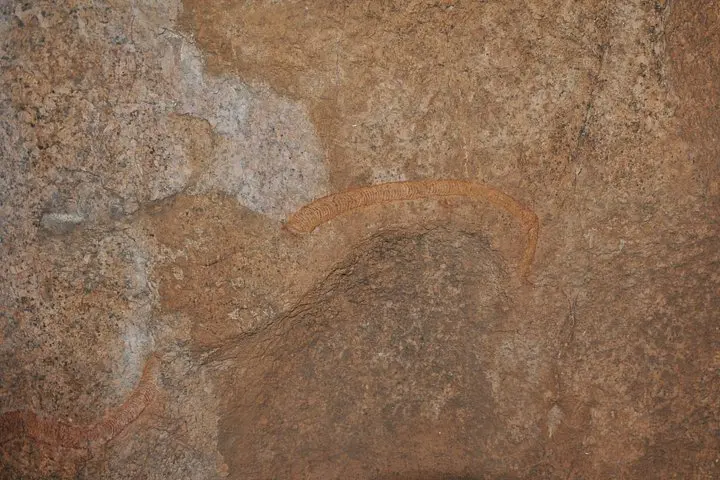
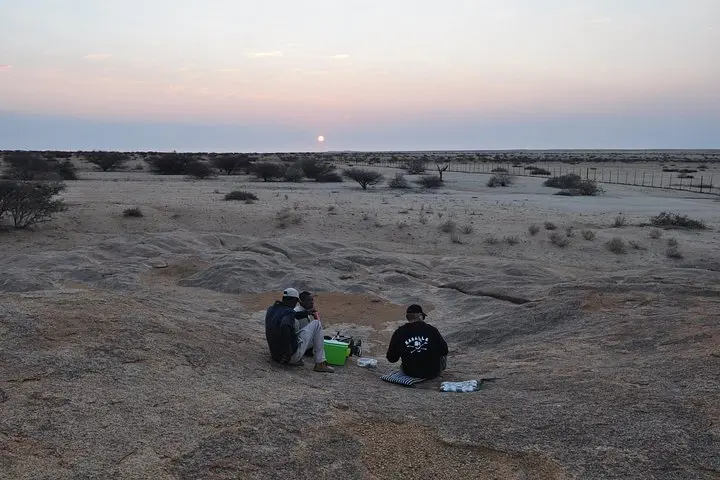
Over seven days you move from wind-swept boulder camps to Atlantic surf, then inland across Damaraland’s sculpted rock and into Etosha’s wide salt pans. The landscape here reads like geology in motion — billion-year-old granite spires, wind-polished tafoni, and ephemeral riverbeds where desert-adapted elephants trace secret paths. Rock engravings at Twyfelfontein offer a human counterpoint: San and early pastoralist marks that speak to millennia of local presence and celestial navigation.
Culturally, expect encounter-based learning. Himba and Damara communities remain distinct: be respectful, ask before photographing, and accept that local guides are your best bridge to authentic context. Wildlife-viewing is paced by water — artificial and natural watering holes orchestrate animal movement; the Etosha hides are designed for patient observation rather than adrenaline-chase viewing.
Practical guidance: travel light but layered — days are hot, nights drop sharply. Bring good binoculars and a camera with a long lens for Etosha, plus a headlamp and a compact sleeping pad if you prefer more comfort than the supplied 5cm mattress. Hydrate continuously; carry refill bottles since distances between services are long. Expect unsealed roads and some walking over rough terrain; a moderate fitness level makes the hikes to rock art and guided nature walks enjoyable. Plan buffer time for photography and simply watching a waterhole unfold — that patience is where the trip rewards you most.
A moderate level of fitness is recommended: you should be comfortable with short hikes on uneven ground and several hours seated during vehicle transfers.
Entrance fees for Spitzkoppe, Twyfelfontein rock engravings, Damara Living Museum and Etosha are included, as are the listed campsite accommodations.
Yes — guides can prepare meals for common intolerances if noted at booking; inform the operator of specifics before departure.
Expect multiple long driving days (several hours each), especially between Windhoek, Swakopmund, Damaraland and Etosha; drives are part of the scenic experience but can be lengthy.
C Africa Safaris & Tours operates guided outdoor trips and adventures with an emphasis on safety, stewardship, and memorable experiences.
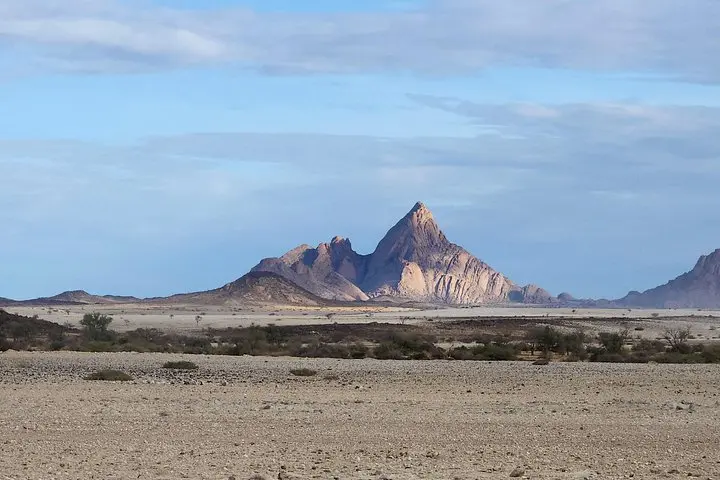
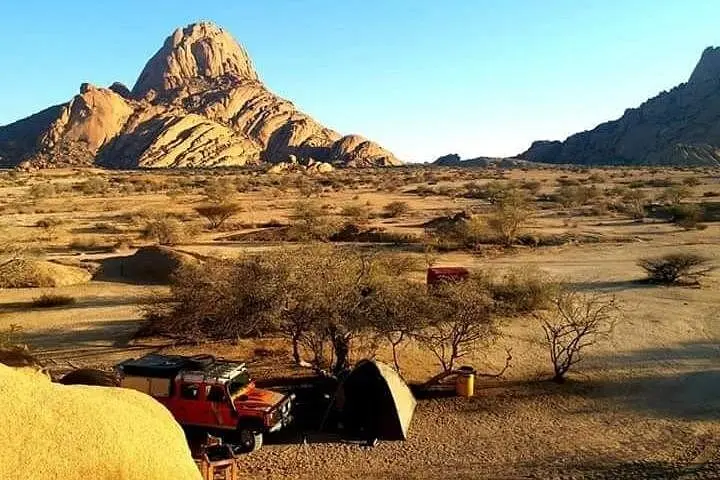
Sunlight slices between granite monoliths as you arrive at Spitzkoppe, dust motes suspended in the wake of the vehicle and the smell of dry grass sharpening your senses.
Sunlight slices between granite monoliths as you arrive at Spitzkoppe, dust motes suspended in the wake of the vehicle and the smell of dry grass sharpening your senses.
Over seven days you move from wind-swept boulder camps to Atlantic surf, then inland across Damaraland’s sculpted rock and into Etosha’s wide salt pans. The landscape here reads like geology in motion — billion-year-old granite spires, wind-polished tafoni, and ephemeral riverbeds where desert-adapted elephants trace secret paths. Rock engravings at Twyfelfontein offer a human counterpoint: San and early pastoralist marks that speak to millennia of local presence and celestial navigation.
Culturally, expect encounter-based learning. Himba and Damara communities remain distinct: be respectful, ask before photographing, and accept that local guides are your best bridge to authentic context. Wildlife-viewing is paced by water — artificial and natural watering holes orchestrate animal movement; the Etosha hides are designed for patient observation rather than adrenaline-chase viewing.
Practical guidance: travel light but layered — days are hot, nights drop sharply. Bring good binoculars and a camera with a long lens for Etosha, plus a headlamp and a compact sleeping pad if you prefer more comfort than the supplied 5cm mattress. Hydrate continuously; carry refill bottles since distances between services are long. Expect unsealed roads and some walking over rough terrain; a moderate fitness level makes the hikes to rock art and guided nature walks enjoyable. Plan buffer time for photography and simply watching a waterhole unfold — that patience is where the trip rewards you most.