THE ADVENTURE COLLECTIVE® · Independent discovery and booking for outdoor travel

Cross sand seas and dry riverbeds on a seven-day dromedary trek from Marrakech to Erg Chegaga. Expect long walking days, basic tents, desert stars and a cultural route through the Drâa Valley.
Cross sand seas and dry riverbeds on a seven-day dromedary trek from Marrakech to Erg Chegaga. Expect long walking days, basic tents, desert stars and a cultural route through the Drâa Valley.
Dawn spills over the High Atlas as a minibus winds down the Tizi n’Tichka and the city noise thins to a desert hush. By afternoon the Drâa Valley opens—palm-lined ribbons fed by the river—and soon sand takes the lead. Over seven days you cross dry plains, climb rippling dunes and spend nights in simple tents while camels stand patient like weathered ships.
Verified experiences and guided adventures in the surrounding area.
Operated by Wandern Marokko Fahim · M'Hamid El Ghizlane, Drâa-Tafilalet
Dawn spills over the High Atlas as a minibus winds down the Tizi n’Tichka and the city noise thins to a desert hush. By afternoon the Drâa Valley opens—palm-lined ribbons fed by the river—and soon sand takes the lead. Over seven days you cross dry plains, climb rippling dunes and spend nights in simple tents while camels stand patient like weathered ships.
Geology here is honest: wind-sculpted erg fields and coarse stone plateaus where ancient riverbeds mark routes of vanished floods. The Drâa has long sustained oases and caravan settlements; you’ll pass ruined souks and a marabout where traders once rested. Local culture is Berber and Saharan—timed to rhythms of water, livestock and seasonal trade. Expect small-group hospitality, tagines cooked over coals, and the occasional evening of song around a low campfire.
Practically, this is desert travel more than technical trekking. Daily walking ranges 5–7 hours over soft sand or compact plains; dune ascents are short but steep, and temperatures swing widely. Pack sun protection, a hydration system and layered clothing for cold desert nights. Walk in the cool hours, let camels carry bulk gear, and keep plans flexible—winds and logistics set the pace. Nights offer extraordinary stars; days demand steady water discipline and respect for fragile oasis ecosystems. Return routes include Aït Ben Haddou and the Ounila Valley, tying the dunes to Morocco’s fortified kasbah landscapes.
No — the itinerary allows walking or riding; many guests alternate so you can rest or experience long dune stretches on foot.
Expect consecutive 5–7 hour days on sand and plains; it’s moderate fitness work rather than technical climbing, but dune climbs can be tiring.
Camping is basic: sleeping mats and shared tents, simple communal meals; overnight in a guesthouse occurs on the return before the drive back to Marrakech.
Facilities are rudimentary or absent in the dunes; camps provide basic washing arrangements—bring biodegradable wipes and hand sanitizer.
Wandern Marokko Fahim operates guided outdoor trips and adventures with an emphasis on safety, stewardship, and memorable experiences.
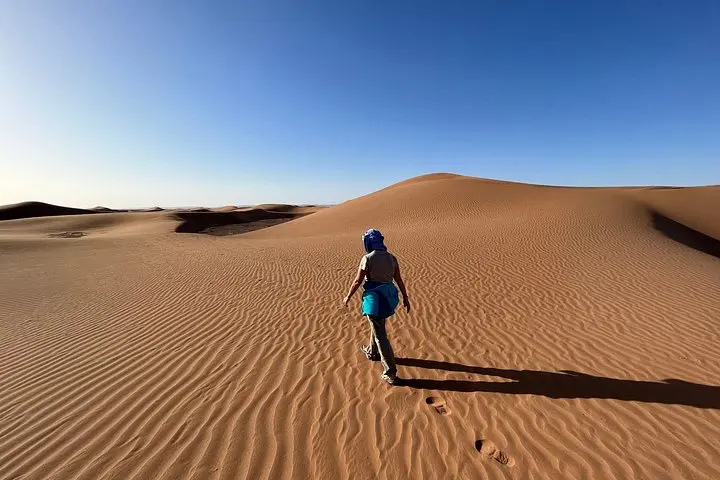
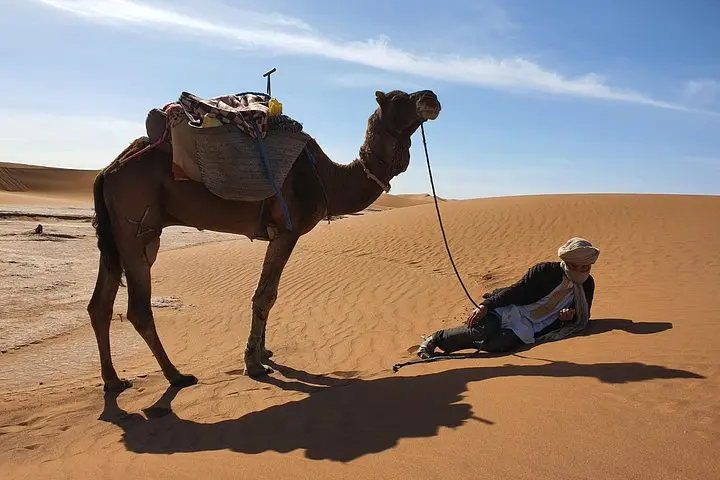
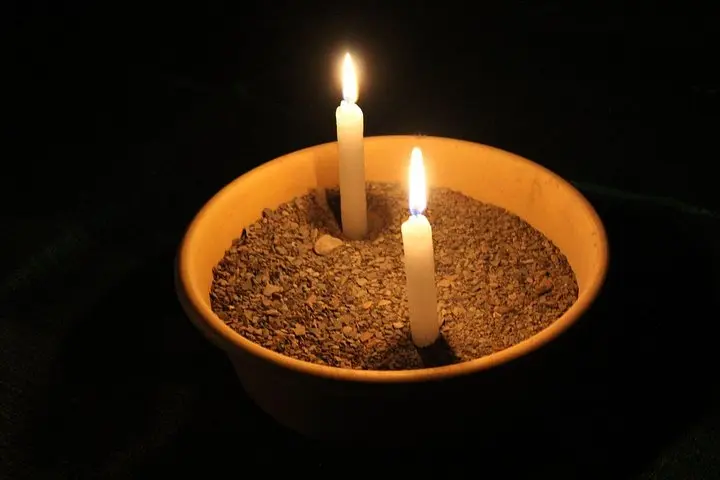
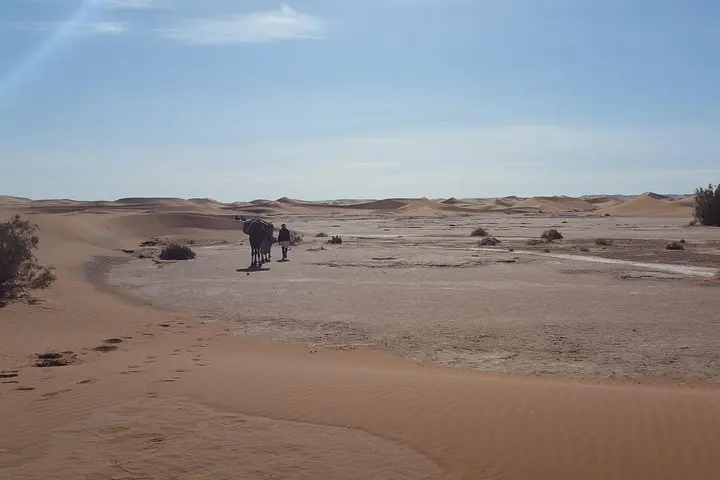
Dawn spills over the High Atlas as a minibus winds down the Tizi n’Tichka and the city noise thins to a desert hush. By afternoon the Drâa Valley opens—palm-lined ribbons fed by the river—and soon sand takes the lead. Over seven days you cross dry plains, climb rippling dunes and spend nights in simple tents while camels stand patient like weathered ships.
Dawn spills over the High Atlas as a minibus winds down the Tizi n’Tichka and the city noise thins to a desert hush. By afternoon the Drâa Valley opens—palm-lined ribbons fed by the river—and soon sand takes the lead. Over seven days you cross dry plains, climb rippling dunes and spend nights in simple tents while camels stand patient like weathered ships.
Geology here is honest: wind-sculpted erg fields and coarse stone plateaus where ancient riverbeds mark routes of vanished floods. The Drâa has long sustained oases and caravan settlements; you’ll pass ruined souks and a marabout where traders once rested. Local culture is Berber and Saharan—timed to rhythms of water, livestock and seasonal trade. Expect small-group hospitality, tagines cooked over coals, and the occasional evening of song around a low campfire.
Practically, this is desert travel more than technical trekking. Daily walking ranges 5–7 hours over soft sand or compact plains; dune ascents are short but steep, and temperatures swing widely. Pack sun protection, a hydration system and layered clothing for cold desert nights. Walk in the cool hours, let camels carry bulk gear, and keep plans flexible—winds and logistics set the pace. Nights offer extraordinary stars; days demand steady water discipline and respect for fragile oasis ecosystems. Return routes include Aït Ben Haddou and the Ounila Valley, tying the dunes to Morocco’s fortified kasbah landscapes.