THE ADVENTURE COLLECTIVE® · Independent discovery and booking for outdoor travel

Covering Meteora’s rock monasteries, the oracle at Delphi, Byzantine Thessaloniki and mountain Litochoro, this private seven-day tour pairs dramatic geology with layered history. Expect long scenic drives, focused site visits, and local drivers who know the stories but not museum guiding.
Covering Meteora’s rock monasteries, the oracle at Delphi, Byzantine Thessaloniki and mountain Litochoro, this private seven-day tour pairs dramatic geology with layered history. Expect long scenic drives, focused site visits, and local drivers who know the stories but not museum guiding.
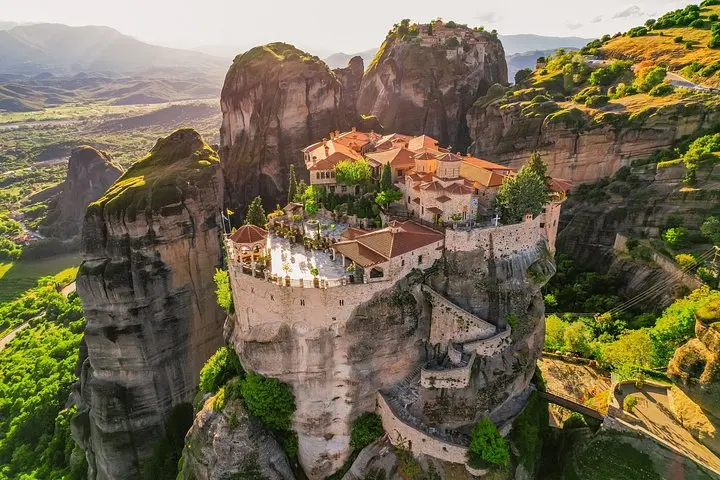
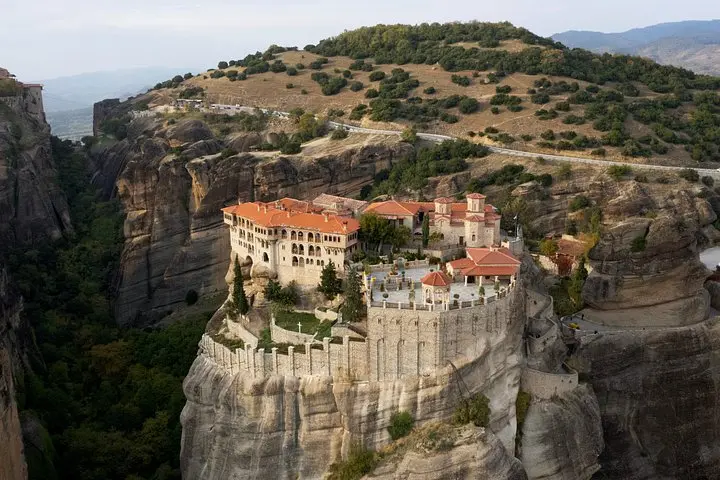
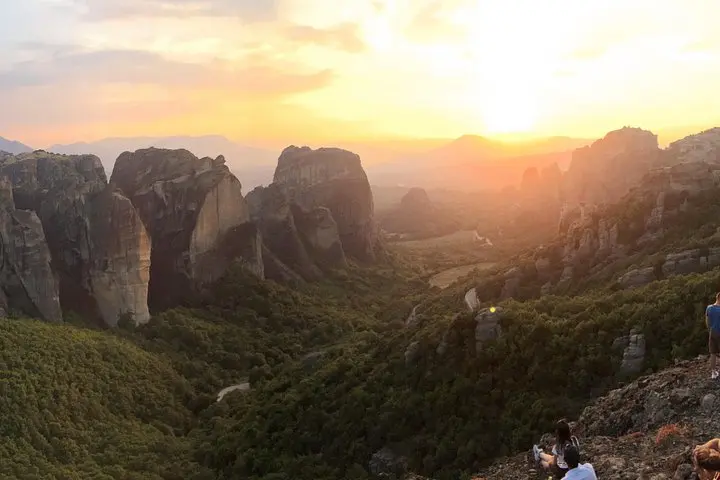
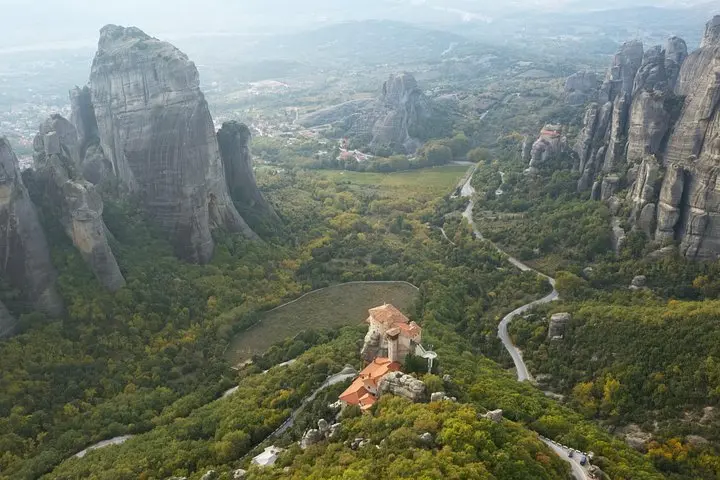
A low sun fires the stone pillars of Meteora into ochre as a private van threads a mountain road, drivers conversant in history guiding the way. Over seven days the landscape shifts: sheer limestone spires that seem to challenge the sky, the calm mirror of Lake Pamvotis, the tile roofs and Ottoman-era minarets of Ioannina, and the marble ghosts of Delphi’s sanctuary watching the valley below.
Verified experiences and guided adventures in the surrounding area.
Operated by Olive Sea Travel · Athens, Attica
A low sun fires the stone pillars of Meteora into ochre as a private van threads a mountain road, drivers conversant in history guiding the way. Over seven days the landscape shifts: sheer limestone spires that seem to challenge the sky, the calm mirror of Lake Pamvotis, the tile roofs and Ottoman-era minarets of Ioannina, and the marble ghosts of Delphi’s sanctuary watching the valley below.
This route stitches together classical and Byzantine chapters of Greece. Meteora’s monasteries perch on sandstone pillars carved by millennia of water and wind; Delphi sits on a steep slope where ancient Greeks believed the earth spoke through an oracle. Northern stops like Vergina and Pella return travelers to the Macedonian era—Philip II and Alexander’s birthplace—while Thessaloniki layers Roman arches, Byzantine churches and Ottoman neighborhoods in close succession.
Culturally this is a study in continuity: monasteries still chant, urban cafés pour strong northern-style coffee, and villagers in mountain towns keep seasonal traditions alive. Geology and history meet on short walks and viewpoint stops that reveal the mechanics of tectonics and human settlement.
Practically, expect long drives punctuated by 30–120 minute visits; accommodations vary from small hotels to guesthouses in Litochoro. Comfortable walking shoes, sun protection and a flexible schedule are essential. Morning light offers the best photos and cooler conditions; late afternoon is ideal for coastal stops like Cape Sounio. Drivers are knowledgeable but not licensed museum guides—hire a local guide on-site if you want in-depth archaeological context. Bring water, a light jacket for mountain evenings, and patience for traffic when approaching larger cities.
No — drivers provide historical overviews and logistics but are not licensed museum guides; hire a local guide at major sites if you want in-depth commentary.
Many transport options are wheelchair accessible, but some archaeological sites and monasteries have steps and uneven terrain that limit access.
Tours often start and finish in Athens but can be tailored; confirm pickup/drop-off with the operator when booking.
Bottled water and private transport are included per the itinerary; museum or monastery admission fees may not be—verify inclusions before travel.
Olive Sea Travel operates guided outdoor trips and adventures with an emphasis on safety, stewardship, and memorable experiences.
A low sun fires the stone pillars of Meteora into ochre as a private van threads a mountain road, drivers conversant in history guiding the way. Over seven days the landscape shifts: sheer limestone spires that seem to challenge the sky, the calm mirror of Lake Pamvotis, the tile roofs and Ottoman-era minarets of Ioannina, and the marble ghosts of Delphi’s sanctuary watching the valley below.
A low sun fires the stone pillars of Meteora into ochre as a private van threads a mountain road, drivers conversant in history guiding the way. Over seven days the landscape shifts: sheer limestone spires that seem to challenge the sky, the calm mirror of Lake Pamvotis, the tile roofs and Ottoman-era minarets of Ioannina, and the marble ghosts of Delphi’s sanctuary watching the valley below.
This route stitches together classical and Byzantine chapters of Greece. Meteora’s monasteries perch on sandstone pillars carved by millennia of water and wind; Delphi sits on a steep slope where ancient Greeks believed the earth spoke through an oracle. Northern stops like Vergina and Pella return travelers to the Macedonian era—Philip II and Alexander’s birthplace—while Thessaloniki layers Roman arches, Byzantine churches and Ottoman neighborhoods in close succession.
Culturally this is a study in continuity: monasteries still chant, urban cafés pour strong northern-style coffee, and villagers in mountain towns keep seasonal traditions alive. Geology and history meet on short walks and viewpoint stops that reveal the mechanics of tectonics and human settlement.
Practically, expect long drives punctuated by 30–120 minute visits; accommodations vary from small hotels to guesthouses in Litochoro. Comfortable walking shoes, sun protection and a flexible schedule are essential. Morning light offers the best photos and cooler conditions; late afternoon is ideal for coastal stops like Cape Sounio. Drivers are knowledgeable but not licensed museum guides—hire a local guide on-site if you want in-depth archaeological context. Bring water, a light jacket for mountain evenings, and patience for traffic when approaching larger cities.