THE ADVENTURE COLLECTIVE® · Independent discovery and booking for outdoor travel

A private, seven-day loop from Amman that stitches together Jerusalem’s holy sites with Jordan’s Petra, Wadi Rum and the Dead Sea. Expect archaeological wonder, desert nights under the stars, and logistical simplicity with private transfers and local guides.
A private, seven-day loop from Amman that stitches together Jerusalem’s holy sites with Jordan’s Petra, Wadi Rum and the Dead Sea. Expect archaeological wonder, desert nights under the stars, and logistical simplicity with private transfers and local guides.
The tour begins where the Levant’s layers meet: a humid breath of incense and traffic at Queen Alia Airport, a driver holding a card with your name, and a quiet sense of leaving ordinary time behind. Over the next seven days the landscape alternates between carved stone and open sky—Roman columns give way to the rose-red cliffs of Petra, which in turn fade into Wadi Rum’s vast dunes where evening wind arranges its own archaeology of ripples.
Verified experiences and guided adventures in the surrounding area.
Operated by Elegant Limo Jordan · Amman, Amman Governorate
The tour begins where the Levant’s layers meet: a humid breath of incense and traffic at Queen Alia Airport, a driver holding a card with your name, and a quiet sense of leaving ordinary time behind. Over the next seven days the landscape alternates between carved stone and open sky—Roman columns give way to the rose-red cliffs of Petra, which in turn fade into Wadi Rum’s vast dunes where evening wind arranges its own archaeology of ripples.
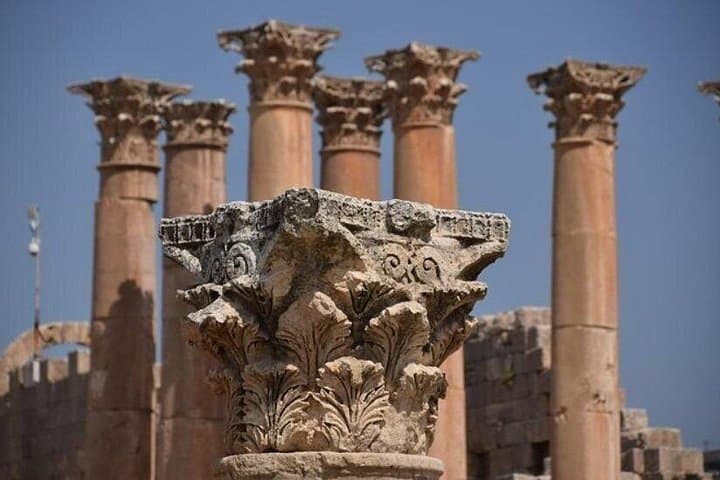
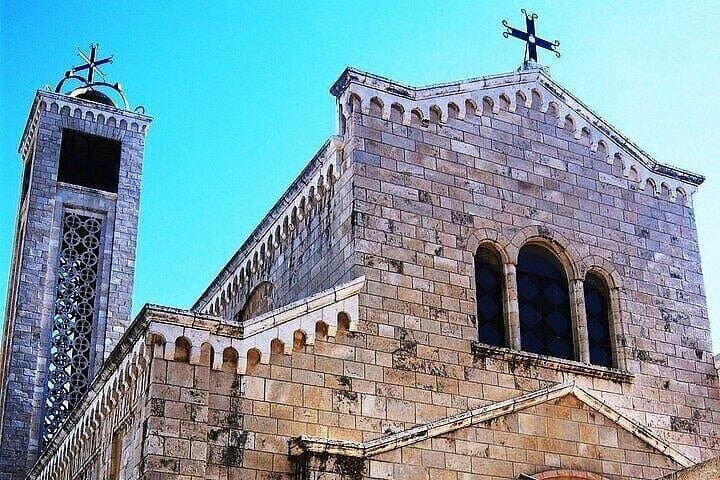
This route moves like history on a map. In Amman and Jerash you trace Roman columns and Byzantine mosaics; Madaba preserves a sixth-century mosaic map that reorders biblical geography under your feet. Mount Nebo offers the view Moses is said to have taken of the Jordan Valley; the Dead Sea demonstrates geology with simple physics—high salinity that lifts the body off the water’s surface. Crossings into Jerusalem and Bethlehem layer Islamic, Christian, and Jewish histories into a compressed, living archive: the Western Wall, Via Dolorosa, and Church of the Holy Sepulchre are both pilgrimage and public forum.
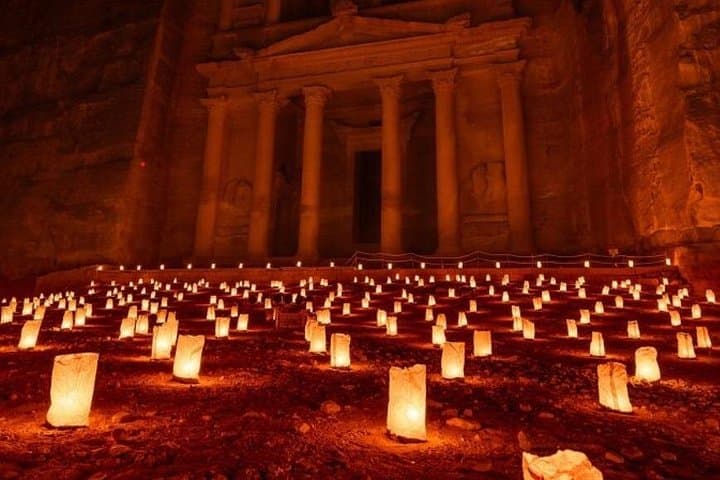
Petra is where human engineering and sandstone meet. The narrow Siq funnels sound, light and expectation toward Al-Khazneh’s façade, which reads like a carved book of weathered ochres. Wadi Rum, by contrast, is wind-carved geology: granite and sandstone towers strike dramatic silhouettes while Bedouin camps keep the desert’s hospitality alive—tea poured with one hand, stories told with the other.
Practical rhythms matter on this itinerary. Days alternate driving with walking; expect long transfers along the Desert Highway and shorter on-foot sections in archaeological sites. Shoes with good traction, a hat, and a refillable water bottle are non-negotiable. The Jordan Pass speeds entry to many sites but must be purchased in advance; passport and visa rules vary by nationality and by border crossing—confirm details well before departure.
Pack layers for temperature swings: desert nights can be unexpectedly cold, while midday in the valley is hot and dry. Respect site rules—no climbing on monuments—and allot time for unhurried exploration at Petra and the contemplative spaces of Jerusalem. Optional extras—hot-air balloon in Petra, a jeep safari in Wadi Rum, or floating time at the Dead Sea—are worth the extra cost if your schedule allows.
This private itinerary rewards slow attention: listen for the scrape of sand on ancient stairs, notice mosaics’ chipped tesserae, and let the silence of the desert reset your pace. With a professional driver and local guides, the route reads less like a checklist and more like a curated passage through some of the region’s most consequential terrain.
Yes—most travelers save time and money by buying the Jordan Pass before arrival; it covers entry to Petra and other archaeological sites when purchased prior to entry.
The operator provides private transfers and coordinates pickups, but travelers must carry correct travel documents and be prepared for immigration procedures on both sides.
No—while it includes walks through Petra and Jerash, the pace is moderate; participants should be comfortable walking on uneven terrain and climbing stairs.
Both are usually available as optional extras—book in advance where possible, as availability can be limited and seasonal.
Yes—floating is safe for most people; avoid shaving before a float, keep water out of eyes and mouth, and rinse off with fresh water afterward to reduce irritation.
Many modern hotels and vehicles are accessible, but some archaeological sites have limited accessibility due to terrain; check specifics with the operator ahead of booking.
Elegant Limo Jordan operates guided outdoor trips and adventures with an emphasis on safety, stewardship, and memorable experiences.

The tour begins where the Levant’s layers meet: a humid breath of incense and traffic at Queen Alia Airport, a driver holding a card with your name, and a quiet sense of leaving ordinary time behind. Over the next seven days the landscape alternates between carved stone and open sky—Roman columns give way to the rose-red cliffs of Petra, which in turn fade into Wadi Rum’s vast dunes where evening wind arranges its own archaeology of ripples.
The tour begins where the Levant’s layers meet: a humid breath of incense and traffic at Queen Alia Airport, a driver holding a card with your name, and a quiet sense of leaving ordinary time behind. Over the next seven days the landscape alternates between carved stone and open sky—Roman columns give way to the rose-red cliffs of Petra, which in turn fade into Wadi Rum’s vast dunes where evening wind arranges its own archaeology of ripples.
This route moves like history on a map. In Amman and Jerash you trace Roman columns and Byzantine mosaics; Madaba preserves a sixth-century mosaic map that reorders biblical geography under your feet. Mount Nebo offers the view Moses is said to have taken of the Jordan Valley; the Dead Sea demonstrates geology with simple physics—high salinity that lifts the body off the water’s surface. Crossings into Jerusalem and Bethlehem layer Islamic, Christian, and Jewish histories into a compressed, living archive: the Western Wall, Via Dolorosa, and Church of the Holy Sepulchre are both pilgrimage and public forum.
Petra is where human engineering and sandstone meet. The narrow Siq funnels sound, light and expectation toward Al-Khazneh’s façade, which reads like a carved book of weathered ochres. Wadi Rum, by contrast, is wind-carved geology: granite and sandstone towers strike dramatic silhouettes while Bedouin camps keep the desert’s hospitality alive—tea poured with one hand, stories told with the other.
Practical rhythms matter on this itinerary. Days alternate driving with walking; expect long transfers along the Desert Highway and shorter on-foot sections in archaeological sites. Shoes with good traction, a hat, and a refillable water bottle are non-negotiable. The Jordan Pass speeds entry to many sites but must be purchased in advance; passport and visa rules vary by nationality and by border crossing—confirm details well before departure.
Pack layers for temperature swings: desert nights can be unexpectedly cold, while midday in the valley is hot and dry. Respect site rules—no climbing on monuments—and allot time for unhurried exploration at Petra and the contemplative spaces of Jerusalem. Optional extras—hot-air balloon in Petra, a jeep safari in Wadi Rum, or floating time at the Dead Sea—are worth the extra cost if your schedule allows.
This private itinerary rewards slow attention: listen for the scrape of sand on ancient stairs, notice mosaics’ chipped tesserae, and let the silence of the desert reset your pace. With a professional driver and local guides, the route reads less like a checklist and more like a curated passage through some of the region’s most consequential terrain.