THE ADVENTURE COLLECTIVE® · Independent discovery and booking for outdoor travel

A seven-day private circuit from Marrakech that stitches together Morocco’s imperial cities, blue-hued Chefchaouen, Roman Volubilis and the mist of Ouzoud Falls. Private driver, guides in Marrakech and Fes, and 3★ accommodation make it a practical way to see the country’s highlights.
A seven-day private circuit from Marrakech that stitches together Morocco’s imperial cities, blue-hued Chefchaouen, Roman Volubilis and the mist of Ouzoud Falls. Private driver, guides in Marrakech and Fes, and 3★ accommodation make it a practical way to see the country’s highlights.
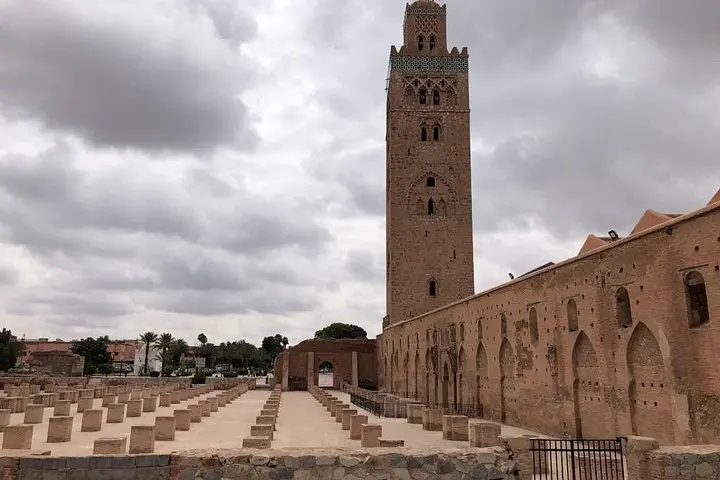
The minivan eases out of Marrakech under a low sun and the city’s ochre walls recede into a scroll of palms, petrol stations and Atlas foothills. Over seven days a private driver threads you across Morocco’s living history: imperial squares, a mosque with a minaret that dares the Atlantic, blue-washed alleys, Roman stonework and a waterfall that keeps the canyon cool.
Verified experiences and guided adventures in the surrounding area.
Operated by Tour Travel & More · Marrakech, Marrakech-Safi
The minivan eases out of Marrakech under a low sun and the city’s ochre walls recede into a scroll of palms, petrol stations and Atlas foothills. Over seven days a private driver threads you across Morocco’s living history: imperial squares, a mosque with a minaret that dares the Atlantic, blue-washed alleys, Roman stonework and a waterfall that keeps the canyon cool.
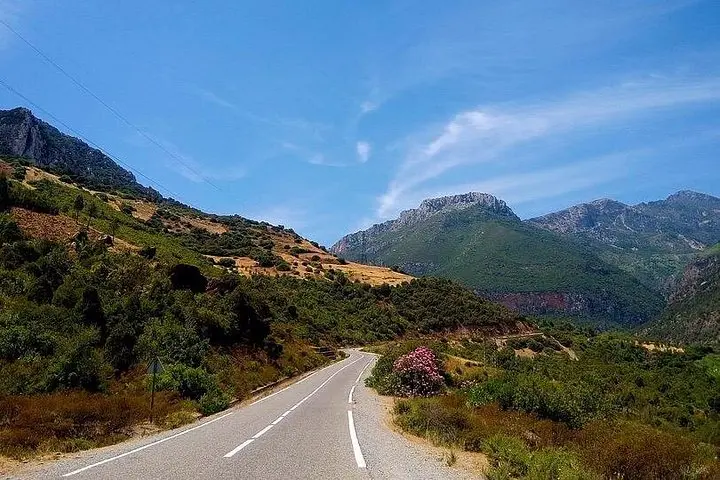
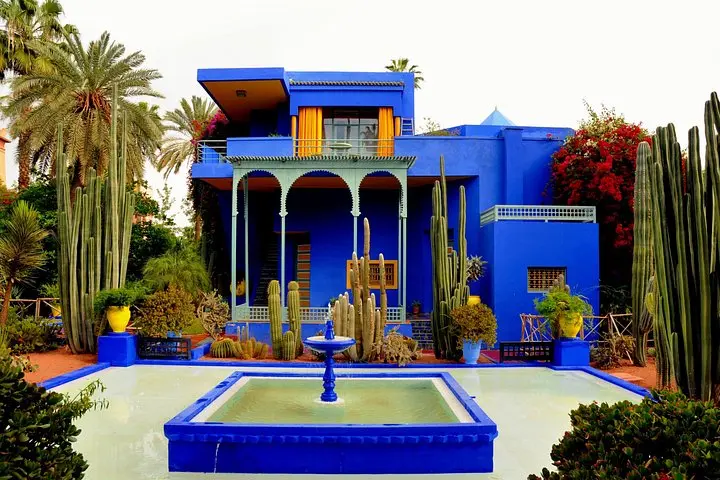
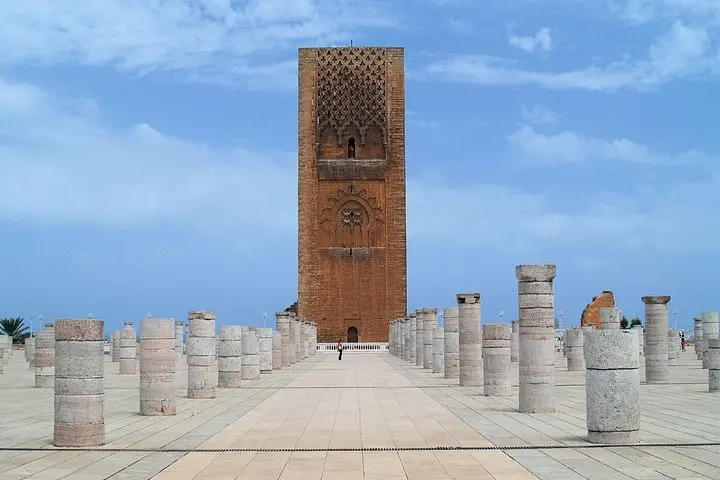
Daylight structures the trip. In Marrakech the itinerary hands you a local guide to walk the souks and slip past the busiest corners of Jemaa el-Fna into Bahia Palace’s tile-worked chambers and the cool, cobalt pockets of Jardin Majorelle. Then the route becomes a corridor—the Atlantic coast to Hassan II Mosque in Casablanca, the royal compounds and fortified necropolis of Rabat, and a highland ribbon through the Rif to Chefchaouen where steep, blue alleys demand slow feet and a steady camera.
Volubilis interrupts the narrative with Roman geometry: paved streets, triumphal arches and mosaics that anchor Morocco’s layered past. Meknes and Fes extend that story—gates, medina lanes and Qarawiyyin’s ivory minaret—places where artisans still tan leather and carve cedar with the same techniques recorded centuries ago.
The Middle Atlas makes its appearance on day six: Ifrane’s alpine facades give way to cedar forests where Barbary macaques watch the road. The finale is Ouzoud Falls—a set of 110-meter drops that refill the air with mist and birdsong and offer stair-lined trails and boat options at river level.
Practicalities are built into the rhythm: private driver in a minivan for road comfort, 3-star hotel nights, and local, licensed guides in Marrakech and Fes. Drives vary: expect long-haul legs of 3–5 hours between cities (Marrakech→Casablanca ~3h; Rabat→Chefchaouen ~4–5h with stops), shorter hops between Volubilis, Meknes and Fes. Foot travel in medinas is mostly flat but cobbled and often stepped; Ouzoud requires negotiating wet stone and stairs.
Bring layered clothing for temperature swings (coastal humidity vs cool mountain air), a comfortable pair of walking shoes for cobbles and steep paths, and a refillable bottle—the tour covers admission to major sites listed but carry local cash for small purchases, tips and village cafés. Because the tour is private, the pace can be adjusted—ask for earlier starts to avoid midday heat or extend time at a ruin for golden-hour photos.
This route trades the logistical stress of overland travel for a curated window on Morocco’s geography and culture: imperial architecture that shaped a nation, landscapes that change from desert-edges to cedar groves, and local encounters that make each town feel like its own chapter.
Yes—private minivan transport and 6 nights in 3★ hotels are included, as detailed in the itinerary.
Tickets to Bahia Palace, Majorelle Gardens, Volubilis and Hassan II Mosque are included; check your voucher for full list.
This is a private tour so the schedule can be adjusted—ask your operator in advance for changes like longer stays or different start times.
Daily walking is moderate: medina exploration and site visits usually involve 1–3 miles of walking on uneven cobbles and steps; Ouzoud includes stair descents to viewpoints.
Local guides in Marrakech and Fes are official and licensed; English and French are commonly available—confirm language needs when booking.
Tipping is customary for guides and drivers; carry small bills (MAD) for tips and incidental purchases.
Tour Travel & More operates guided outdoor trips and adventures with an emphasis on safety, stewardship, and memorable experiences.
The minivan eases out of Marrakech under a low sun and the city’s ochre walls recede into a scroll of palms, petrol stations and Atlas foothills. Over seven days a private driver threads you across Morocco’s living history: imperial squares, a mosque with a minaret that dares the Atlantic, blue-washed alleys, Roman stonework and a waterfall that keeps the canyon cool.
The minivan eases out of Marrakech under a low sun and the city’s ochre walls recede into a scroll of palms, petrol stations and Atlas foothills. Over seven days a private driver threads you across Morocco’s living history: imperial squares, a mosque with a minaret that dares the Atlantic, blue-washed alleys, Roman stonework and a waterfall that keeps the canyon cool.
Daylight structures the trip. In Marrakech the itinerary hands you a local guide to walk the souks and slip past the busiest corners of Jemaa el-Fna into Bahia Palace’s tile-worked chambers and the cool, cobalt pockets of Jardin Majorelle. Then the route becomes a corridor—the Atlantic coast to Hassan II Mosque in Casablanca, the royal compounds and fortified necropolis of Rabat, and a highland ribbon through the Rif to Chefchaouen where steep, blue alleys demand slow feet and a steady camera.
Volubilis interrupts the narrative with Roman geometry: paved streets, triumphal arches and mosaics that anchor Morocco’s layered past. Meknes and Fes extend that story—gates, medina lanes and Qarawiyyin’s ivory minaret—places where artisans still tan leather and carve cedar with the same techniques recorded centuries ago.
The Middle Atlas makes its appearance on day six: Ifrane’s alpine facades give way to cedar forests where Barbary macaques watch the road. The finale is Ouzoud Falls—a set of 110-meter drops that refill the air with mist and birdsong and offer stair-lined trails and boat options at river level.
Practicalities are built into the rhythm: private driver in a minivan for road comfort, 3-star hotel nights, and local, licensed guides in Marrakech and Fes. Drives vary: expect long-haul legs of 3–5 hours between cities (Marrakech→Casablanca ~3h; Rabat→Chefchaouen ~4–5h with stops), shorter hops between Volubilis, Meknes and Fes. Foot travel in medinas is mostly flat but cobbled and often stepped; Ouzoud requires negotiating wet stone and stairs.
Bring layered clothing for temperature swings (coastal humidity vs cool mountain air), a comfortable pair of walking shoes for cobbles and steep paths, and a refillable bottle—the tour covers admission to major sites listed but carry local cash for small purchases, tips and village cafés. Because the tour is private, the pace can be adjusted—ask for earlier starts to avoid midday heat or extend time at a ruin for golden-hour photos.
This route trades the logistical stress of overland travel for a curated window on Morocco’s geography and culture: imperial architecture that shaped a nation, landscapes that change from desert-edges to cedar groves, and local encounters that make each town feel like its own chapter.