THE ADVENTURE COLLECTIVE® · Independent discovery and booking for outdoor travel

A private, seven-day safari from Arusha that follows the wildebeest migration through Tarangire, Serengeti, and Ngorongoro. Expect luxury lodges, early-morning game drives, and consistent opportunities to see the Great Migration.
A private, seven-day safari from Arusha that follows the wildebeest migration through Tarangire, Serengeti, and Ngorongoro. Expect luxury lodges, early-morning game drives, and consistent opportunities to see the Great Migration.
Dawn breaks over endless grass, and a thin line of dust marks the path of thousands of hooves as wildebeest push north across the Serengeti. Your private vehicle threads between acacia-studded kopjes, the guide’s silhouette steady against a horizon that seems to move with the herd.
Verified experiences and guided adventures in the surrounding area.
Operated by MERU SLOPES TOURS AND SAFARIS · Arusha, Arusha Region
Dawn breaks over endless grass, and a thin line of dust marks the path of thousands of hooves as wildebeest push north across the Serengeti. Your private vehicle threads between acacia-studded kopjes, the guide’s silhouette steady against a horizon that seems to move with the herd.
This seven-day loop links Tarangire, central and northern Serengeti, and the Ngorongoro Crater—parks shaped by tectonics and volcanic force. Tarangire’s baobabs and riverine forests contrast with Serengeti’s broad, wind-swept plains and Ngorongoro’s collapsed volcanic bowl, each ecosystem driving distinct animal behavior and sighting windows. The Maasai people have lived here for generations; you’ll pass villages and learn how seasonal grazing and traditional land use influence wildlife patterns.
Practically: expect early starts, long but comfortable drives between lodges, and game drives timed to dawn and late afternoon light. Lodging ranges from Serena lodges to tented camps in the north; accommodations provide meals, transfers, and a professional driver-guide.
Bring binoculars, a DSLR or mirrorless camera with telephoto, dust protection for gear, and layered clothing for chilly mornings. Stay hydrated, follow your guide’s safety briefings around wildlife, and budget tipping for guides and lodge staff—customary in Tanzania.
The pace is observational and patient—days measured in sightings rather than miles. When the Mara River roars with crossing wildebeest, the landscape itself becomes an actor: water daring the herd, wind pushing the dust like a curtain. This trip balances spectacle with practical logistics to make the migration accessible without sacrificing comfort.
Consult your travel clinic for up-to-date advice; yellow fever vaccination may be required depending on origin, and malaria prophylaxis is commonly recommended for northern Tanzania.
Migration timing varies, but river crossings in the northern Serengeti/Mara are most likely July–September; calving in the south is usually January–March.
Light aircraft and lodge transfers often limit luggage to about 15–20 kg (33–44 lb); check with the operator and pack soft bags where possible.
Always follow your guide’s instructions; remain in the vehicle for big-game viewing and never approach animals on foot except in designated, guided walking activities.
MERU SLOPES TOURS AND SAFARIS operates guided outdoor trips and adventures with an emphasis on safety, stewardship, and memorable experiences.
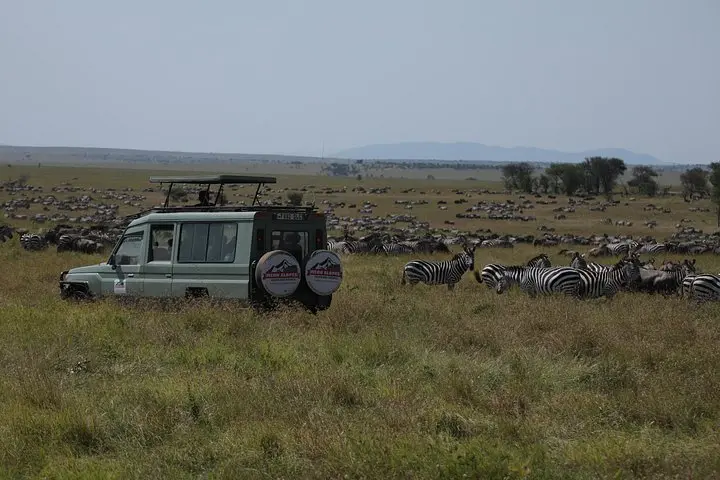
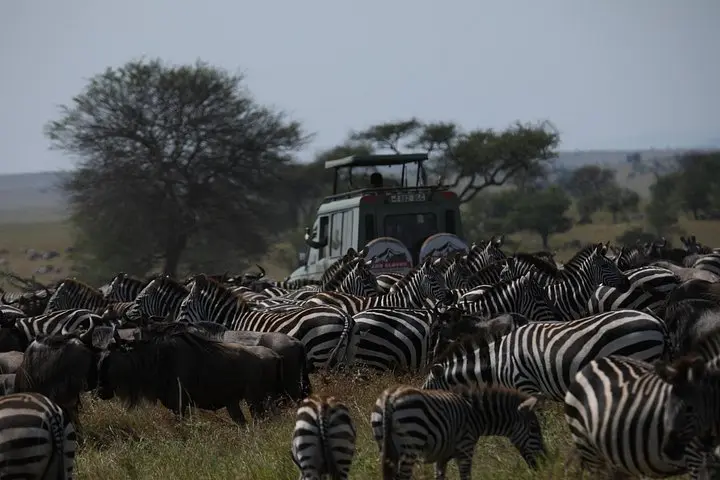
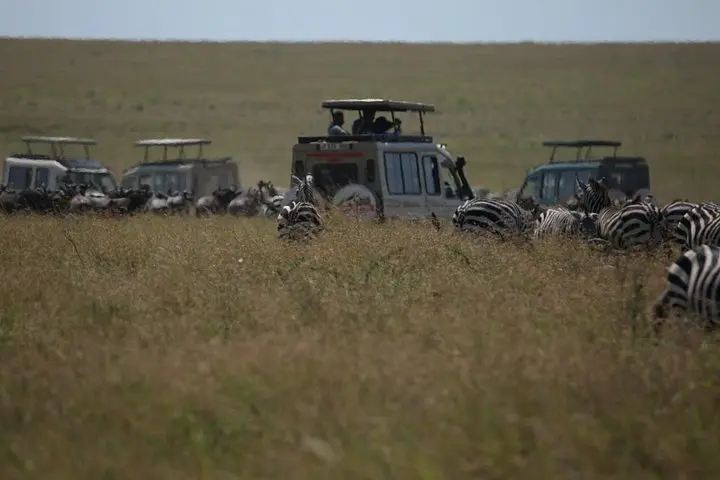
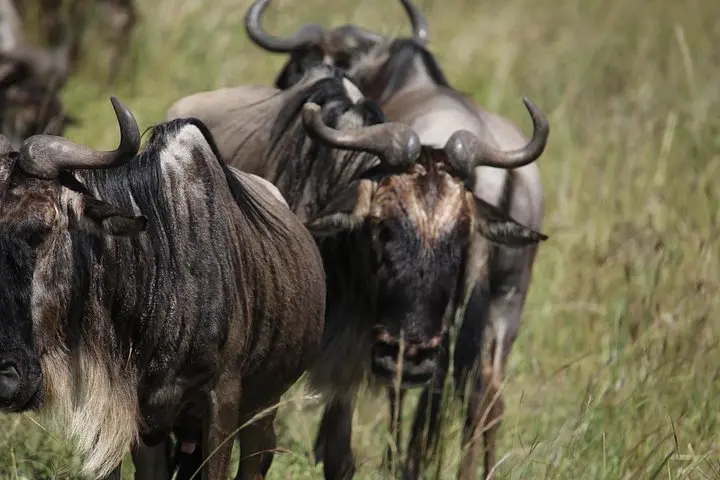
Dawn breaks over endless grass, and a thin line of dust marks the path of thousands of hooves as wildebeest push north across the Serengeti. Your private vehicle threads between acacia-studded kopjes, the guide’s silhouette steady against a horizon that seems to move with the herd.
Dawn breaks over endless grass, and a thin line of dust marks the path of thousands of hooves as wildebeest push north across the Serengeti. Your private vehicle threads between acacia-studded kopjes, the guide’s silhouette steady against a horizon that seems to move with the herd.
This seven-day loop links Tarangire, central and northern Serengeti, and the Ngorongoro Crater—parks shaped by tectonics and volcanic force. Tarangire’s baobabs and riverine forests contrast with Serengeti’s broad, wind-swept plains and Ngorongoro’s collapsed volcanic bowl, each ecosystem driving distinct animal behavior and sighting windows. The Maasai people have lived here for generations; you’ll pass villages and learn how seasonal grazing and traditional land use influence wildlife patterns.
Practically: expect early starts, long but comfortable drives between lodges, and game drives timed to dawn and late afternoon light. Lodging ranges from Serena lodges to tented camps in the north; accommodations provide meals, transfers, and a professional driver-guide.
Bring binoculars, a DSLR or mirrorless camera with telephoto, dust protection for gear, and layered clothing for chilly mornings. Stay hydrated, follow your guide’s safety briefings around wildlife, and budget tipping for guides and lodge staff—customary in Tanzania.
The pace is observational and patient—days measured in sightings rather than miles. When the Mara River roars with crossing wildebeest, the landscape itself becomes an actor: water daring the herd, wind pushing the dust like a curtain. This trip balances spectacle with practical logistics to make the migration accessible without sacrificing comfort.