THE ADVENTURE COLLECTIVE® · Independent discovery and booking for outdoor travel

Approach Kilimanjaro from the calm, dry northeast on the seven-day Rongai route—an itinerary built for slow acclimatization, quiet campsites and a measured push to Uhuru Peak. This guide explains what to expect, what to pack, and how to prepare for summit night.
Approach Kilimanjaro from the calm, dry northeast on the seven-day Rongai route—an itinerary built for slow acclimatization, quiet campsites and a measured push to Uhuru Peak. This guide explains what to expect, what to pack, and how to prepare for summit night.
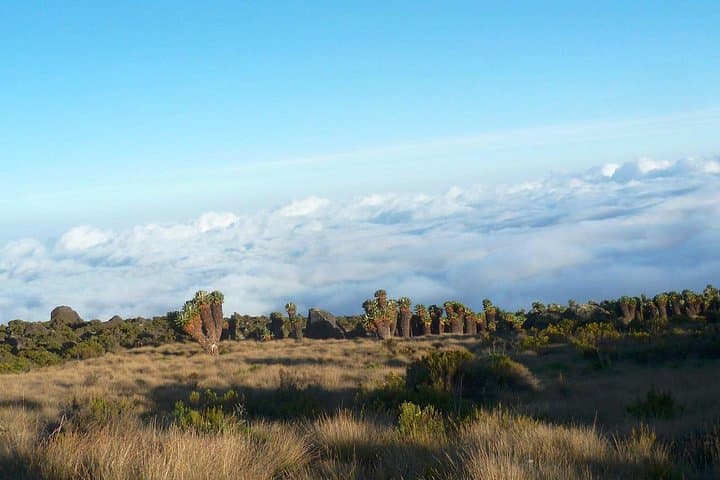
The first light on Kilimanjaro’s shoulder slices through a dry northeast wind as your group leaves the tree line. On the Rongai route the forest gives way quickly: moss and dripping ferns surrender to heather, then to moorland, then an austere, wind-scrubbed alpine desert. Over seven days you move north-to-south around Kibo, sleeping under four-season tents and listening to the guides’ low, steady cadence as they set the rhythm for altitude.
Verified experiences and guided adventures in the surrounding area.
Operated by Shah Tours Travel Ltd. · Moshi, Kilimanjaro Region
The first light on Kilimanjaro’s shoulder slices through a dry northeast wind as your group leaves the tree line. On the Rongai route the forest gives way quickly: moss and dripping ferns surrender to heather, then to moorland, then an austere, wind-scrubbed alpine desert. Over seven days you move north-to-south around Kibo, sleeping under four-season tents and listening to the guides’ low, steady cadence as they set the rhythm for altitude.
Rongai’s lore is practical: it was the traditional trade route from Kenya and offers a quieter, drier approach than the southern tracks. Geologically, you’re walking across old volcanic flanks—loose scoria, compact lava beds and the baked ash that makes the final slog above 4,500m a test of lungs and patience. Culturally, the trek starts near Moshi, the Kilimanjaro Region’s market town where Chagga agricultural terraces and coffee farms frame the lowlands; porters and guides often come from these villages, bringing local knowledge and decades of mountain experience.
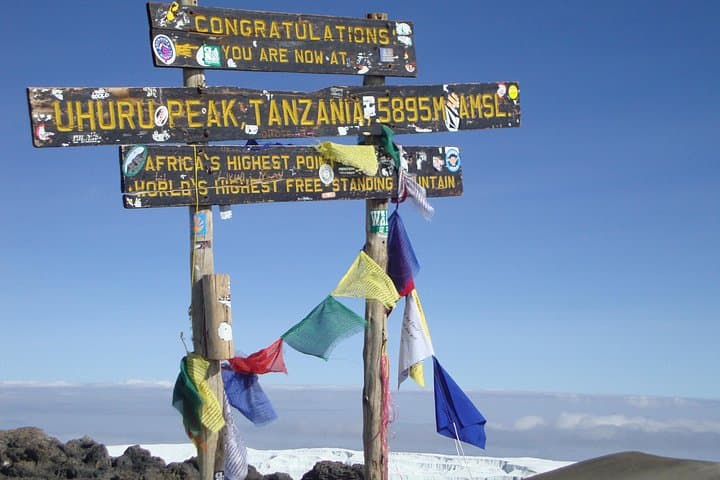
Days one through four are acclimatization in motion: 5–8 km hikes that gain altitude gradually through distinct ecological bands—rainforest to heather to alpine desert—each change visible as a shift in vegetation and sky. Day five crosses the saddle between Mawenzi and Kibo; you’ll feel the air thin and the sun sharpen. The summit night is long and technical in its demand for endurance: a midnight start, a climb on loose volcanic scree to Gilman’s Point (5,681 m), then on to Stella Point and Uhuru Peak (5,895 m). Descents are hard on knees; the finale drops you to Marangu Gate and a vehicle back to Moshi.
Practically: this is a non-technical route—no ropes or crampons needed—but altitude is the real obstacle. The itinerary includes daily meals on the mountain, shared campsite facilities, twice-daily health checks and oxygen for emergencies. The operator follows Kilimanjaro Porters Assistance Project standards and provides crew, cooking staff and camp equipment.
Plan to move slowly, hydrate often and sleep when instructed. Footwear with secure ankle support matters less for technicality than for stability on scree. Bring layered insulation and a good headlamp for summit night. Expect strong sun at altitude, sharp winds and temperature swings from warm village mornings to bitter summit nights.
For an unforgettable, less-crowded ascent that pairs measured acclimatization with a high summit success rate, the Rongai 7-day circuit is a solid choice—if you arrive fit and respectful of the mountain’s pace.
No; the Rongai route is non-technical—no ropes or ice axes required—but the summit uses loose scree and requires stamina and altitude awareness.
A 7-day Rongai itinerary balances acclimatization and pace to improve summit odds, but success depends on fitness, acclimatization response and weather.
Altitude sickness can occur above 3,000 m; the operator conducts twice-daily checks and carries oxygen, but you must report symptoms early and follow guide instructions.
Camps use four-season tents, dining shelters and foam sleeping mattresses; conditions are basic but managed by trained tent crew and cooks.
The drier months (late June–October and January–March) offer clearer skies and colder summit nights, increasing summit-day visibility.
Yes—each person typically has a porter carrying up to 15 kg of personal luggage; additional crew handle communal equipment and cooking gear.
Shah Tours Travel Ltd. operates guided outdoor trips and adventures with an emphasis on safety, stewardship, and memorable experiences.


The first light on Kilimanjaro’s shoulder slices through a dry northeast wind as your group leaves the tree line. On the Rongai route the forest gives way quickly: moss and dripping ferns surrender to heather, then to moorland, then an austere, wind-scrubbed alpine desert. Over seven days you move north-to-south around Kibo, sleeping under four-season tents and listening to the guides’ low, steady cadence as they set the rhythm for altitude.
The first light on Kilimanjaro’s shoulder slices through a dry northeast wind as your group leaves the tree line. On the Rongai route the forest gives way quickly: moss and dripping ferns surrender to heather, then to moorland, then an austere, wind-scrubbed alpine desert. Over seven days you move north-to-south around Kibo, sleeping under four-season tents and listening to the guides’ low, steady cadence as they set the rhythm for altitude.
Rongai’s lore is practical: it was the traditional trade route from Kenya and offers a quieter, drier approach than the southern tracks. Geologically, you’re walking across old volcanic flanks—loose scoria, compact lava beds and the baked ash that makes the final slog above 4,500m a test of lungs and patience. Culturally, the trek starts near Moshi, the Kilimanjaro Region’s market town where Chagga agricultural terraces and coffee farms frame the lowlands; porters and guides often come from these villages, bringing local knowledge and decades of mountain experience.
Days one through four are acclimatization in motion: 5–8 km hikes that gain altitude gradually through distinct ecological bands—rainforest to heather to alpine desert—each change visible as a shift in vegetation and sky. Day five crosses the saddle between Mawenzi and Kibo; you’ll feel the air thin and the sun sharpen. The summit night is long and technical in its demand for endurance: a midnight start, a climb on loose volcanic scree to Gilman’s Point (5,681 m), then on to Stella Point and Uhuru Peak (5,895 m). Descents are hard on knees; the finale drops you to Marangu Gate and a vehicle back to Moshi.
Practically: this is a non-technical route—no ropes or crampons needed—but altitude is the real obstacle. The itinerary includes daily meals on the mountain, shared campsite facilities, twice-daily health checks and oxygen for emergencies. The operator follows Kilimanjaro Porters Assistance Project standards and provides crew, cooking staff and camp equipment.
Plan to move slowly, hydrate often and sleep when instructed. Footwear with secure ankle support matters less for technicality than for stability on scree. Bring layered insulation and a good headlamp for summit night. Expect strong sun at altitude, sharp winds and temperature swings from warm village mornings to bitter summit nights.
For an unforgettable, less-crowded ascent that pairs measured acclimatization with a high summit success rate, the Rongai 7-day circuit is a solid choice—if you arrive fit and respectful of the mountain’s pace.