THE ADVENTURE COLLECTIVE® · Independent discovery and booking for outdoor travel

Climb Kilimanjaro’s quieter northern flank on the Rongai Route: seven days of forest, moorland and a headlamp-lit summit push to Uhuru Peak. This private itinerary prioritizes acclimatization and solitude while delivering expansive views of Mawenzi and the Kenyan plains.
Climb Kilimanjaro’s quieter northern flank on the Rongai Route: seven days of forest, moorland and a headlamp-lit summit push to Uhuru Peak. This private itinerary prioritizes acclimatization and solitude while delivering expansive views of Mawenzi and the Kenyan plains.
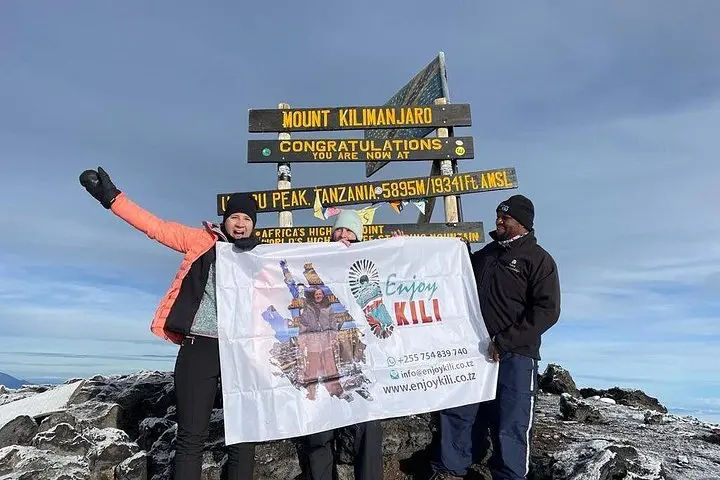
Dawn on the northern flank of Kilimanjaro arrives cool and spare: a thin lightslides across a moorland carved by wind and time, while the Kenyan plains stretch east like a patient audience. The Rongai Route begins with a low, green gate and quickly moves into forest where black-and-white colobus chatter from high branches. Over seven days you trade thick rainforest for heather moor, then for the lunar saddle between Mawenzi and Kibo, finishing with a summit run under headlamp to Uhuru Peak.
Verified experiences and guided adventures in the surrounding area.
Operated by Enjoy Kili Limited · Moshi, Kilimanjaro Region
Dawn on the northern flank of Kilimanjaro arrives cool and spare: a thin lightslides across a moorland carved by wind and time, while the Kenyan plains stretch east like a patient audience. The Rongai Route begins with a low, green gate and quickly moves into forest where black-and-white colobus chatter from high branches. Over seven days you trade thick rainforest for heather moor, then for the lunar saddle between Mawenzi and Kibo, finishing with a summit run under headlamp to Uhuru Peak.
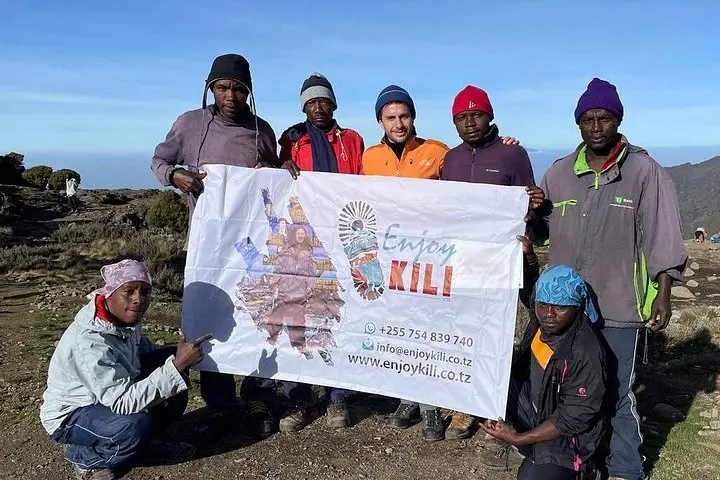
Geologically, Kilimanjaro is a dormant stratovolcano made of three cones—Shira, Mawenzi and Kibo—whose glacial remnants crown the summit. The climb threads cultural edges too: local Chagga porters and guides maintain mountain paths and village economies around Moshi, and the route’s relative solitude reflects its approach from the Kenyan border.
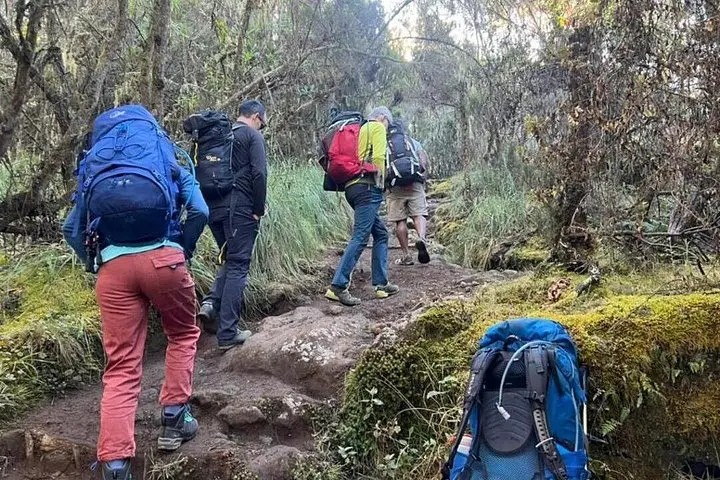
Expect varied terrain: muddy forest tracks, ericaceous moorland, rocky scree and steep switchbacks on summit night. Altitude is the main challenge—your itinerary builds acclimatization days and slower gains to reduce risk. Weather shifts fast; wind and cold dominate above 4,000 m.
Practical guidance: pack layered insulation, a reliable headlamp and trekking poles, and hydrate often—small, frequent sips beat large gulps. Move at a steady pace on summit night, follow your guide’s rotation schedule, and know that summit success depends as much on acclimatization and nutrition as on fitness. This private Rongai itinerary balances technical simplicity with long days and the commitment of high-altitude trekking—prepare, respect the mountain, and plan recovery time in Moshi after descent.
Rongai is considered one of the less crowded and more gradual approaches, with gentler initial slopes, but the summit night remains a long, steep challenge—altitude, not technicality, is the main obstacle.
Dry months (roughly late June–October and January–February) offer the most stable conditions; the northern route can be drier than southern approaches during shoulder seasons.
Typical inclusions are park fees, guides and porters, tents, meals on trek, emergency first-aid equipment, and summit certificates—confirm specifics with the operator before booking.
Moderately fit beginners can succeed with proper training and adherence to acclimatization; however operators require good cardiovascular health and may restrict participation for medical concerns.
Enjoy Kili Limited operates guided outdoor trips and adventures with an emphasis on safety, stewardship, and memorable experiences.
Dawn on the northern flank of Kilimanjaro arrives cool and spare: a thin lightslides across a moorland carved by wind and time, while the Kenyan plains stretch east like a patient audience. The Rongai Route begins with a low, green gate and quickly moves into forest where black-and-white colobus chatter from high branches. Over seven days you trade thick rainforest for heather moor, then for the lunar saddle between Mawenzi and Kibo, finishing with a summit run under headlamp to Uhuru Peak.
Dawn on the northern flank of Kilimanjaro arrives cool and spare: a thin lightslides across a moorland carved by wind and time, while the Kenyan plains stretch east like a patient audience. The Rongai Route begins with a low, green gate and quickly moves into forest where black-and-white colobus chatter from high branches. Over seven days you trade thick rainforest for heather moor, then for the lunar saddle between Mawenzi and Kibo, finishing with a summit run under headlamp to Uhuru Peak.
Geologically, Kilimanjaro is a dormant stratovolcano made of three cones—Shira, Mawenzi and Kibo—whose glacial remnants crown the summit. The climb threads cultural edges too: local Chagga porters and guides maintain mountain paths and village economies around Moshi, and the route’s relative solitude reflects its approach from the Kenyan border.
Expect varied terrain: muddy forest tracks, ericaceous moorland, rocky scree and steep switchbacks on summit night. Altitude is the main challenge—your itinerary builds acclimatization days and slower gains to reduce risk. Weather shifts fast; wind and cold dominate above 4,000 m.
Practical guidance: pack layered insulation, a reliable headlamp and trekking poles, and hydrate often—small, frequent sips beat large gulps. Move at a steady pace on summit night, follow your guide’s rotation schedule, and know that summit success depends as much on acclimatization and nutrition as on fitness. This private Rongai itinerary balances technical simplicity with long days and the commitment of high-altitude trekking—prepare, respect the mountain, and plan recovery time in Moshi after descent.