THE ADVENTURE COLLECTIVE® · Independent discovery and booking for outdoor travel

Cross wind-sculpted dunes by camel, sleep in Bedouin bivouacs, and discover the desert rose formations on a 7-day Sahara trek from Douz. Practical guidance and cultural context help you prepare for long days under the sun and quiet nights beneath the stars.
Cross wind-sculpted dunes by camel, sleep in Bedouin bivouacs, and discover the desert rose formations on a 7-day Sahara trek from Douz. Practical guidance and cultural context help you prepare for long days under the sun and quiet nights beneath the stars.
The sun drops like hot coin behind a sweep of dunes as your camel picks a steady rhythm; sand sighs underfoot and the horizon becomes a living map of ridges and hollows. By night, stars pour over the bivouac and the desert’s silence presses close—broken only by the soft chatter of guides and the crackle of a small fire.
Verified experiences and guided adventures in the surrounding area.
Operated by SAHARANSKY · Douz, Kebili Governorate
The sun drops like hot coin behind a sweep of dunes as your camel picks a steady rhythm; sand sighs underfoot and the horizon becomes a living map of ridges and hollows. By night, stars pour over the bivouac and the desert’s silence presses close—broken only by the soft chatter of guides and the crackle of a small fire.
This seven-day trek starts and ends in Douz, the traditional gateway to the Tunisian Sahara. The route threads high dunes and interdunal corridors, visits the crystalline 'rose de sable' formations formed where gypsum and sand crystallize, and includes stops at marabouts—local holy sites—reflecting centuries of nomadic and Bedouin culture. Geologically the area is wind-sculpted Quaternary sand atop older continental deposits; biologically it's an arid mosaic where hardy shrubs and acacia patches mark scarce water.
Expect days paced around camel riding and short walks—most participants find the physical demand low but the balance and heat management challenging. Overnight accommodations alternate simple bivouac tents and a final permanent camp with shared facilities. Meals are local, largely vegetable and grain-based, and guides provide turbans and djellabas to shield you from sun and sand.
Practical notes: travel light, drink frequently, and plan arrivals in cooler months (October–April) when heat is manageable. Footwear with good grip helps for dune climbs; a forehead band and sunglasses cut glare. This trek is cultural as much as scenic—bring curiosity, sun protection, and a readiness for slow desert time.
The tour is listed as suitable for most fitness levels; most travel is by camel with short walks—physical strain comes primarily from heat and balance rather than long mileage.
Cooler months (October–April) are recommended to avoid extreme daytime heat; evenings can be cool, especially November–February.
Nights alternate between simple bivouac tents (with provided bedding) and one permanent desert camp on the penultimate night that has shared showers and toilets.
Yes—meals (6 breakfasts, lunches, dinners) and bottled drinking water are included, with freshly prepared local dishes by camp staff.
SAHARANSKY operates guided outdoor trips and adventures with an emphasis on safety, stewardship, and memorable experiences.
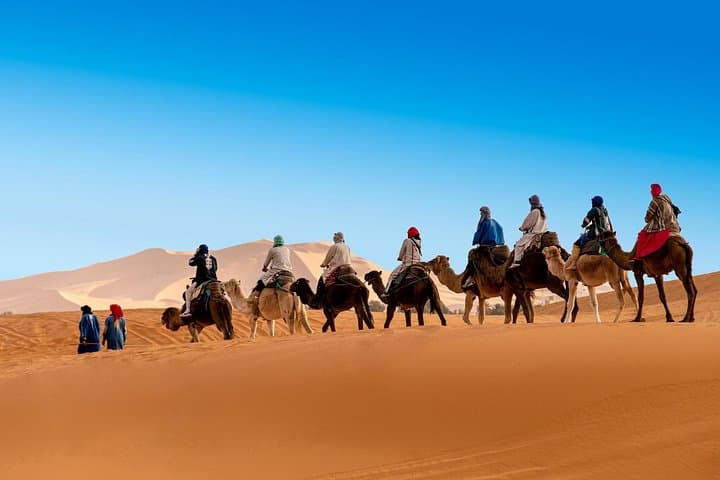


The sun drops like hot coin behind a sweep of dunes as your camel picks a steady rhythm; sand sighs underfoot and the horizon becomes a living map of ridges and hollows. By night, stars pour over the bivouac and the desert’s silence presses close—broken only by the soft chatter of guides and the crackle of a small fire.
The sun drops like hot coin behind a sweep of dunes as your camel picks a steady rhythm; sand sighs underfoot and the horizon becomes a living map of ridges and hollows. By night, stars pour over the bivouac and the desert’s silence presses close—broken only by the soft chatter of guides and the crackle of a small fire.
This seven-day trek starts and ends in Douz, the traditional gateway to the Tunisian Sahara. The route threads high dunes and interdunal corridors, visits the crystalline 'rose de sable' formations formed where gypsum and sand crystallize, and includes stops at marabouts—local holy sites—reflecting centuries of nomadic and Bedouin culture. Geologically the area is wind-sculpted Quaternary sand atop older continental deposits; biologically it's an arid mosaic where hardy shrubs and acacia patches mark scarce water.
Expect days paced around camel riding and short walks—most participants find the physical demand low but the balance and heat management challenging. Overnight accommodations alternate simple bivouac tents and a final permanent camp with shared facilities. Meals are local, largely vegetable and grain-based, and guides provide turbans and djellabas to shield you from sun and sand.
Practical notes: travel light, drink frequently, and plan arrivals in cooler months (October–April) when heat is manageable. Footwear with good grip helps for dune climbs; a forehead band and sunglasses cut glare. This trek is cultural as much as scenic—bring curiosity, sun protection, and a readiness for slow desert time.