THE ADVENTURE COLLECTIVE® · Independent discovery and booking for outdoor travel

Seven days of Morocco’s most striking contrasts: cross the High Atlas, walk UNESCO-listed kasbahs, ride camels at Erg Chebbi and explore Fez’s medieval lanes. This private tour mixes long scenic drives with guided city visits and an overnight in a desert camp.
Seven days of Morocco’s most striking contrasts: cross the High Atlas, walk UNESCO-listed kasbahs, ride camels at Erg Chebbi and explore Fez’s medieval lanes. This private tour mixes long scenic drives with guided city visits and an overnight in a desert camp.
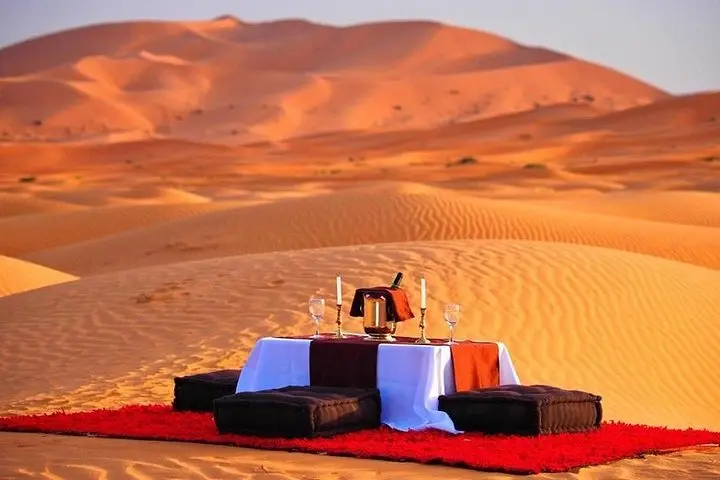
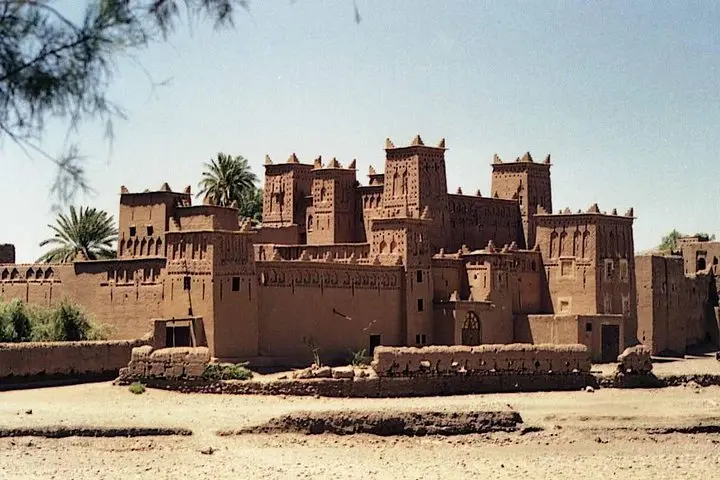
The sun leans low over the High Atlas as your convoy winds up Tizi n'Tichka, the road cutting through stony slopes and pockets of scrub. By the time you reach Aït Benhaddou the light has flattened earthen walls into sharp, ochre planes; by night the Erg Chebbi dunes loom like a slow-moving sea, inviting the first camel trek to camp.
Verified experiences and guided adventures in the surrounding area.
Operated by Marrakech First Trip · Marrakech, Marrakech-Safi
The sun leans low over the High Atlas as your convoy winds up Tizi n'Tichka, the road cutting through stony slopes and pockets of scrub. By the time you reach Aït Benhaddou the light has flattened earthen walls into sharp, ochre planes; by night the Erg Chebbi dunes loom like a slow-moving sea, inviting the first camel trek to camp.
This seven-day loop links Marrakech with Morocco’s imperial cities—Fez, Meknes and Rabat—while threading the Atlas Mountains, the rose-scented Dades and Todra gorges, and the orange-burnt sweep of the Sahara. Geology here is dramatic: folded, uplifted ranges give way to river-washed gorges and finally to wind-sculpted sand ridges that rise up to roughly 100–150 meters.
Culturally the route follows ancient caravan and imperial corridors. Kasbahs such as Taourirt and Aït Benhaddou mark fortified power centers; Fez holds the medieval medina and the world’s oldest functioning university. In the valleys, Berber villages and rose distilleries add human scale to the vast landscape.
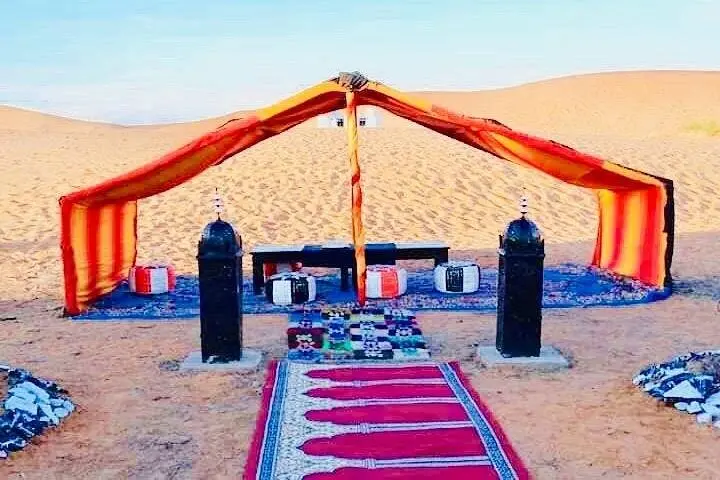
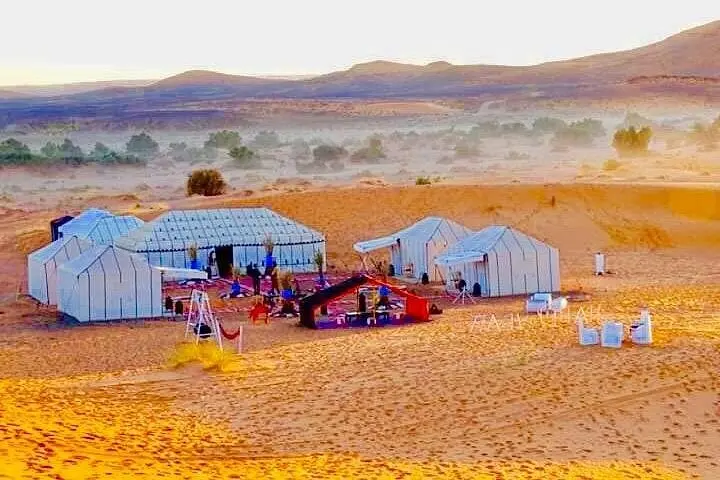
Expect several long driving days—plan for multiple 4–8 hour stretches—with guided city walks, a sunset and sunrise camel ride, and an overnight in a desert camp on mattresses with blankets provided. Practical notes: protect against sun and dust, carry layered clothing for hot days and cold desert nights, and keep cash for small market purchases. The trip is private with air-conditioned transport and includes most breakfasts and dinners, making it a compact, well-supported way to sample Morocco’s contrasts from red-city courtyards to the silent dunes.
Yes—transfer from Marrakech airport to your riad is included as part of the first-day service.
The tour is half-board: breakfasts and six dinners are included; lunches and drinks are typically paid locally unless specified.
Camel rides are short (sunset and sunrise) and suitable for most people; desert nights require climbing soft sand to reach tents but accommodations provide mattresses and blankets.
This is a private tour so routes, pickup points and some stops can usually be adjusted—confirm specifics with the operator when booking.
Marrakech First Trip operates guided outdoor trips and adventures with an emphasis on safety, stewardship, and memorable experiences.
The sun leans low over the High Atlas as your convoy winds up Tizi n'Tichka, the road cutting through stony slopes and pockets of scrub. By the time you reach Aït Benhaddou the light has flattened earthen walls into sharp, ochre planes; by night the Erg Chebbi dunes loom like a slow-moving sea, inviting the first camel trek to camp.
The sun leans low over the High Atlas as your convoy winds up Tizi n'Tichka, the road cutting through stony slopes and pockets of scrub. By the time you reach Aït Benhaddou the light has flattened earthen walls into sharp, ochre planes; by night the Erg Chebbi dunes loom like a slow-moving sea, inviting the first camel trek to camp.
This seven-day loop links Marrakech with Morocco’s imperial cities—Fez, Meknes and Rabat—while threading the Atlas Mountains, the rose-scented Dades and Todra gorges, and the orange-burnt sweep of the Sahara. Geology here is dramatic: folded, uplifted ranges give way to river-washed gorges and finally to wind-sculpted sand ridges that rise up to roughly 100–150 meters.
Culturally the route follows ancient caravan and imperial corridors. Kasbahs such as Taourirt and Aït Benhaddou mark fortified power centers; Fez holds the medieval medina and the world’s oldest functioning university. In the valleys, Berber villages and rose distilleries add human scale to the vast landscape.
Expect several long driving days—plan for multiple 4–8 hour stretches—with guided city walks, a sunset and sunrise camel ride, and an overnight in a desert camp on mattresses with blankets provided. Practical notes: protect against sun and dust, carry layered clothing for hot days and cold desert nights, and keep cash for small market purchases. The trip is private with air-conditioned transport and includes most breakfasts and dinners, making it a compact, well-supported way to sample Morocco’s contrasts from red-city courtyards to the silent dunes.