THE ADVENTURE COLLECTIVE® · Independent discovery and booking for outdoor travel

Drive a campervan from Reykjavík through basalt cliffs, black sand beaches, geothermal baths, and a live glacier ice cave on this 7‑day self‑drive Northern Lights adventure. Expect long scenic drives, booked activities, and nightly campsites.
Drive a campervan from Reykjavík through basalt cliffs, black sand beaches, geothermal baths, and a live glacier ice cave on this 7‑day self‑drive Northern Lights adventure. Expect long scenic drives, booked activities, and nightly campsites.
The van door thuds shut against a spit of wind that tastes of sea salt and hot rock. Reykjavik’s harbor lights retreat in the rearview as the highway unspools west and south — flat lava fields give way to cathedral-like basalt, sharp mountain teeth, and black beaches that seem to drink the Atlantic. At night the sky is an active partner, barreling green and violet across a heavy Arctic dome; the aurora can arrive without ceremony, folding the landscape into motion.
Verified experiences and guided adventures in the surrounding area.
Operated by CampEasy ehf. · Reykjavík, Capital Region
The van door thuds shut against a spit of wind that tastes of sea salt and hot rock. Reykjavik’s harbor lights retreat in the rearview as the highway unspools west and south — flat lava fields give way to cathedral-like basalt, sharp mountain teeth, and black beaches that seem to drink the Atlantic. At night the sky is an active partner, barreling green and violet across a heavy Arctic dome; the aurora can arrive without ceremony, folding the landscape into motion.
This seven-day self-drive loop stitches together Iceland’s geological chapters: recent lava flows hardened into hexagonal columns at Gerðuberg, glaciers ground valleys into soft U-shapes and left Fjallsárlón and Diamond Beach littered with stranded ice, and centuries of tectonic tug left Þingvellir as a visible rift between continents. Human history threads through the route too — turf houses, Viking-age assemblies, and fishing villages where salted fish and horse lore remain part of daily life.
Expect variety: short coastal walks to Reynisfjara’s basalt columns, a spiral stair descent into an 8,000-year-old lava tube, and a guided super-jeep ride up to a Vatnajökull ice cave where the deep-blue walls are shaped yearly by melt and fall. Distances between daily stops are manageable — plan for 2 to 5 hours driving on most days and roughly 1,000–1,200 km of total road time on mixed paved and graveled routes.
The itinerary is practical by design. You’ll sleep at well-located campsites most nights (campsite fees included), work from an Easy Guide tablet with recommended routes and local intel, and access booked activities like the ice cave and Krauma geothermal baths. Drivers must be at least 20 years old with an international license valid for 12 months; winter road conditions demand cautious driving and warm layering rather than speed.
For food and fuel, towns are frequent enough along the main ring and south coast, but services thin in remote stretches; keep a half-tank reserve and a supply of snacks. Weather is a variable partner — sudden wind and blowing spray can close a viewpoint or re-route you — so build flexibility into each day.
Practical preparation pays off: pack waterproof outer layers, crampon-capable boots for the ice cave approach (guides provide helmets and lights), and a plan for aurora hunting — get away from village lights, check local cloud cover forecasts, and be ready to be patient. The journey is part road trip, part geology lesson, and part nocturnal light show — a week of elemental Iceland that asks only that you slow the throttle, listen for the rumble of waterfall spray, and follow the road where it wants to lead.
Drivers must be at least 20 years old and present an international driving license valid for at least 12 months; check the supplier’s terms for any vehicle-specific requirements.
Some activities have minimum age limits (often 8 years) and height requirements; guides assess conditions and provide helmets and basic safety gear—check each activity’s age/height rules.
No—aurora visibility depends on solar activity and clear skies; the itinerary improves your odds by getting you to dark, rural sites, but sightings can’t be guaranteed.
Winter roads can be icy and windy; the route uses mainly paved roads but may include gravel. Drivers should be comfortable with winter conditions and allow extra time.
Most campsites on this route have basic facilities and electricity, but levels vary; the itinerary includes campsite fees but check each stop for services if you need hookups.
Activities like ice cave tours are weather-dependent; the supplier typically offers alternatives or rescheduling when possible—confirm refund and cancellation terms in advance.
CampEasy ehf. operates guided outdoor trips and adventures with an emphasis on safety, stewardship, and memorable experiences.
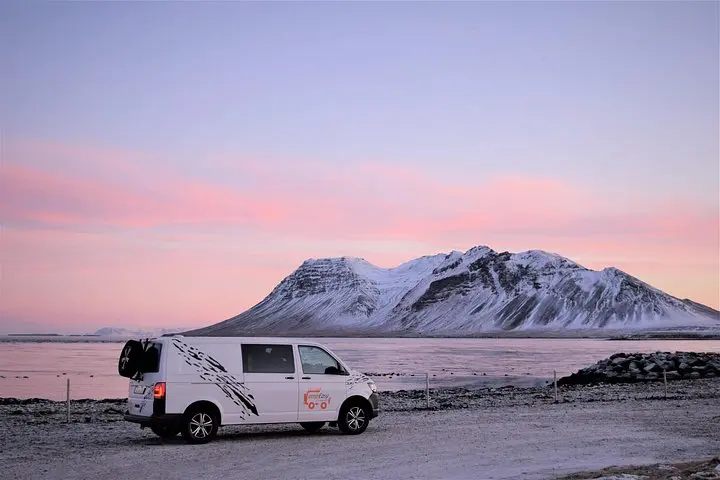
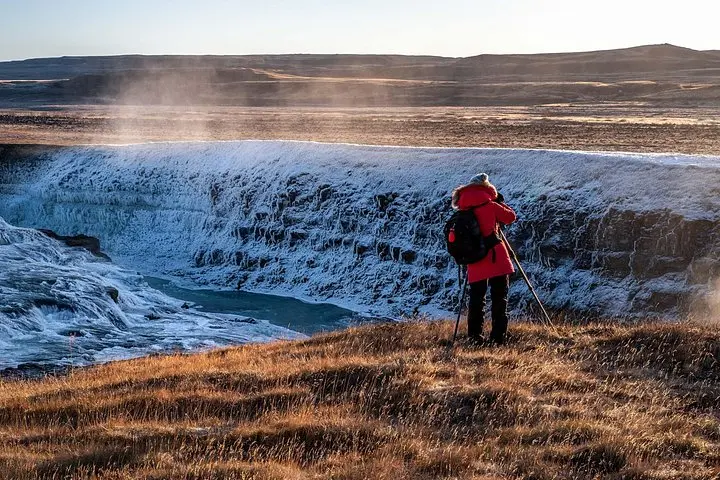
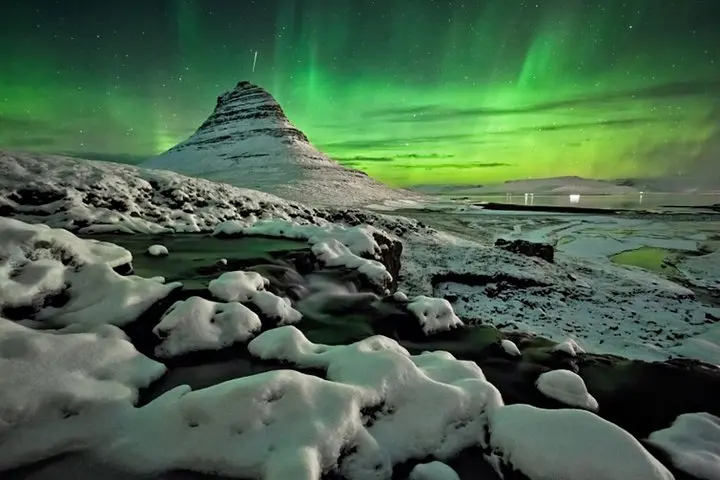
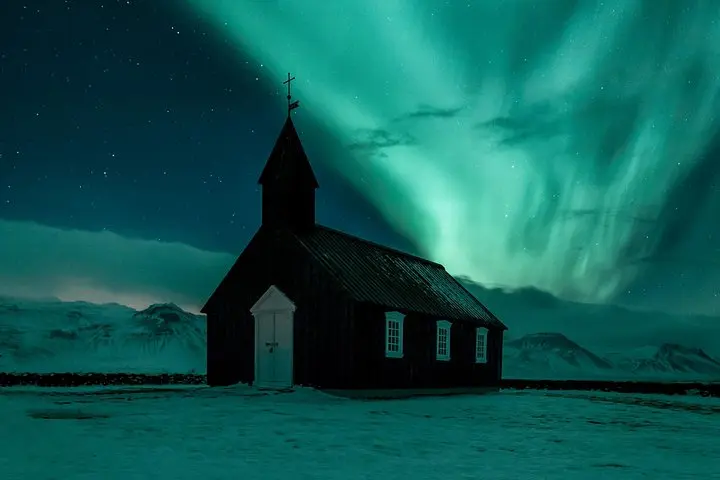
The van door thuds shut against a spit of wind that tastes of sea salt and hot rock. Reykjavik’s harbor lights retreat in the rearview as the highway unspools west and south — flat lava fields give way to cathedral-like basalt, sharp mountain teeth, and black beaches that seem to drink the Atlantic. At night the sky is an active partner, barreling green and violet across a heavy Arctic dome; the aurora can arrive without ceremony, folding the landscape into motion.
The van door thuds shut against a spit of wind that tastes of sea salt and hot rock. Reykjavik’s harbor lights retreat in the rearview as the highway unspools west and south — flat lava fields give way to cathedral-like basalt, sharp mountain teeth, and black beaches that seem to drink the Atlantic. At night the sky is an active partner, barreling green and violet across a heavy Arctic dome; the aurora can arrive without ceremony, folding the landscape into motion.
This seven-day self-drive loop stitches together Iceland’s geological chapters: recent lava flows hardened into hexagonal columns at Gerðuberg, glaciers ground valleys into soft U-shapes and left Fjallsárlón and Diamond Beach littered with stranded ice, and centuries of tectonic tug left Þingvellir as a visible rift between continents. Human history threads through the route too — turf houses, Viking-age assemblies, and fishing villages where salted fish and horse lore remain part of daily life.
Expect variety: short coastal walks to Reynisfjara’s basalt columns, a spiral stair descent into an 8,000-year-old lava tube, and a guided super-jeep ride up to a Vatnajökull ice cave where the deep-blue walls are shaped yearly by melt and fall. Distances between daily stops are manageable — plan for 2 to 5 hours driving on most days and roughly 1,000–1,200 km of total road time on mixed paved and graveled routes.
The itinerary is practical by design. You’ll sleep at well-located campsites most nights (campsite fees included), work from an Easy Guide tablet with recommended routes and local intel, and access booked activities like the ice cave and Krauma geothermal baths. Drivers must be at least 20 years old with an international license valid for 12 months; winter road conditions demand cautious driving and warm layering rather than speed.
For food and fuel, towns are frequent enough along the main ring and south coast, but services thin in remote stretches; keep a half-tank reserve and a supply of snacks. Weather is a variable partner — sudden wind and blowing spray can close a viewpoint or re-route you — so build flexibility into each day.
Practical preparation pays off: pack waterproof outer layers, crampon-capable boots for the ice cave approach (guides provide helmets and lights), and a plan for aurora hunting — get away from village lights, check local cloud cover forecasts, and be ready to be patient. The journey is part road trip, part geology lesson, and part nocturnal light show — a week of elemental Iceland that asks only that you slow the throttle, listen for the rumble of waterfall spray, and follow the road where it wants to lead.