THE ADVENTURE COLLECTIVE® · Independent discovery and booking for outdoor travel

Seven days across Tarangire, Lake Manyara, Serengeti and Ngorongoro follow the great wildebeest migration. Expect vehicle-based game drives, early mornings, private tented camps and lodge nights, and close encounters with lions, elephants and river crossings.
Seven days across Tarangire, Lake Manyara, Serengeti and Ngorongoro follow the great wildebeest migration. Expect vehicle-based game drives, early mornings, private tented camps and lodge nights, and close encounters with lions, elephants and river crossings.
Dawn breaks low over acacia silhouettes and a Land Cruiser eases onto a dusty track — the air already full of movement. A rolling thunder of hooves may be distant or immediately present; the wildebeest migration shapes the day, rivers dare you to watch as crocodiles and herds negotiate the crossings. Guides scan the horizon with practiced eyes while the sun burns off a cool morning and reveals the scrub, kopjes and wide-open grasslands.
Verified experiences and guided adventures in the surrounding area.
Operated by Silver Sky Travel · Serengeti National Park, Mara Region
Dawn breaks low over acacia silhouettes and a Land Cruiser eases onto a dusty track — the air already full of movement. A rolling thunder of hooves may be distant or immediately present; the wildebeest migration shapes the day, rivers dare you to watch as crocodiles and herds negotiate the crossings. Guides scan the horizon with practiced eyes while the sun burns off a cool morning and reveals the scrub, kopjes and wide-open grasslands.
The route threads through landscapes carved by tectonics and time: the uplifted basalts and volcanic soils of the Serengeti, the steep-walled bowl of Ngorongoro, and the shallow alkaline spreads of Lake Manyara. Human history is visible too — Olduvai Gorge’s fossil beds and Maasai homesteads recall deep time and living culture. Birds map the seasons; elephants and predators mark the health of the plains.
Practically, this is vehicle-based wildlife travel: expect long daylight hours in a modified 4x4, early starts, and camp or lodge nights with private bathrooms. Weather swings between chilly mornings (layers required) and fierce midday sun. Bring binoculars, a long lens, sun protection and a small daypack for camera gear and water. Respect park rules — keep distance, stay in the vehicle during sightings, and follow your guide’s instructions.
Logistics: pick Arusha as your staging town for flights and supplies; transfers are typically included and drivers double as naturalists. The trip is low-impact physically but rich in observation skills — patience, silence and timing yield the best views. Hydrate, charge batteries, and be ready: the plains have a way of making even brief encounters feel monumental.
Migration timing shifts each year, but June–October (dry season) and December–March (calving in the south) offer the most predictable large-group sightings.
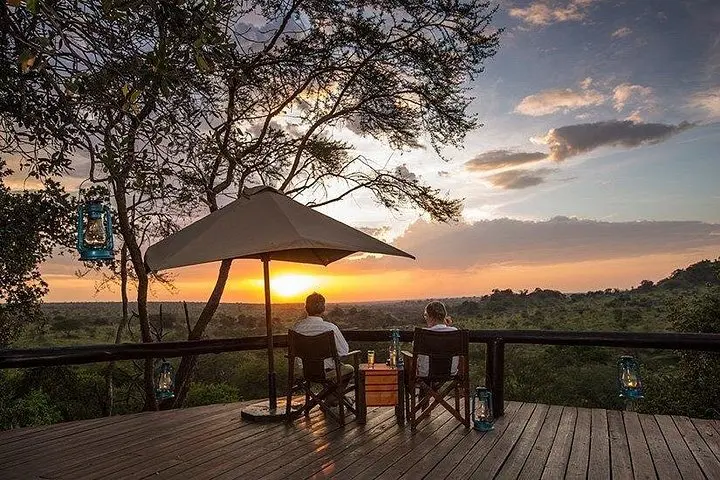
This itinerary mixes ‘Comfort’ hotels, tented lodges and tented camps — each night has private bathroom facilities as noted in the trip inclusions.
Yes — the trip is vehicle-based with flexible pacing; however travel times can be long and bumps common, so consider individual needs.
Typical inclusions are private transportation in an air-conditioned vehicle, breakfasts, lunches and dinners as listed, bottled water, park fees and Wi‑Fi onboard where available.
Silver Sky Travel operates guided outdoor trips and adventures with an emphasis on safety, stewardship, and memorable experiences.
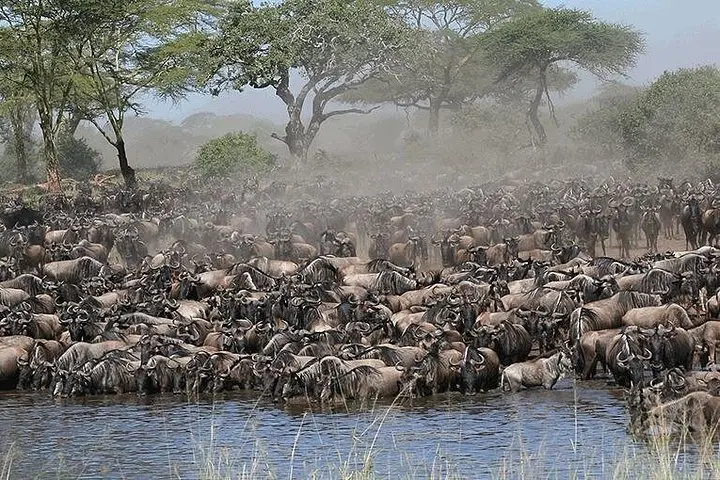
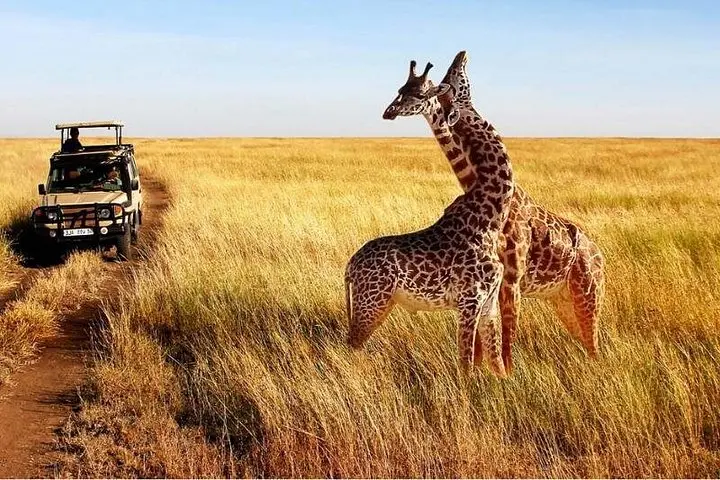
Dawn breaks low over acacia silhouettes and a Land Cruiser eases onto a dusty track — the air already full of movement. A rolling thunder of hooves may be distant or immediately present; the wildebeest migration shapes the day, rivers dare you to watch as crocodiles and herds negotiate the crossings. Guides scan the horizon with practiced eyes while the sun burns off a cool morning and reveals the scrub, kopjes and wide-open grasslands.
Dawn breaks low over acacia silhouettes and a Land Cruiser eases onto a dusty track — the air already full of movement. A rolling thunder of hooves may be distant or immediately present; the wildebeest migration shapes the day, rivers dare you to watch as crocodiles and herds negotiate the crossings. Guides scan the horizon with practiced eyes while the sun burns off a cool morning and reveals the scrub, kopjes and wide-open grasslands.
The route threads through landscapes carved by tectonics and time: the uplifted basalts and volcanic soils of the Serengeti, the steep-walled bowl of Ngorongoro, and the shallow alkaline spreads of Lake Manyara. Human history is visible too — Olduvai Gorge’s fossil beds and Maasai homesteads recall deep time and living culture. Birds map the seasons; elephants and predators mark the health of the plains.
Practically, this is vehicle-based wildlife travel: expect long daylight hours in a modified 4x4, early starts, and camp or lodge nights with private bathrooms. Weather swings between chilly mornings (layers required) and fierce midday sun. Bring binoculars, a long lens, sun protection and a small daypack for camera gear and water. Respect park rules — keep distance, stay in the vehicle during sightings, and follow your guide’s instructions.
Logistics: pick Arusha as your staging town for flights and supplies; transfers are typically included and drivers double as naturalists. The trip is low-impact physically but rich in observation skills — patience, silence and timing yield the best views. Hydrate, charge batteries, and be ready: the plains have a way of making even brief encounters feel monumental.