THE ADVENTURE COLLECTIVE® · Independent discovery and booking for outdoor travel

A compact, budget-friendly 7-day loop from Windhoek that threads the Skeleton Coast, Sossusvlei’s massive dunes, Kolmanskop’s sand-filled villas and the vast Fish River Canyon. Expect long drives, early sunrises on shifting dunes, and nights camping under some of the darkest skies in southern Africa.
A compact, budget-friendly 7-day loop from Windhoek that threads the Skeleton Coast, Sossusvlei’s massive dunes, Kolmanskop’s sand-filled villas and the vast Fish River Canyon. Expect long drives, early sunrises on shifting dunes, and nights camping under some of the darkest skies in southern Africa.
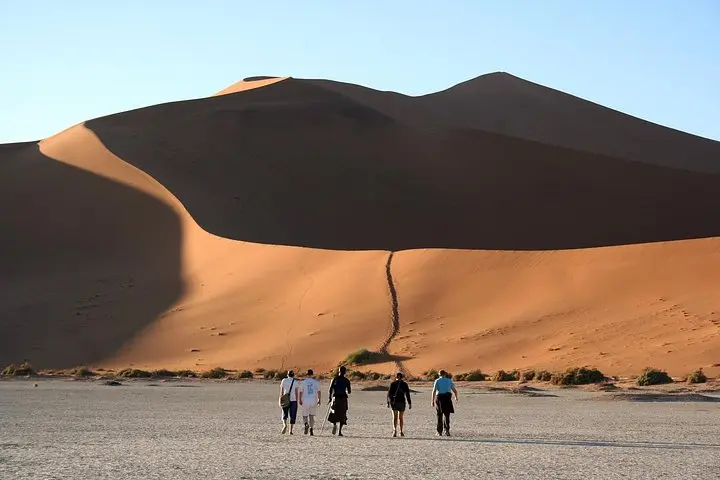
The morning wind in the Namib has a way of announcing itself before the sun appears: it lifts sand into long ripples and erases footprints like an impatient editor. On day three of the 7-day Southern Namibia camping safari, the convoy slips down a dry riverbed into a sea of red and ochre that seems larger than memory and quieter than any city. Travelers climb Dune 45 at first light, the sand warming beneath boots, and watch the light move across slopes that measure hundreds of meters high — dunes that breathe color from soft apricot to deep copper as the sun climbs.
Verified experiences and guided adventures in the surrounding area.
Operated by Chameleon Safaris · Windhoek, Khomas
The morning wind in the Namib has a way of announcing itself before the sun appears: it lifts sand into long ripples and erases footprints like an impatient editor. On day three of the 7-day Southern Namibia camping safari, the convoy slips down a dry riverbed into a sea of red and ochre that seems larger than memory and quieter than any city. Travelers climb Dune 45 at first light, the sand warming beneath boots, and watch the light move across slopes that measure hundreds of meters high — dunes that breathe color from soft apricot to deep copper as the sun climbs.
This route stitches together the geological extremes that define southern Namibia. The Namib is one of the oldest deserts on Earth; its wind-sculpted dunes are relics of long-ago coastlines and riverine deposits. Kolmanskop, the ghost town near Luderitz, narrates a different history: a diamond rush that built hospitals, ballrooms and the region’s first X-ray machine, then emptied the streets when riches ran out and the desert reclaimed houses with patient sand.
Culturally, the trip passes through a landscape marked by German colonial architecture, Afrikaans place names, and small Herero and Nama communities whose practices still thread through local markets and roadside stalls. Natural history reaches its peak at Fish River Canyon — a vast incision in the earth where erosion and tectonics conspire to form one of the world’s largest canyons, plunging roughly 500–550 meters to the riverbed below.
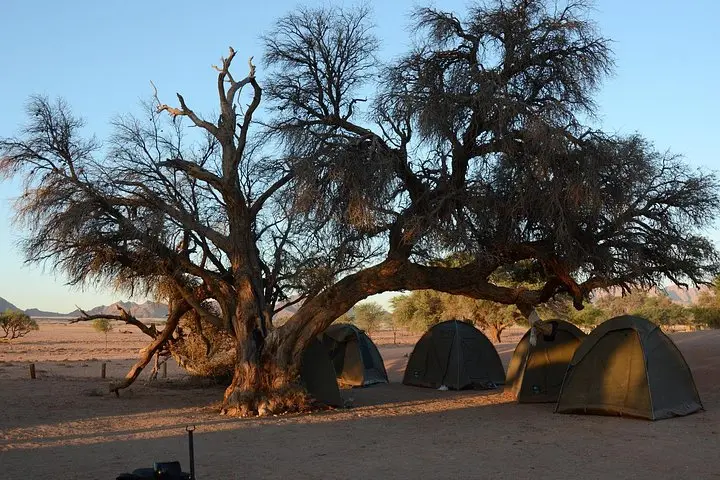
Practically, the safari balances adventure with straightforward logistics. Days alternate between long drives — expect 3–7 hour stretches — and short, intensive outings: dune climbs at dawn, a guided tour of Kolmanskop, and viewpoints over Fish River Canyon. Camping nights are a mix of established campsites and national park grounds; one hotel night in Swakopmund breaks up the route. Weather swings fast: desert days can exceed 35°C (95°F) while nights drop to near freezing in winter.
To get the most from this itinerary, plan for early starts and light packs. Bring a sun hat and layered clothing for sharp diurnal shifts, closed hiking boots for dune and rocky trails, and a 2–3 liter hydration system — the desert will test your water meter. Sleep systems range from provided sleeping pads to personal bags; campers should be comfortable with basic tent setup and cold-night sleeping. Guides handle most cooking and route permits, but personal preparedness — physical fitness for steep dune ascents and a tolerance for long vehicle transfers — makes the trip smoother.
In short: this is a trip for travelers who appreciate raw landscapes and purposeful travel logistics — long drives rewarded by remote panoramas, intimate nights under the stars, and a handful of sites that feel emblematic of Namibia’s rough, luminous charm.
No formal experience required; guides handle camp setup and meals, but you should be comfortable sleeping in tents and managing personal gear.
The itinerary includes key site visits like Sossusvlei and Sesriem Canyon; check with the operator for any additional park fees or night photography permits that may be extra.
Moderate fitness is sufficient — dunes are steep and soft, so expect short bursts of strenuous effort but no technical climbing.
Signal is intermittent outside towns; expect no reliable service in remote camps and plan accordingly.
Guides can usually accommodate common dietary needs if notified in advance via the booking questions.
Not recommended for very young children due to long drives and campsite conditions; operator policies vary, so check age restrictions during booking.
Chameleon Safaris operates guided outdoor trips and adventures with an emphasis on safety, stewardship, and memorable experiences.
The morning wind in the Namib has a way of announcing itself before the sun appears: it lifts sand into long ripples and erases footprints like an impatient editor. On day three of the 7-day Southern Namibia camping safari, the convoy slips down a dry riverbed into a sea of red and ochre that seems larger than memory and quieter than any city. Travelers climb Dune 45 at first light, the sand warming beneath boots, and watch the light move across slopes that measure hundreds of meters high — dunes that breathe color from soft apricot to deep copper as the sun climbs.
The morning wind in the Namib has a way of announcing itself before the sun appears: it lifts sand into long ripples and erases footprints like an impatient editor. On day three of the 7-day Southern Namibia camping safari, the convoy slips down a dry riverbed into a sea of red and ochre that seems larger than memory and quieter than any city. Travelers climb Dune 45 at first light, the sand warming beneath boots, and watch the light move across slopes that measure hundreds of meters high — dunes that breathe color from soft apricot to deep copper as the sun climbs.
This route stitches together the geological extremes that define southern Namibia. The Namib is one of the oldest deserts on Earth; its wind-sculpted dunes are relics of long-ago coastlines and riverine deposits. Kolmanskop, the ghost town near Luderitz, narrates a different history: a diamond rush that built hospitals, ballrooms and the region’s first X-ray machine, then emptied the streets when riches ran out and the desert reclaimed houses with patient sand.
Culturally, the trip passes through a landscape marked by German colonial architecture, Afrikaans place names, and small Herero and Nama communities whose practices still thread through local markets and roadside stalls. Natural history reaches its peak at Fish River Canyon — a vast incision in the earth where erosion and tectonics conspire to form one of the world’s largest canyons, plunging roughly 500–550 meters to the riverbed below.
Practically, the safari balances adventure with straightforward logistics. Days alternate between long drives — expect 3–7 hour stretches — and short, intensive outings: dune climbs at dawn, a guided tour of Kolmanskop, and viewpoints over Fish River Canyon. Camping nights are a mix of established campsites and national park grounds; one hotel night in Swakopmund breaks up the route. Weather swings fast: desert days can exceed 35°C (95°F) while nights drop to near freezing in winter.
To get the most from this itinerary, plan for early starts and light packs. Bring a sun hat and layered clothing for sharp diurnal shifts, closed hiking boots for dune and rocky trails, and a 2–3 liter hydration system — the desert will test your water meter. Sleep systems range from provided sleeping pads to personal bags; campers should be comfortable with basic tent setup and cold-night sleeping. Guides handle most cooking and route permits, but personal preparedness — physical fitness for steep dune ascents and a tolerance for long vehicle transfers — makes the trip smoother.
In short: this is a trip for travelers who appreciate raw landscapes and purposeful travel logistics — long drives rewarded by remote panoramas, intimate nights under the stars, and a handful of sites that feel emblematic of Namibia’s rough, luminous charm.